
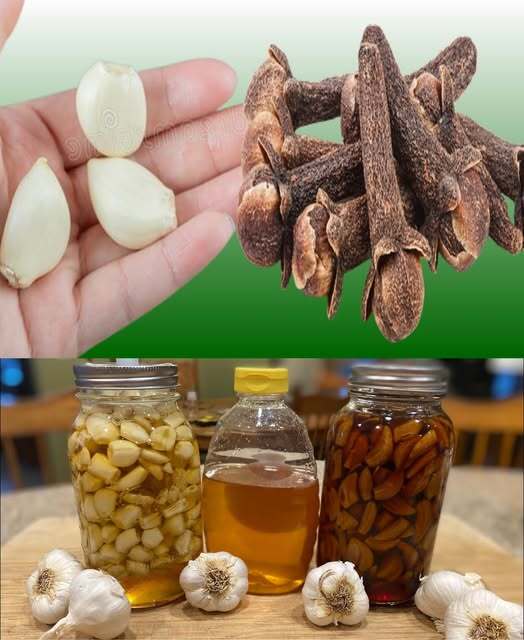
There’s a certain magic in combining humble kitchen staples into a simple remedy. Garlic, cloves, and honey — each has earned a place in traditional medicine for centuries, and many people swear by combinations that amplify their effects. The idea is appealing: natural, accessible, and gentle. But how much of the “magic” is real, and when are we in the realm of folklore or hope? In this article, we’ll explore what we know about garlic, cloves, and honey — individually and together — and what remains uncertain.
🌿 Why People Mix Garlic, Cloves, and Honey
The appeal of this concoction comes from the strengths of each ingredient:
- Garlic — often referred to as “nature’s antibiotic,” because of its active compounds such as allicin. Healthline+2PMC+2
- Honey (especially raw honey) — rich in antioxidants, with antibacterial and soothing properties. Healthline+2Wikipédia+2
- Cloves (or similar spices) — aromatic and often credited in traditional medicine with anti‑inflammatory and antimicrobial properties. (Note: scientific studies are more limited here, and most evidence is on garlic and honey.)
Together, they’re thought to provide a kind of “triple boost”: antimicrobial/antiviral support, antioxidant and anti‑inflammatory effects, and gentle nourishment — an appealing idea especially during cold & flu season, or when one wants natural support for immunity. Many traditional health systems rely on natural remedies like this, and there is some scientific support for using garlic and honey together. Vinmec International Hospital+2PMC+2
But — and this is important — while many benefits are promising, others are unproven or exaggerated by anecdote and tradition. Let’s break down what we do know, what’s speculative, and what to watch out for.
✅ What Science Does Say — About Garlic, Honey, or Both
Garlic: More Than Flavor
- Heart and cardiovascular health: Studies suggest that garlic can help reduce risk factors for heart disease. Consumption of garlic (or garlic extract) may help lower blood pressure, improve lipid profiles (cholesterol / triglycerides), and reduce vascular inflammation. PMC+2ResearchGate+2
- Antimicrobial / immune‑supportive properties: Garlic’s sulfur‑containing compounds (like allicin) have shown antibacterial, antifungal, and some antiviral activity in lab settings. Healthline+1
- Antioxidant & anti‑inflammatory effects: Garlic is rich in antioxidants which may help reduce oxidative stress and inflammation, potentially offering broader protective effects for heart, metabolic, and overall health. PMC+1
So when people tout garlic as a “superfood,” there is credible research backing some of those claims — especially when it comes to cardiovascular health and general immune support.
Honey: Nature’s Soother with Antimicrobial & Antioxidant Qualities
- Antibacterial and antimicrobial activity: Many types of honey have shown antibacterial effects. In fact, honey has been used in wound‑care medicine and topical healing because it can inhibit bacterial growth and support healing. Wikipédia+1
- Soothing the throat & respiratory comfort: Honey is often used to calm coughs and sore throats, especially in children (though not under one year old) — and honey-based syrups or teas remain a gentle, traditional remedy. Cleveland Clinic+1
- Antioxidant & anti‑inflammatory support: Honey contains flavonoids and polyphenols — compounds that help fight oxidative stress and may help support immune function and general health. Healthline+1
Given these properties, honey does seem like a reasonable anchor for a home remedy: sweet (so palatable), stable, and bioactive in its own right.
What About Garlic + Honey Together?
When combined, garlic and honey may share and possibly complement each other’s benefits. A few lab studies on mixtures of garlic extract and honey showed antibacterial effectiveness — sometimes more potent than when each is used alone. PMC+1
For example:
- One study found that combining garlic (or garlic extract) with honey inhibited growth of bacteria — including some pathogens known to cause respiratory or foodborne illness. Healthline+1
- Such combinations are sometimes used to soothe minor throat irritation, as a supportive remedy during cold season, or as a dietary boost for immune‑supportive antioxidants and anti‑inflammatory compounds. Cleveland Clinic+2www.ndtv.com+2
Also: A recent analysis highlighted garlic’s potential to reduce risk of atherosclerosis, hypertension, metabolic diseases, and cardiovascular events — meaning regular intake (alongside a healthy lifestyle) could offer long‑term benefits. PMC+2ResearchGate+2
So yes — there is scientific rationale for believing garlic + honey might offer synergistic benefits. But — and this is key — most of the strong evidence is either from lab studies (not human trials), or concerns garlic or honey individually. The combined mixture’s effects in real people are much less well studied.
⚠️ What We Don’t Know — And Where Claims Run Ahead of Evidence
Lack of Robust Clinical Evidence for the Combined Mixture
- While garlic and honey individually have some clinical support, there is very limited research on their combination (especially when mixed with spices like cloves). Most supportive studies are in vitro (petri dish / lab) — not in people. Cleveland Clinic+2PMC+2
- A recent review noted that although many people use “fermented garlic honey” or homemade garlic‑honey remedies for colds, flus, or general immunity, there is no definitive scientific proof that they prevent or cure viral infections. Cleveland Clinic+1
- Experts caution that relying on garlic‑honey mixes as a substitute for proven medical care (for serious illness) is risky. Verywell Health+1
In other words: the mixture may help support general wellness — but it is not a guaranteed shield against infection or disease.
Potential Risks & Limitations
- Dosage matters: Garlic contains potent sulfur compounds that can cause digestive upset (bloating, gas, heartburn) in sensitive individuals. Verywell Health+1
- Interactions with medications: Garlic can influence blood pressure, blood clotting, or interact with certain drugs (especially blood thinners), so people on medication should be cautious. Wikipédia+1
- Honey concerns: Raw honey has benefits, but also natural sugars — which may not suit people with diabetes or those monitoring sugar intake. Wikipédia+1
- No quick‑fix cure: Some of the more sweeping claims — “cures colds,” “flushes toxins,” “prevents serious diseases” — are unproven. To date, robust clinical trials for those assertions are lacking.
Many health professionals treating home remedies like garlic‑honey as “supportive, not curative” — helpful for mild symptoms or as part of a healthy lifestyle, but no substitute for medical care when needed. Cleveland Clinic+1
🧪 What About Adding Cloves — Or Other Spices?
Cloves (or similar warming spices) are often included in home‑remedy mixtures for flavor — and sometimes, for added antimicrobial or antioxidant claims. However:
- Evidence for cloves’ health effects — while promising in some lab studies — is far less robust and less well documented than for garlic or honey.
- Most scientific research focuses separately on garlic or honey; combined or “spiced” remedies are largely anecdotal or traditional.
- When spices are added, any potential benefit becomes harder to isolate; and risks (e.g. digestive sensitivity) can increase.
In short: using cloves (or similar spices) is unlikely to do harm for most people — but you should treat any claimed “extra benefits” with healthy skepticism.
🍯 How People Commonly Use Garlic‑Honey (or Garlic‑Honey‑Spice) Mixtures
Because of the simplicity — and centuries of tradition — many people use garlic‑honey (or more elaborate versions) in one or more of the following ways:
- Daily “wellness spoon”: A teaspoon (or small amount) of mixture on an empty stomach — as a preventive boost, especially during cold/flu seasons.
- Sore throat / mild cough relief: Mixed into warm water or tea, or taken by spoonful to soothe throat irritation.
- Dietary precaution or heart support: As a natural complement to a balanced diet, possibly supporting cardiovascular health over time.
- Gentle antimicrobial drink or tonic: Especially when combined with warm water, lemon, or mild spices (ginger, cinnamon) — a kind of “home tonic.”
Many also adapt the basic recipe — customizing sweetness, dilution, or spice levels to suit their taste or tolerance.
✅ If You Try It — How to Do It Sensibly
If you decide to try a garlic‑honey (or garlic‑honey‑clove) mix, here’s how to do so in a way that maximizes benefit and minimizes risk:
| Practice | Why It Matters |
|---|---|
| Use fresh garlic, crushed or chopped just before mixing — don’t rely on pre‑minced or heavily processed garlic. Healthline+1 | Fresh garlic releases more allicin — the active compound linked to many of the benefits. |
| Use raw or minimally processed honey — avoid honeys that are highly filtered, pasteurized, or labeled “just sweetener.” Healthline+1 | Raw honey retains more of its antioxidants, enzymes, and antimicrobial properties. |
| Start small — ½ to 1 teaspoon daily, see how your body reacts (digestion, tolerance, etc.). | Because the mixture can be strong (garlic + honey + sometimes spice), a small amount helps avoid digestive upset or sensitivity. |
| Avoid if you have certain conditions — e.g. take blood thinners, anticoagulants, or have honey/garlic allergies. Wikipédia+1 | Garlic can impact platelet/clotting function, and honey (raw) is not always suitable for those with immune compromise or infants. |
| Use as a complement, not a substitute — alongside a balanced diet, moderation of sugar intake, fresh foods, hydration, and medical care if needed. | Even if beneficial, garlic‑honey is not a “silver bullet.” Lifestyle remains key. |
| Maintain realistic expectations: think “supportive” not “miraculous.” | Evidence for strong cures or disease prevention remains limited. |
❤️ Potential Benefits — and What They’re Most Useful For
Based on research and tradition, here’s what garlic‑honey (or similar) mix might realistically help with — and where it probably isn’t a solution on its own:
What it might help with:
- Mild throat irritation or cough — honey soothes, garlic may offer gentle antimicrobial support.
- Everyday immune support — as part of a balanced lifestyle, may slightly help resist seasonal infections or at least support recovery.
- Cardiovascular support (long term) — when eaten regularly (not as a cure), garlic’s cardiovascular benefits may contribute to healthier blood pressure and cholesterol levels.
- Antioxidant and inflammation balance — may help reduce oxidative stress, which over time supports overall health.
What it likely won’t do by itself:
- Cure serious infections, flu, or viral illnesses.
- Reverse chronic diseases, cancer, or complex metabolic conditions.
- Substitute for prescribed medications or medical treatment.
🧴 When to Be Cautious — and Who Should Avoid It
- People on blood thinners or anticoagulants: Garlic’s effect on clotting could interfere with medication or increase bleeding risk. Wikipédia+1
- Individuals with sensitive digestion, acid reflux, or IBS: Garlic can irritate the GI tract. Verywell Health+1
- Those with diabetes or blood sugar concerns: Raw honey adds sugar — moderation is important. Wikipédia+1
- Infants under 1 year: Honey should never be given to them due to risk of botulism. Wikipédia+1
- People with garlic or honey allergies — obvious but worth repeating.
🌟 Bottom Line — A Gentle, Natural Support, Not a Miracle Cure
The blend of garlic, honey, and — optionally — cloves (or other warming spices) is appealing because it draws on centuries of tradition, tastes simple, and feels like a gentle way to support your health. Scientific research supports many of the benefits of garlic and honey individually — and some small studies suggest their combination may retain or even enhance certain effects, especially antimicrobial and antioxidant properties. ResearchGate+3PMC+3Healthline+3
At the same time, strong clinical evidence — especially for using this mixture to prevent or cure serious illness — simply isn’t there. Experts often caution that such natural remedies be viewed as complementary: something that might help support everyday health, but not replace medical care or a balanced lifestyle. Cleveland Clinic+2Verywell Health+2
If you try it, consider it a supportive ritual — like drinking herbal tea daily, or keeping a balanced diet. Listen to your body, be mindful of how you feel, and treat it as one piece of a broader health puzzle.
🧑⚕️ When It Definitely Makes Sense to Talk to a Doctor
If you have any of the following, you should consult a healthcare professional rather than rely solely on natural remedies:
- Chronic diseases (heart disease, diabetes, clotting disorders)
- Regular medication use (especially blood thinners, blood pressure meds)
- Persistent or severe symptoms (unexplained fatigue, infections, persistent cough, immune compromise)
- Gastrointestinal conditions like IBS, reflux, acid sensitivity
- Pregnancy or breastfeeding — always important to check any dietary or supplement changes
📝 Final Thoughts
Nature provides many incredible gifts — garlic, honey, and spices are among the simplest and oldest. When used thoughtfully and tempered with realism, a mixture of garlic, honey, and optionally cloves can be a gentle, comforting ritual: a spoonful of wellness, a soothing sip, a daily nudge toward better habits.
But as with all remedies — natural or otherwise — wisdom comes from balance. Use it as part of a healthy lifestyle: varied diet, movement, sleep, and medical care when needed. Be cautious with claims that promise to cure everything — those are rarely supported by evidence.
If you enjoy the taste, the ritual, or the small comfort it brings, garlic‑honey blends are unlikely to hurt — and may even modestly support your wellness. Just remember: the real strength lies in consistency, not miracles.
Stay curious, stay balanced, and always take care of your health — from the inside out.