Classic Soft & Fluffy Yeast Donuts are light, airy, golden brown, and coated in a delicate layer of sparkling sugar that clings perfectly to every warm bite. These homemade yeast donuts feature pillowy centers, slightly crisp exteriors, and that unmistakable bakery-style texture that only real yeast dough can create. From the soft proofed dough to the final sugar coating, every step builds rich flavor and irresistible texture.
The secret to these fluffy yeast donuts comes from allowing the dough enough time to rise properly before frying. As the yeast develops, the dough becomes soft, airy, and tender. Once fried until golden brown and immediately tossed in sugar while still warm, the donuts develop that classic fuzzy sugar-coated finish seen in bakery display cases and old-fashioned donut shops.
The first time I made these Classic Soft & Fluffy Yeast Donuts was on a slow weekend morning when I wanted to recreate the fresh bakery donuts I remembered from childhood. Watching the dough slowly puff during proofing felt almost magical, and once the donuts hit the hot oil, they transformed into golden airy pillows within seconds. By the time they were coated in sugar and still warm enough to steam slightly when torn open, everyone in the kitchen was reaching for a second donut before finishing the first.
Why Yeast Donuts Turn Out So Light and Fluffy
Yeast Creates an Airy Dough Structure
Active dry yeast gives these donuts their signature light and fluffy texture. As the yeast activates in warm milk, it begins creating tiny air pockets throughout the dough that expand during rising and frying.
The dough becomes soft and elastic as it develops, allowing the donuts to puff beautifully in the hot oil. Unlike cake donuts, yeast donuts have a stretchy airy crumb that feels tender and almost cloud-like when bitten into.
Using milk warmed to about 110°F helps activate the yeast properly without overheating it. If the liquid becomes too hot, the yeast may weaken or die before the dough rises fully.
Allowing the yeast mixture to become foamy before mixing confirms the yeast is active and ready to create fluffy donuts.
Kneading Builds Soft Elastic Dough
Kneading the dough helps develop gluten structure, which gives the donuts their soft chewy texture while still remaining light and tender.
The dough should feel smooth and slightly tacky after kneading rather than dry or sticky. This balanced texture allows the donuts to rise properly while staying soft after frying.
Adding softened butter during mixing enriches the dough and creates softer texture throughout the finished donuts. The butter also adds flavor while helping the donuts stay tender longer.
Because enriched dough takes slightly longer to rise, patience during proofing creates much better flavor and texture in the final donuts.
Proper Proofing Creates Bakery-Style Donuts
The First Rise Develops Flavor
The initial rise allows the yeast dough to double in size while developing rich slightly sweet flavor. During this time, the gluten relaxes and the dough becomes airy and easier to shape.
Keeping the dough in a warm draft-free environment helps the yeast remain active and consistent throughout the rise.
Once the dough doubles in volume, it becomes soft, puffy, and ready for shaping. Properly risen dough feels airy when gently pressed with a fingertip.
This first proof also helps create the signature soft interior texture associated with classic bakery yeast donuts.
Individual Parchment Squares Prevent Deflation
Placing each shaped donut onto its own parchment square creates one of the smartest techniques for homemade fried donuts. Instead of lifting delicate risen dough by hand, the parchment supports the donuts during transfer to the oil.
This method prevents the proofed donuts from collapsing or stretching before frying. As a result, the donuts stay light, round, and evenly puffed once they hit the hot oil.
During the second rise, the shaped donuts become visibly larger and softer. They should look airy and delicate before frying.
The parchment squares also make the frying process safer and easier, especially for beginners making yeast donuts for the first time.
Frying Creates Perfect Golden Brown Donuts
Proper Oil Temperature Matters Most
Maintaining oil at 350°F creates perfectly golden donuts with soft fluffy interiors. If the oil becomes too hot, the outside browns too quickly while the center remains undercooked.
If the oil is too cool, the donuts absorb excess grease and become heavy instead of light and airy.
Frying for about 60 to 90 seconds per side usually creates the ideal golden-brown color while fully cooking the interior.
As the donuts fry, they puff dramatically and develop their classic bakery appearance. Watching them rise and float in the oil becomes one of the most satisfying parts of the process.
Warm Donuts Hold Sugar Best
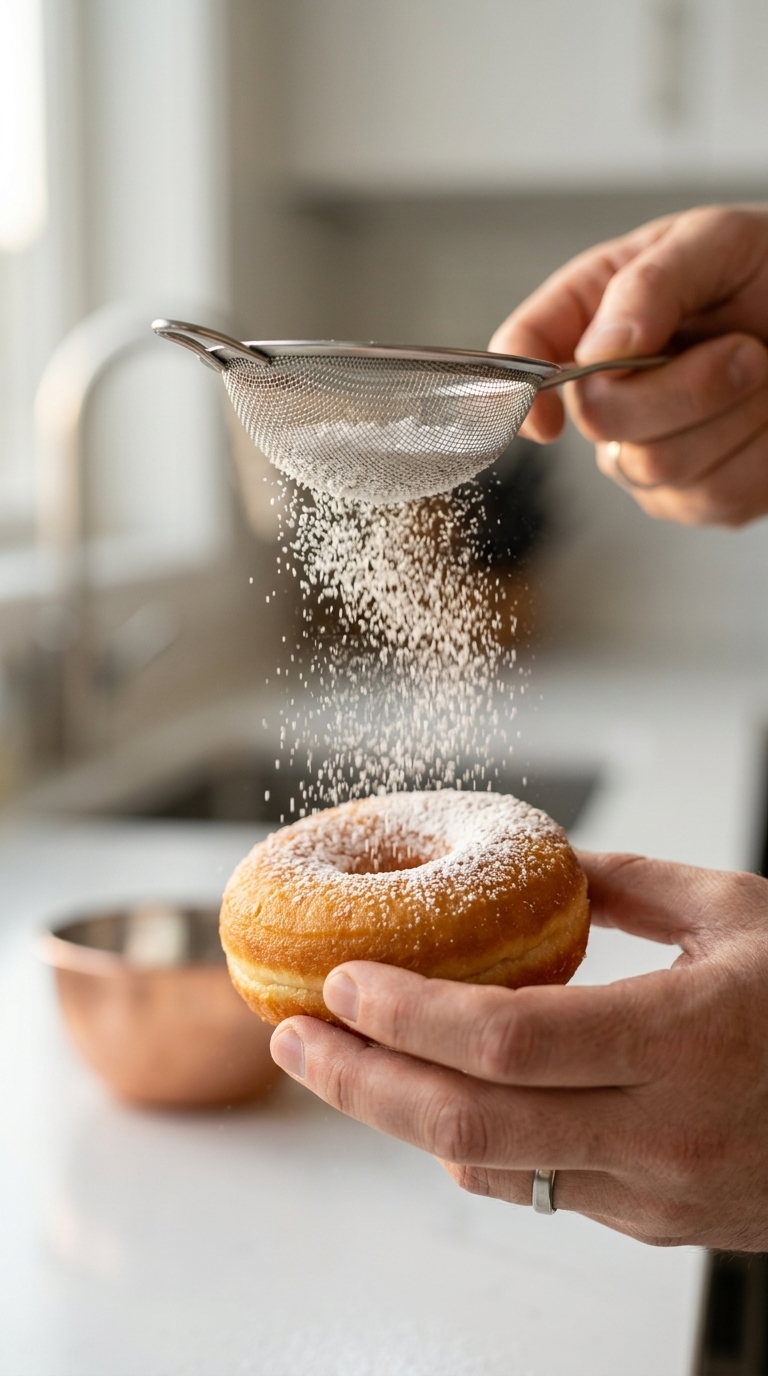
The sugar coating works best while the donuts are still very warm from frying. Warm surfaces allow the granulated sugar to cling evenly around the entire donut.
If the donuts cool completely first, the sugar may slide off rather than sticking properly. Therefore, coating them quickly after draining creates the signature fuzzy sugar appearance.
Adding cinnamon to the sugar mixture creates warm bakery-style flavor that pairs beautifully with the buttery dough.
The slight crunch from the sugar coating also contrasts perfectly with the soft fluffy interior of the donuts.
Easy Tips for Perfect Homemade Donuts
Avoid Adding Too Much Flour
Although sticky dough can feel challenging initially, adding too much flour may create dense donuts instead of fluffy ones.
The dough should remain soft and slightly tacky while still being manageable after kneading. Lightly flouring the work surface helps with rolling and cutting without drying out the dough.
Soft dough expands more beautifully during proofing and frying, resulting in lighter bakery-style texture.
Because humidity and flour brands vary slightly, adjusting carefully while kneading creates the best final consistency.
Use a Thermometer for Frying
Oil temperature changes quickly during frying, especially after adding several donuts at once. Using a thermometer helps maintain steady heat throughout the process.
Allowing the oil to return to temperature between batches prevents greasy or unevenly browned donuts.
Frying only a few donuts at a time also helps maintain stable oil temperature and gives enough room for the donuts to expand properly.
Draining briefly on a wire rack before sugaring removes excess oil while still keeping the donuts warm enough for sugar coating.
Best Ways to Serve Yeast Donuts
Fresh Donuts Taste Best Warm
Classic Soft & Fluffy Yeast Donuts taste absolutely best shortly after frying while the centers remain warm and airy.
The sugar coating sparkles beautifully while the inside stays soft enough to pull apart easily with your hands.
Serving them alongside coffee, hot chocolate, or milk creates the perfect comforting breakfast or weekend treat.
Because homemade yeast donuts feel nostalgic and bakery-fresh, they often become the centerpiece of cozy family mornings and holiday breakfasts.
Fun Variations Add Extra Flavor
Although classic sugar-coated donuts remain timeless, many variations work beautifully with this dough recipe.
Filled donuts with jam, vanilla cream, or chocolate create bakery-style treats with very little extra effort. Glazes, powdered sugar, or maple icing also work wonderfully.
For extra richness, dipping half the donuts into chocolate ganache after frying creates beautiful presentation and flavor contrast.
Because the dough itself remains soft and versatile, it works well for countless donut variations once mastered.
Frequently Asked Questions
Why didn’t my donuts rise properly?
Inactive yeast or cold rising temperatures are the most common causes. Always ensure the yeast becomes foamy before mixing.
Can I make the dough ahead of time?
Yes. The dough can rise overnight in the refrigerator for slower flavor development.
Why are my donuts greasy?
Usually the oil temperature is too low. Maintaining 350°F helps prevent excess oil absorption.
Can I bake these instead of frying?
Yes, but baked donuts will have different texture and less classic richness than fried yeast donuts.
How should leftovers be stored?
Store at room temperature in an airtight container for up to two days for best texture.
Ingredients
Equipment
Method
- Combine the warm milk and 1 tablespoon of sugar in a bowl.
- Sprinkle the yeast over the milk mixture and let sit for 5 to 10 minutes until foamy.
- Add the remaining sugar, egg, salt, and half of the flour. Mix until combined.
- Add the softened butter and remaining flour. Knead for 5 to 7 minutes until smooth and slightly tacky.
- Place the dough into a greased bowl, cover, and let rise in a warm place for 1 to 1.5 hours until doubled in size.
- Roll the dough to 1/2-inch thickness and cut into donut shapes.
- Place each donut onto an individual parchment square on a baking sheet.
- Cover and let the donuts rise again for 30 to 45 minutes until puffy.
- Heat oil to 350°F (175°C). Carefully lower the donuts into the oil using the parchment squares.
- Fry the donuts for 60 to 90 seconds per side until golden brown.
- Drain briefly on a wire rack for 30 seconds.
- Toss the warm donuts in granulated sugar until fully coated and serve immediately.
Notes
Conclusion
Classic Soft & Fluffy Yeast Donuts combine airy yeast dough, golden crispy edges, and sparkling sugar coating into one irresistible homemade treat. The careful proofing process creates bakery-style texture while the warm sugar coating delivers that nostalgic donut-shop finish everyone loves.
Whether served for breakfast, holidays, weekend baking projects, or sweet afternoon snacks, these homemade yeast donuts always feel comforting and special. Once you taste the warm fluffy interior and delicate sugary exterior, this recipe will likely become your favorite homemade donut recipe for years to come.