
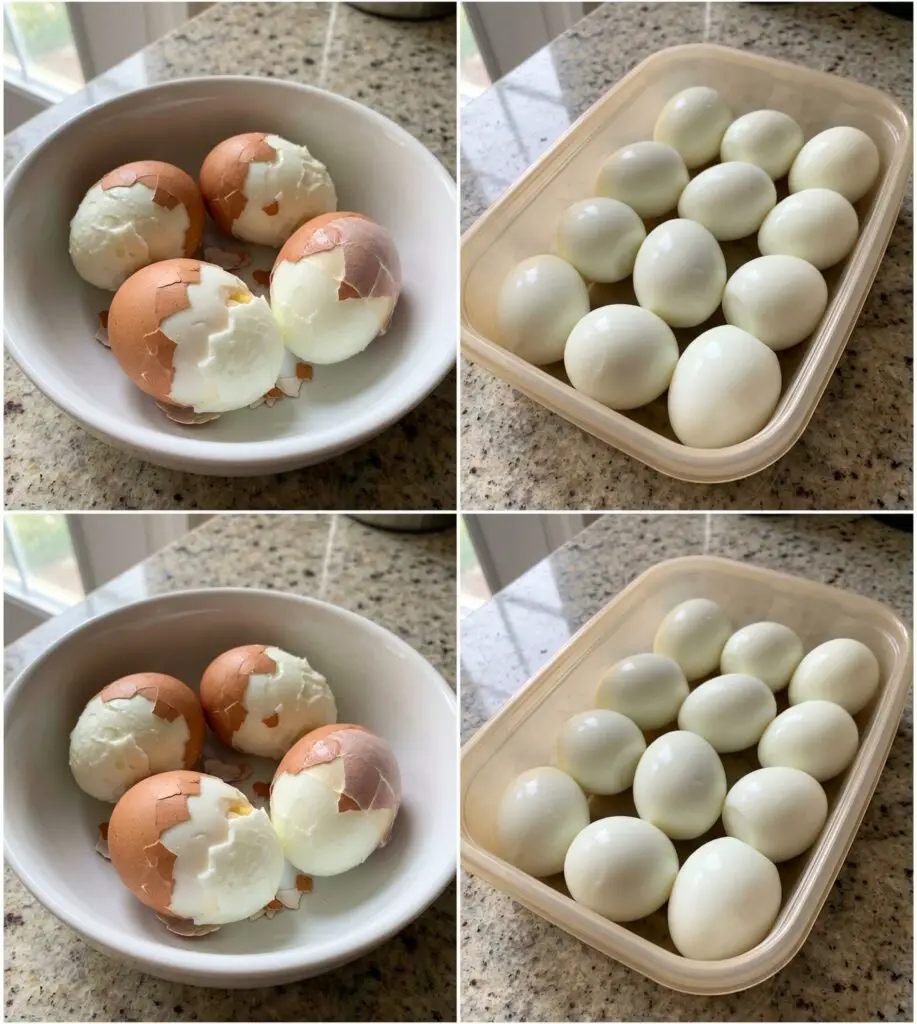
If you’ve ever struggled to peel a hard-boiled egg only to end up with torn whites and deep craters, you’re not alone. It’s one of the most common kitchen frustrations. The good news is that chefs and food scientists agree: perfect peeling has less to do with technique and more to do with how the eggs are cooked and cooled.
Here’s the professional, foolproof method that delivers smooth, clean eggs every time.
The 3-Step Chef’s Method for Easy-Peel Eggs
1. Start With Slightly Older Eggs
This may sound backward, but it matters.
Why it works:
Very fresh eggs have a lower pH, which causes the egg white to cling tightly to the inner shell membrane. As eggs age, their pH increases slightly, making them much easier to peel.
Best choice:
Use eggs that are 7–10 days old rather than just-laid or very fresh eggs.
If you only have fresh eggs, don’t worry—the next steps will still help a lot.
2. Steam Instead of Boil (The Game-Changer)
This is the step chefs swear by.
Why steaming works better than boiling:
When eggs are lowered into steam, the heat sets the egg white quickly, pulling it slightly away from the shell. This creates a small gap that makes peeling dramatically easier.
How to steam eggs:
- Add about 1 inch of water to a pot and bring it to a boil
- Place eggs in a steamer basket above the water
- Cover with a lid
Cooking times:
- 12 minutes for fully hard-boiled eggs
- 6–7 minutes for medium-set yolks
Once done, remove the eggs immediately.
3. Ice Bath Shock (Don’t Skip This)
Cooling is just as important as cooking.
Why it matters:
An ice bath stops the cooking process and causes the egg white to contract slightly, pulling away from the shell membrane.
How to do it:
- Transfer eggs straight from the steamer into a bowl of ice water
- Let them sit for at least 5–10 minutes
This step also makes the eggs easier to handle while peeling.
The Best Way to Peel
Once the eggs are fully cooled:
- Gently tap the egg on a hard surface to crack all over
- Start peeling from the wide end (where the air pocket is)
- Peel under running water or submerged in water to help lift the shell
The shell should slide off in large pieces with minimal effort.
Extra Pro Tips From Chefs
- Skip vinegar and baking soda: They don’t work consistently
- Don’t peel eggs while still warm—they tear more easily
- Store peeled eggs in water in the fridge to keep them fresh
- Slight cracks during steaming are normal and won’t affect peeling
The Bottom Line
Perfectly peeled hard-boiled eggs aren’t about luck or peeling tricks. They’re about older eggs, steaming instead of boiling, and proper cooling.
Follow this chef-approved method, and you’ll get smooth, flawless eggs every time—no frustration, no wasted whites, and no messy peeling.