The Marriage That Began as a Transaction
When people looked at Eleanor and me together, they always smiled with quiet approval.
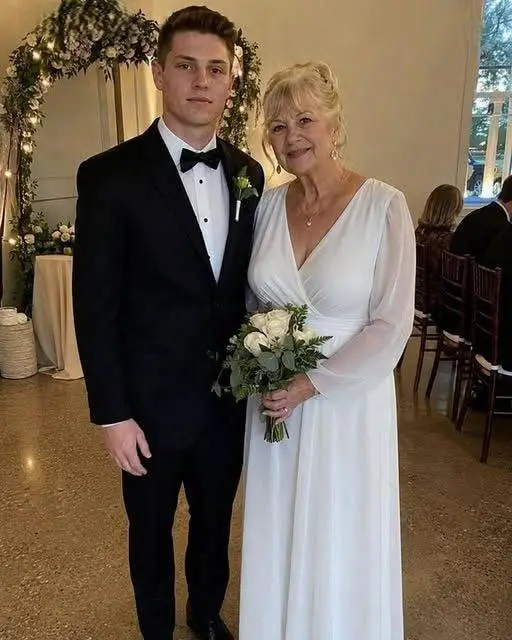
They saw an elegant older woman with silver hair and gentle eyes walking arm in arm with a younger husband who appeared patient, attentive, and devoted. To everyone else, we looked like proof that love could appear at any stage of life.
No one questioned us.
No one asked why I had married a woman nearly thirty years older than me.
And I never volunteered the truth.
The truth was ugly.
I hadn’t married Eleanor because I loved her.
I had married her because she was wealthy.
At least, that was the story I spent years telling myself.
Back then I believed life was simple. Everyone wanted something. Some people chased romance. Others chased status. I chased security.
After years of financial mistakes, failed businesses, mounting debts, and relationships built on disappointment, I convinced myself that emotions only complicated life. Money was dependable. Money solved problems. Love only created them.
Then I met Eleanor.
She was already a widow.
Her husband had built a successful manufacturing company decades earlier, leaving behind more wealth than either of them could spend in one lifetime. By the time we met, she lived alone in a beautiful estate just outside town.
The house was enormous.
Fresh flowers stood in every room.
The garden bloomed year-round.
Yet despite all its beauty, the home felt painfully quiet.
The silence should have warned me.
Instead, I saw opportunity.
A Woman Everyone Admired
Everyone loved Eleanor.
She remembered birthdays.
She donated anonymously to local charities.
She volunteered at the library every Wednesday despite having more than enough money to spend her afternoons anywhere else.
People described her as gracious.
Kind.
Patient.
The type of person who always asked how your family was—and genuinely waited for the answer.
When we first met at a charity fundraiser, she greeted me with the same warm smile she offered everyone.
There was nothing flirtatious about it.
Nothing dramatic.
Just kindness.
That made what I was doing even worse.
Because while she saw another guest, I immediately noticed the expensive jewelry on her wrist, the elegant dress, and the way people quietly treated her with respect.
I didn’t see a lonely woman.
I saw financial freedom.
Building the Perfect Performance
Winning Eleanor’s trust wasn’t difficult.
She wasn’t naive.
She simply believed the best about people.
We started having coffee together.
Then lunches.
Soon I was helping her carry groceries, fixing little problems around the house, and listening while she talked about books, gardening, and the husband she’d loved for forty-three years.
Most people would have grown uncomfortable hearing constant stories about a late spouse.
I listened carefully.
Not because I cared.
Because I knew listening built trust.
Every conversation felt like another investment.
Another step toward the future I wanted.
She laughed at my jokes.
I complimented her cooking.
I remembered details about her favorite flowers.
I noticed how she preferred classical music while cooking dinner and old mystery movies before bed.
None of it felt genuine.
It felt strategic.
Or so I believed.
Months later, when she accepted my proposal, several friends privately questioned my motives.
I couldn’t blame them.
Even I questioned them.
But Eleanor never did.
She simply smiled, slipped on the ring, and said quietly,
“I didn’t think I’d ever have another chance at companionship.”
Those words should have stopped me.
Instead, I accepted her gratitude like another victory.
Life Inside the Big House
Marriage settled into an unexpectedly peaceful rhythm.
Every morning Eleanor woke before sunrise.
She made tea instead of coffee.
Exactly one spoonful of sugar.
A splash of milk.
Never more.
She read newspapers from beginning to end instead of skimming headlines.
She wrote handwritten birthday cards months before they were needed.
She believed every thank-you deserved a handwritten response.
Life slowed around her.
At first I found it exhausting.
I had spent years rushing through life.
She moved through each day as though time itself deserved respect.
Dinner happened at six.
Every evening.
No television.
Just conversation.
Sometimes she’d tell stories about childhood.
Sometimes she’d ask about mine.
I usually answered with carefully edited versions of the truth.
She never challenged me.
She simply listened.
Gradually, without realizing it, I stopped eating in front of the television.
I started reading again.
I even found myself sitting on the porch with her while she watered roses.
None of this had been part of my plan.
Yet I told myself it didn’t matter.
The inheritance was still the goal.
Everything else was just routine.
Waiting for the Future
Years passed quietly.
Friends assumed we were happy.
Perhaps we were.
I never stopped thinking about the money waiting at the end of our marriage.
Whenever guilt appeared, I buried it beneath practical reasoning.
She wasn’t being hurt.
She had company.
I had stability.
Everyone benefited.
That was the lie I repeated often enough that it almost sounded true.
Still, there were moments that didn’t fit my carefully constructed narrative.
When Eleanor caught the flu, I stayed awake beside her bed all night changing cold compresses.
When arthritis made climbing the stairs difficult, I carried laundry without being asked.
When storms frightened her because thunder reminded her of childhood memories, I stayed downstairs until she finally fell asleep.
Each time I dismissed those moments.
Anyone would have done the same.
I wasn’t becoming attached.
I was simply fulfilling my role.
At least, that’s what I believed.
Then, eight years after our wedding, everything changed.
One quiet Tuesday morning, Eleanor closed her eyes for the last time.
And with her final breath, the story I had spent years telling myself began to fall apart.
The Shoebox That Changed Everything
The funeral passed exactly as I expected.
People embraced me.
Neighbors brought casseroles I never intended to eat.
Former colleagues stood beside Eleanor’s grave and shared stories about her generosity.
Everyone called her remarkable.
Everyone told me how lucky I had been.
I nodded politely.
Inside, I was already thinking about paperwork.
Insurance.
Bank accounts.
Property transfers.
The future.
Three days later, her attorney invited me back to his office.
After reviewing several legal documents, he slid a small wooden shoebox across the polished desk.
It wasn’t expensive.
Just old.
Its corners were worn smooth.
A faded blue ribbon wrapped around the lid.
“Eleanor asked me to give you this,” he said quietly.
“She was very specific. She wanted you to open it only when you felt ready.”
I almost laughed.
Ready for what?
Old photographs?
Family keepsakes?
Perhaps jewelry she’d forgotten to mention.
I thanked him politely and carried it home without another thought.
For nearly a week it sat untouched on the kitchen counter.
Every time I walked past it, something made me hesitate.
The house felt strangely different without Eleanor.
Not empty.
Different.
The silence had changed.
There was no soft humming from the kitchen.
No classical music drifting through the hallway.
No quiet footsteps moving toward the garden every morning.
I hadn’t realized how much sound one gentle woman could create.
One rainy evening, unable to sleep, I finally untied the ribbon.
Inside were no valuables.
No hidden fortune.
Only letters.
Dozens of them.
Neatly folded.
Carefully dated.
A leather journal rested beneath them alongside several photographs I had never seen.
At the bottom lay one sealed envelope.
My name was written across the front in Eleanor’s elegant handwriting.
For reasons I couldn’t explain, my hands began to shake.
The First Letter
I opened the oldest letter first.
It was dated only three months after our wedding.
My dear husband,
I know why you married me.
I stopped reading.
Every muscle in my body tightened.
Had someone told her?
Had she investigated me?
Had she discovered everything?
Slowly, I continued.
You think you’ve hidden your reasons well, but loneliness teaches people to observe. I noticed long ago that you rarely looked at me the way husbands usually look at wives.
I swallowed hard.
She knew.
She had known almost from the beginning.
Yet the next lines stunned me.
Please don’t feel ashamed.
Ashamed?
That wasn’t the reaction I expected.
You were searching for security. I was searching for companionship. Perhaps we both entered this marriage hoping to receive something the other person could provide.
I read the paragraph three times.
There was no anger.
No bitterness.
No accusation.
Only understanding.
Quiet Observations
The next letter came six months later.
Again, no blame.
Instead, Eleanor described ordinary moments I barely remembered.
The morning I fixed the loose cabinet door before breakfast.
The evening I noticed she was cold and quietly draped a blanket over her shoulders without saying anything.
The afternoon I planted tulips because she’d casually mentioned missing them.
I had forgotten every one of those moments.
She hadn’t.
One passage stopped me cold.
Today you made my tea exactly the way I like it.
I frowned.
Then I smiled despite myself.
One sugar.
Clockwise.
A splash of milk.
I hadn’t realized I’d memorized her routine.
She continued.
Perhaps you think these are small things. They aren’t. Small kindnesses become a life.
I stared at those words for a very long time.
The Story I Told Myself
For eight years I had repeated the same sentence whenever guilt appeared.
I’m only here for the money.
It became my shield.
If I admitted anything else, then I’d have to admit I was vulnerable.
That I cared.
That I wasn’t nearly as cold as I pretended to be.
The letters dismantled every excuse.
They reminded me of evenings spent reading novels aloud when Eleanor’s eyesight worsened.
Afternoons helping her prune roses.
Sunday mornings laughing over crossword puzzles.
Long drives through the countryside with no destination.
I’d dismissed all of them as obligations.
She saw them differently.
She saw affection growing quietly where neither of us expected it.
One photograph slipped from between the letters.
It showed us sitting on the porch during autumn.
She was laughing.
I was laughing too.
Not posing.
Not pretending.
Simply laughing.
I couldn’t remember what was funny.
But the happiness on my face looked genuine.
For the first time since her death, I questioned everything I believed about myself.
Maybe I hadn’t been acting.
Maybe somewhere along the way I’d stopped pretending.
The Journal
Beneath the letters rested Eleanor’s leather journal.
Unlike the letters, these pages were never meant to be read.
At least, I didn’t think so.
Yet she’d placed them in the box anyway.
The entries weren’t about illness.
Or fear.
Or wealth.
They were about ordinary life.
She wrote about watching birds outside the kitchen window.
About missing her late husband while also appreciating the second chance life had unexpectedly given her.
Then she began writing about me.
“Today he smiled before realizing I was looking.”
“He still thinks kindness is something people perform instead of something they become.”
“I hope one day he forgives himself for mistakes I don’t even blame him for.”
Every page revealed a woman who understood me better than I understood myself.
She never tried changing me.
She simply waited.
Patiently.
Believing I would eventually discover the truth on my own.
At the bottom of the journal rested one final sealed envelope.
Unlike the others, this one had no date.
Only three words written across the front.
For after goodbye.
With trembling hands, I broke the seal, unaware that the final letter inside would completely change the course of my life.
The Truth She Left Behind
I stared at the final envelope for several minutes before opening it.
Some part of me already knew nothing inside would involve money.
Whatever Eleanor wanted to leave me, it wasn’t something that could be deposited into a bank account.
I unfolded the letter carefully.
Her handwriting was noticeably weaker than in the others, the graceful loops slightly uneven, the ink fading in places.
Still, every word carried the same quiet warmth that had filled our home.
My Dear Husband,
If you’re reading this, then I’ve already said goodbye.
You’re probably sitting alone in the kitchen. You always go there when you’re trying to think.
I instinctively looked around.
I was, indeed, sitting exactly where she’d imagined.
For the first time, I smiled through tears.
She knew me better than anyone ever had.
There’s something I need you to understand.
You believe you married me for my money.
Perhaps you did.
But that isn’t why you stayed.
I stopped reading.
My throat tightened.
Because deep inside, I already knew she was right.
People who marry only for money don’t learn how someone likes their tea.
They don’t memorize which blanket eases aching knees.
They don’t notice when someone is pretending to be brave.
They certainly don’t spend sleepless nights reading aloud during thunderstorms.
You kept telling yourself those moments didn’t matter.
To me, they mattered more than anything money could ever buy.
The room blurred.
For years I had convinced myself every kind act was simply part of maintaining appearances.
Yet Eleanor had quietly collected those moments like precious treasures.
Not because they proved I loved her.
Because they proved I was learning how.
The Greatest Inheritance
The next page contained something unexpected.
It wasn’t another letter.
It was a copy of her will.
Highlighted near the bottom was a paragraph I’d somehow overlooked during the legal meeting.
“A portion of my estate shall establish the Eleanor Harper Companionship Fund, dedicated to supporting programs that reduce loneliness among older adults.”
Below it, another handwritten note.
I know you’ll understand why this matters now.
She had spent years living alone before I entered her life.
Loneliness, not illness, had been her greatest burden.
She wasn’t trying to leave behind wealth.
She wanted to leave behind connection.
Then came one final paragraph.
I don’t expect you to become someone perfect.
I simply hope you become someone honest.
Don’t waste your life counting what you’ve gained.
Spend it appreciating who you’ve become.
That will be the greatest gift either of us ever receives.
With quiet love,
Eleanor
Seeing My Life Clearly
I finally cried.
Not polite tears.
Not funeral tears.
Real ones.
The kind that arrive without warning.
The kind that leave you exhausted.
For eight years I believed I had been acting.
But grief doesn’t appear for strangers.
It doesn’t arrive for business arrangements.
It arrives when love leaves an empty chair at the dinner table.
I walked through every room of the house that evening.
The library where we’d read together.
The garden where she’d taught me the names of flowers.
The porch where we’d watched rainstorms without speaking.
Every room held memories I had refused to acknowledge.
I hadn’t simply lived there.
I’d belonged there.
And somehow, without realizing it, Eleanor had become home.
Choosing a Different Future
Over the following months, I made decisions that would have seemed impossible to the man I used to be.
I paid off my remaining debts.
I kept enough money to live comfortably—but nothing extravagant.
The rest of my inheritance went where I knew Eleanor would have smiled to see it.
Part funded the companionship program she had envisioned.
Another portion supported the community clinic whose nurses had treated her with kindness during her final illness.
I also began volunteering there every Thursday afternoon.
At first, I believed I was honoring Eleanor.
Eventually I realized something deeper.
I was honoring the person she believed I could become.
The mansion was sold.
I moved into a modest apartment filled with sunlight instead of expensive furniture.
For the first time in years, I stopped measuring success by numbers in a bank account.
Instead, I measured it by conversations.
Friendships.
Acts of kindness.
Moments that couldn’t be bought.
The Shoebox on My Desk
Years have passed since Eleanor’s funeral.
The wooden shoebox still sits on my desk.
I don’t keep it because it reminds me of my mistakes.
I keep it because it reminds me that people are capable of changing.
Whenever I begin slipping back into old habits—calculating every decision, questioning every motive—I open the box.
I reread one of her letters.
Sometimes it’s the one about the tea.
Sometimes it’s the one about the storm.
Sometimes it’s simply the final sentence she ever wrote to me.
“Don’t waste your life counting what you’ve gained. Spend it appreciating who you’ve become.”
Those words have become my compass.
A Final Reflection
I once believed money could solve every problem.
Eleanor showed me that loneliness couldn’t be purchased away.
Neither could forgiveness.
Or purpose.
Or love.
I married a wealthy widow expecting to inherit her fortune.
Instead, I inherited something infinitely more valuable.
She gave me the courage to face the lies I’d told myself for years.
She taught me that compassion isn’t always loud, and love doesn’t always arrive in dramatic moments.
Sometimes it grows quietly over shared cups of tea, rainy afternoons, and ordinary days that don’t seem important until they’re gone.
The greatest inheritance isn’t money.
It’s becoming someone you can finally respect when you look in the mirror.
Eleanor left me a shoebox full of letters.
Inside, I found the truth about the man I had been.
More importantly, I found the man I still had time to become.