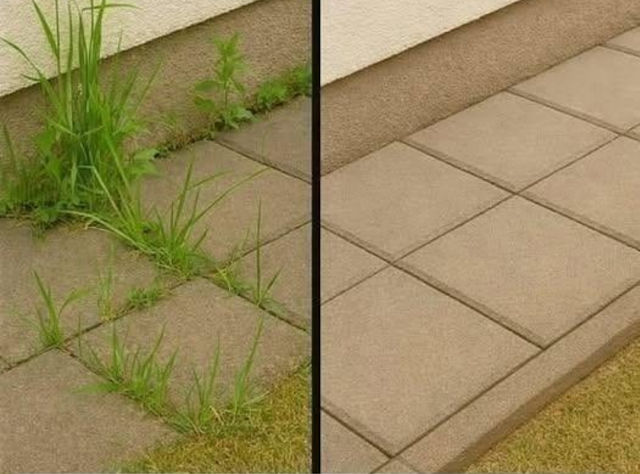
Every gardener knows the frustration of watching unwanted weeds appear almost overnight. One week your driveway looks clean and tidy, and the next it’s dotted with stubborn green shoots pushing through cracks in the concrete. Patios, sidewalks, gravel paths, and fence lines can quickly become overrun, making even a well-maintained yard look neglected.
For many homeowners, the first instinct is to purchase a commercial weed killer. Garden centers are filled with products promising fast, long-lasting results, and many work exactly as advertised. However, some people prefer to reduce their use of synthetic chemicals around children, pets, vegetable gardens, or pollinator-friendly landscapes. Others simply want a less expensive option using ingredients they already have at home.
One of the most popular homemade weed-killing recipes combines white vinegar, salt, and liquid dish soap. This mixture has been shared for years among gardeners because it can effectively kill many young weeds growing in cracks, sidewalks, gravel, and other areas where no vegetation is desired.
Before mixing your first batch, though, it’s important to understand how this solution works, where it should—and should not—be used, and what its limitations are.
Why Weeds Keep Coming Back
Weeds are incredibly resilient.
Unlike many cultivated plants, weeds have evolved to survive difficult conditions.
Many species produce:
- Thousands of seeds each year.
- Deep root systems.
- Fast-growing stems.
- Seeds capable of remaining dormant for years.
Some weeds spread through underground roots called rhizomes, while others regenerate from tiny fragments left behind after pulling.
That’s why removing the visible leaves doesn’t always solve the problem.
Why Many People Look for Homemade Weed Killers
Commercial herbicides certainly have their place.
Professional landscapers, farmers, and gardeners often rely on them to control invasive weeds efficiently.
However, some homeowners choose homemade alternatives for reasons such as:
- Lower cost
- Readily available ingredients
- Avoiding synthetic herbicides
- Small treatment areas
- Occasional weed control
For weeds growing between paving stones or driveway cracks, homemade sprays can sometimes provide satisfactory results.
Understanding How This DIY Herbicide Works
Many people assume the mixture somehow poisons weeds.
Actually, each ingredient performs a different job.
White Vinegar
The active ingredient in vinegar is acetic acid.
Household vinegar usually contains around 5% acetic acid.
When sprayed directly onto plant leaves, vinegar damages plant tissues by removing moisture from exposed surfaces.
Young weeds usually respond much faster than mature plants with extensive root systems.
Salt
Salt increases the drying effect.
It interferes with the plant’s ability to absorb water.
However, salt also remains in the soil.
This is important because excessive salt can prevent future plants from growing in treated areas.
For this reason, salt should be used carefully.
Dish Soap
Dish soap doesn’t kill weeds by itself.
Instead, it works as a surfactant.
Normally, water forms droplets that roll off waxy leaves.
Dish soap reduces surface tension.
This allows the vinegar solution to spread evenly across the leaf surface, increasing contact with the plant.
Homemade Weed Killer Recipe
One commonly used recipe includes:
- 2 cups white vinegar (5% acidity or higher)
- ½ cup table salt
- 1 tablespoon liquid dish soap
Mix thoroughly until the salt dissolves as much as possible.
Transfer to a spray bottle or garden sprayer.
Shake before each use.
Step-by-Step Instructions
Step 1
Pour the vinegar into a large container.
Step 2
Add the salt.
Stir until mostly dissolved.
Step 3
Mix in the dish soap gently.
Avoid creating excessive foam.
Step 4
Pour the finished mixture into a clean spray bottle.
Label the container clearly.
Never store homemade sprays in food containers.
How to Apply It Correctly
Application is just as important as the recipe itself.
For best results:
- Spray on a warm, sunny day.
- Apply when no rain is expected for at least 24 hours.
- Treat weeds during the hottest part of the afternoon if possible.
- Spray leaves thoroughly without excessive runoff.
The vinegar works best while sunlight accelerates dehydration.
Where This Herbicide Works Best
This mixture is most appropriate for places where you don’t want any plants growing.
Examples include:
- Driveway cracks
- Sidewalk edges
- Gravel paths
- Stone patios
- Brick walkways
- Fence lines
- Around mailboxes
- Along curbs
These locations usually don’t require healthy soil afterward.
Where You Should Never Use It
This is one of the most important parts of the article.
Avoid spraying this mixture on:
- Vegetable gardens
- Flower beds
- Lawns
- Around tree roots
- Near shrubs
- Newly planted areas
The vinegar doesn’t distinguish between weeds and desirable plants.
Anything sprayed directly may be injured.
Salt can also remain in the soil long after the weeds disappear.
Does It Kill the Roots?
Not always.
This homemade herbicide mainly damages leaves and stems.
Annual weeds often die completely.
Perennial weeds with deep underground roots may regrow.
Examples include:
- Dandelions
- Bindweed
- Canada thistle
- Bermuda grass
These weeds often require repeated treatments or physical removal.
Weeds That Respond Well
This spray often works best on:
- Chickweed
- Crabgrass seedlings
- Spurge
- Young clover
- Moss growing in cracks
- Newly sprouted weeds
Young plants are generally easier to control than mature ones.
Weather Makes a Big Difference
Temperature plays an important role.
Warm sunshine speeds dehydration.
Avoid spraying when:
- Rain is expected.
- Wind is strong.
- Temperatures are very cool.
- Leaves are already wet.
Rain may wash away much of the solution before it has time to work.
How Quickly Does It Work?
Results vary.
Many people notice:
Within 24 hours:
- Wilting leaves
- Browning edges
- Loss of firmness
Within several days:
- Complete drying of foliage
Deep-rooted weeds may recover if roots survive.
Is Homemade Always Better?
Not necessarily.
Homemade herbicides have advantages.
They also have limitations.
Advantages
- Inexpensive
- Simple ingredients
- Easy to prepare
- Useful for small areas
- No specialized equipment required
Limitations
- Less effective on perennial weeds
- Usually requires repeat applications
- Doesn’t always kill roots
- Salt may damage soil
- Can harm desirable plants
Understanding these limitations helps set realistic expectations.
Alternatives That Don’t Use Salt
Because salt may remain in the soil, some gardeners prefer alternatives.
These include:
Boiling Water
Excellent for weeds growing between paving stones.
Hand Pulling
Most effective after rainfall when soil is soft.
Mulching
A thick mulch layer blocks sunlight and prevents many weed seeds from germinating.
Landscape Fabric
Useful beneath gravel paths and decorative stone.
Flame Weeders
Some gardeners use propane weed torches on driveways and gravel areas.
These should only be used where fire hazards are minimal and local regulations allow.
Tips for Preventing Future Weeds
Prevention usually requires less work than repeated spraying.
Helpful practices include:
- Pull weeds before they produce seeds.
- Sweep soil from pavement cracks.
- Repair damaged pavement.
- Add mulch to garden beds.
- Improve drainage.
- Mow lawns regularly.
- Remove weeds while they’re young.
Small efforts throughout the season reduce larger problems later.
Frequently Asked Questions
Is vinegar stronger than commercial herbicides?
No.
Commercial herbicides are designed to move throughout the plant and often kill roots.
Household vinegar primarily damages above-ground growth.
Can I use cleaning vinegar?
Cleaning vinegar contains higher concentrations of acetic acid and can be more irritating to skin and eyes.
If using stronger vinegar products, wear gloves and eye protection, and follow the manufacturer’s safety instructions.
Will rain reduce effectiveness?
Yes.
Rain soon after application may wash away much of the solution.
Can I spray around vegetables?
It’s best to avoid spraying near desirable plants because the solution doesn’t distinguish between weeds and crops.
Is the mixture safe for pets?
Allow treated areas to dry completely before allowing pets back into the area. Even though the ingredients are common household products, vinegar and salt can irritate paws, eyes, or skin if contacted while wet.
How often should I reapply?
Persistent weeds may require several applications spaced over one to two weeks.
Common Weed Mistakes That Make the Problem Worse
One of the biggest reasons weeds seem impossible to control isn’t because they’re unusually tough—it’s because many of us unknowingly give them the perfect conditions to thrive. A few small changes in your gardening routine can make a noticeable difference over time.
Spraying at the Wrong Time
Many homeowners spray weeds early in the morning or late in the evening because the weather is cooler. However, homemade vinegar-based herbicides work best when the sun is strong. Heat speeds up the drying effect of the vinegar, helping it damage the leaves more quickly.
For the best results:
- Choose a warm, sunny afternoon.
- Avoid windy conditions that may carry the spray onto nearby plants.
- Make sure no rain is expected for at least 24 hours.
Patience also matters. Some weeds begin wilting within hours, while others may take several days before showing significant damage.
Understanding Annual vs. Perennial Weeds
Not all weeds behave the same way, which is why one treatment may eliminate some while barely affecting others.
Annual Weeds
Annual weeds complete their entire life cycle in one growing season. They germinate, grow, produce seeds, and die within a single year.
Examples include:
- Chickweed
- Crabgrass
- Pigweed
- Purslane
- Common spurge
Because annual weeds depend entirely on their leaves to survive, vinegar-based sprays often work quite well when applied while the plants are young.
Perennial Weeds
Perennial weeds are much more persistent.
Their underground roots survive from year to year, even if the leaves die back.
Common perennial weeds include:
- Dandelions
- Bindweed
- Canada thistle
- Bermuda grass
- Plantain
When you spray these weeds, the visible growth may disappear, but the underground root system often survives and sends up new shoots a few weeks later.
Repeated treatment or physical removal is usually necessary.
Why Weeds Love Cracks in Concrete
It seems strange that weeds can thrive in the smallest cracks in sidewalks and driveways.
The explanation is surprisingly simple.
Dust, fallen leaves, grass clippings, and windblown soil gradually collect inside tiny cracks.
Over time this material breaks down into organic matter.
Add a little moisture from rain, and you’ve created a miniature flowerpot.
Seeds carried by wind or birds settle into these cracks, germinate, and begin growing.
Regularly sweeping patios and driveways removes much of this accumulated debris before weeds have a chance to establish themselves.
The Importance of Prevention
Experienced gardeners often say the easiest weed to remove is the one that never sprouts.
Preventing weeds from becoming established usually requires far less effort than removing mature plants.
Simple preventative measures include:
- Applying mulch around shrubs and flowers.
- Filling cracks in sidewalks before weeds appear.
- Pulling weeds while they’re still seedlings.
- Keeping lawn grass healthy and dense.
- Removing seed heads before they mature.
Even spending ten minutes each week pulling young weeds can dramatically reduce weed problems later in the season.
Does More Vinegar Mean Better Results?
Some gardeners assume that adding extra vinegar will automatically make the herbicide stronger.
Unfortunately, it doesn’t work quite that way.
Using extremely concentrated vinegar can:
- Increase the risk of skin irritation.
- Damage nearby desirable plants more easily.
- Burn exposed skin and eyes if handled improperly.
Household vinegar (about 5% acidity) is generally sufficient for many common household weed-control applications.
Higher-strength horticultural vinegars should always be handled carefully with protective gloves and eye protection because they are considerably more corrosive than kitchen vinegar.
Can Homemade Herbicides Replace Commercial Products?
The answer depends on the situation.
For small areas such as:
- Walkways
- Driveway cracks
- Patio joints
- Gravel paths
A homemade herbicide may work quite well.
However, for:
- Large infestations
- Deep-rooted invasive weeds
- Agricultural fields
- Large landscapes
Commercial weed-control methods or integrated weed management strategies are often more practical.
Many gardeners successfully combine several techniques instead of relying on one solution alone.
Keeping Children and Pets Safe
Although homemade weed killers avoid many synthetic chemicals, they should still be handled responsibly.
After spraying:
- Allow treated areas to dry completely.
- Store leftover solution out of reach of children.
- Clearly label spray bottles.
- Never transfer the mixture into drink containers.
- Wash hands after handling.
Pets are naturally curious and may investigate freshly sprayed surfaces, so giving the solution time to dry is a simple precaution.
Frequently Asked Questions
Will this homemade herbicide prevent weeds from coming back?
Not permanently. New weed seeds can still germinate later, especially after rain. Periodic maintenance is usually necessary.
Can I spray this mixture on moss?
Yes. Vinegar-based sprays often damage moss growing between paving stones or bricks, although repeated treatments may be needed.
Is it safe for vegetable gardens?
No. Because the spray damages any green plant tissue it contacts, it should never be applied directly to vegetables, herbs, or ornamental flowers.
Why didn’t my weeds die after one application?
Several factors affect results, including the type of weed, weather conditions, plant maturity, and root depth. Perennial weeds often require repeated treatments.
Should I pull the weeds after spraying?
Yes. Once the plants have dried out completely, removing the dead material helps keep the area tidy and makes it easier to spot any new growth.
Final Thoughts
A homemade herbicide made from vinegar, salt, and dish soap can be an effective option for controlling weeds in driveways, sidewalks, gravel paths, and other hardscape areas where no vegetation is desired. It’s inexpensive, easy to prepare, and relies on ingredients that many households already have on hand. When used correctly, it can quickly damage the leaves of young weeds and improve the appearance of outdoor spaces without the need for more complex products.
However, it’s important to remember that “natural” does not always mean harmless. Vinegar can injure any plant it touches, and salt may remain in the soil long after the weeds have disappeared, making it difficult for other plants to grow. For that reason, this mixture should be used carefully and only in appropriate locations, never in lawns, vegetable gardens, or flower beds.
The most successful weed management strategy often combines several methods: removing weeds while they’re young, preventing seeds from spreading, improving landscaping practices, and using targeted treatments only where necessary. By understanding both the strengths and limitations of homemade herbicides, you can choose the approach that best fits your garden while protecting the plants you want to keep.