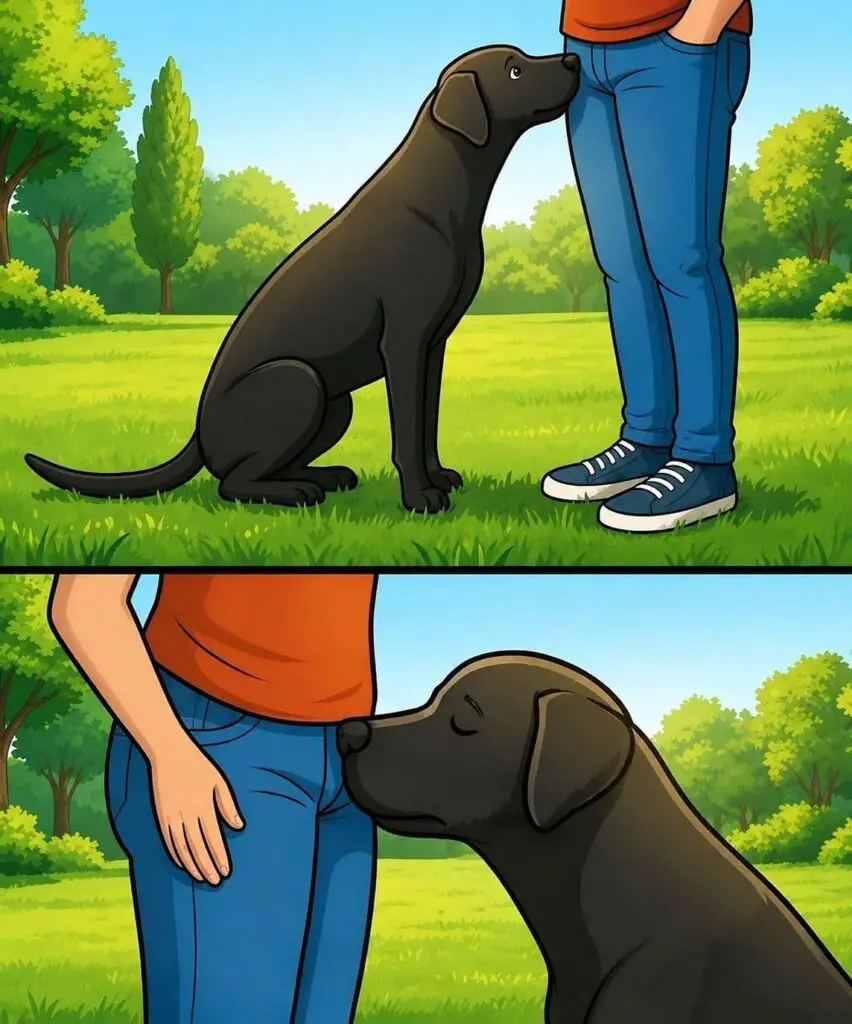
Dogs understand the world through scent first. When your dog sniffs a guest, a shoe, another pet, or even an awkward personal area, they are not trying to embarrass you. They are gathering information.
A dog’s nose can detect details humans completely miss, including emotional changes, unfamiliar scents, other animals, food traces, and environmental clues. To your dog, sniffing is communication, curiosity, and comfort all at once.
Why Dogs Sniff So Much
Dogs have an extraordinary sense of smell. Their noses contain millions more scent receptors than human noses, and their brains devote much more space to analyzing odors.
When your dog sniffs, they may learn:
- Who has been nearby
- Where someone has been
- Whether another animal was present
- Whether a person feels stressed or calm
- What food or objects someone touched
- Whether a place feels familiar or safe
For dogs, scent is like a detailed story. A quick sniff can tell them more than a long look ever could.
Why Dogs Sniff People
When dogs meet humans, they often sniff hands, shoes, legs, clothing, or private areas. Although this can feel uncomfortable, it is natural canine behavior.
Certain parts of the human body produce stronger scent signals. Dogs are drawn to those areas because they contain chemical information. Your dog is not being rude. They are simply using the strongest tool they have to understand the person in front of them.
In dog language, sniffing often means:
“Who are you?”
“Are you safe?”
“Have we met before?”
“Where have you been?”
“How do you feel?”
Sniffing Is a Dog’s Greeting Ritual
When two dogs meet, sniffing is normal. They often sniff each other’s faces, bodies, and rear ends. This helps them identify one another and decide how to behave.
Because dogs use scent socially, they may try to greet humans the same way. They do not understand human embarrassment unless we teach them polite alternatives.
When Sniffing Becomes Too Much
Sniffing is normal, but it can become a problem if your dog jumps, pushes, mouths, or refuses to back away from guests.
Instead of yelling or punishing, guide the behavior gently.
Try teaching:
- “Sit” when guests arrive
- “Touch” to redirect the nose to your hand
- “Leave it” for overly focused sniffing
- “Go to place” for calm greetings
- Rewarding polite sniffing of hands or shoes
This gives your dog a better way to greet people without removing their natural curiosity.
Why You Should Not Punish Sniffing
Punishing a dog for sniffing can confuse them. To the dog, sniffing is not bad behavior. It is how they learn.
Harsh correction may cause:
- Anxiety around guests
- Fearful greetings
- More excitement
- Confusion
- Avoidance or stress
Instead, use calm redirection and rewards. You are not trying to stop your dog from being a dog. You are teaching them how to live politely in a human world.
How to Help Guests Feel Comfortable
Before guests arrive, prepare your dog.
You can:
- Keep your dog on a leash at first
- Ask guests to offer a hand calmly
- Reward your dog for sitting
- Allow a brief sniff, then redirect
- Give your dog a chew or toy afterward
This keeps greetings relaxed and respectful for everyone.
What Different Sniffing Behaviors May Mean
If your dog sniffs the floor, they may be tracking recent movement.
If your dog sniffs your clothes, they may be reading where you went.
If your dog sniffs another dog, they are gathering social information.
If your dog sniffs the air, they may detect food, animals, weather changes, or unfamiliar people nearby.
If your dog sniffs you more than usual, they may notice a change in your scent caused by sweat, stress, illness, hormones, or new products.
When to Pay Attention
Most sniffing is harmless. However, sudden changes in sniffing behavior may be worth noticing.
Contact a veterinarian if your dog:
- Sniffs obsessively and cannot relax
- Suddenly starts smelling one body part repeatedly
- Shows anxiety, pacing, or whining
- Loses interest in smelling things
- Has nasal discharge, sneezing, or breathing issues
Dogs sometimes notice changes before humans do, but sniffing alone does not diagnose anything.
Final Thoughts
Dog sniffing is not misbehavior. It is communication.
Your dog’s nose is their guide, their greeting, their security system, and their way of understanding the world. While humans rely on words and facial expressions, dogs rely on scent.
The goal is not to shame them for sniffing. The goal is to guide them kindly.
With patience, training, and understanding, you can help your dog greet people politely while still honoring their natural instincts.
Because when your dog sniffs, they are not trying to be awkward.
They are trying to understand.
And in their own quiet, nose-first way, they are trying to connect.