
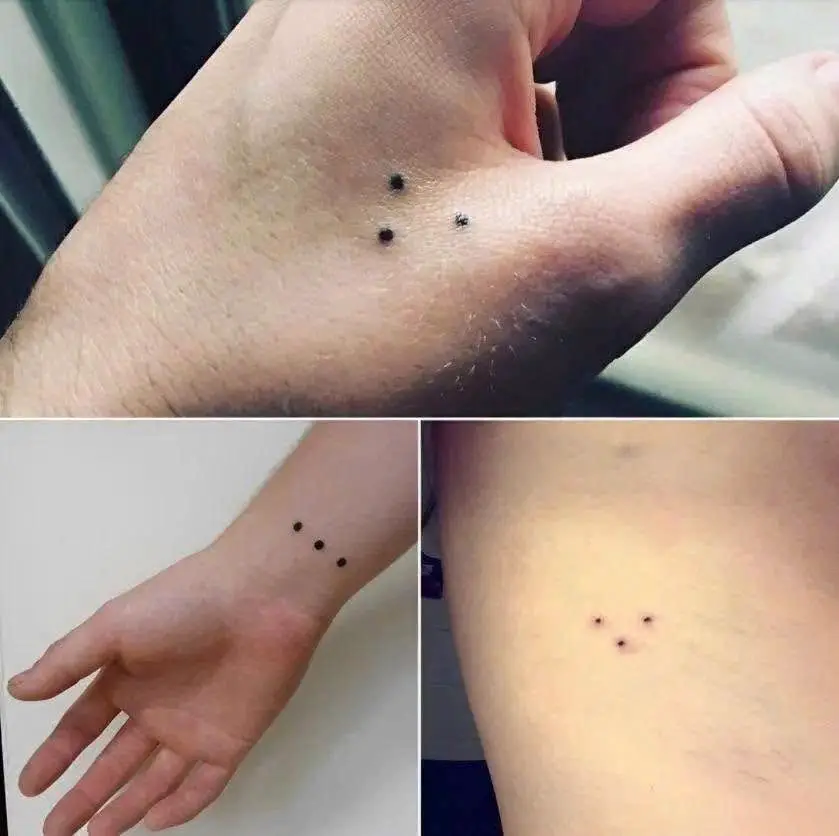
The internet loves a frightening headline.
Every week, a new viral post appears claiming that a certain symbol, gesture, or tattoo is a secret warning sign of danger. One of the most common examples is the three-dot tattoo, often accompanied by dramatic claims such as:
“If you see someone with a three-point tattoo, run as far as you can.”
The message is designed to provoke an immediate emotional reaction. It encourages fear, suspicion, and quick judgment based on appearance alone.
But is there any truth behind these warnings?
The answer is far more complicated—and far less frightening—than social media would have you believe.
In reality, the three-dot tattoo is one of the most widely recognized tattoo designs in the world. While it has historical connections to certain groups and subcultures, its meaning varies enormously depending on who wears it, where they come from, and why they chose it.
Understanding the history and symbolism behind this simple design reveals an important lesson: appearances rarely tell the whole story.
What Is a Three-Dot Tattoo?
A three-dot tattoo typically consists of three small dots arranged either:
- In a triangular formation
- In a straight line
- Around another symbol or design
Because of its simplicity, it has become popular across multiple cultures, countries, and generations.
Some people choose it because it is discreet and minimalist.
Others choose it because it represents an important personal philosophy.
For some, it serves as a reminder of a difficult chapter in life they have overcome.
The meaning depends entirely on the individual.
The Most Common Meaning: “Mi Vida Loca”
One of the best-known interpretations of the three-dot tattoo comes from the Spanish phrase:
“Mi Vida Loca”
Which translates to:
“My Crazy Life”
This phrase has been associated with people who have experienced challenging, unpredictable, or turbulent circumstances.
The tattoo is not necessarily a threat.
Instead, it often symbolizes:
- Survival
- Resilience
- Personal struggle
- Overcoming hardship
- Living through difficult experiences
For many people, the tattoo represents a reminder of where they have been and how far they have come.
Rather than glorifying danger, it often reflects endurance.
A Symbol of Mind, Body, and Spirit
Many people view the three dots as a spiritual symbol.
In this interpretation, each dot represents one aspect of human existence:
- Mind
- Body
- Spirit
Together, the three elements create balance and harmony.
Individuals who choose this meaning often use the tattoo as a reminder to care for themselves holistically.
The design reflects the belief that true well-being comes from maintaining balance in all areas of life.
This interpretation has become increasingly common among those interested in mindfulness, meditation, and personal growth.
Past, Present, and Future
Another popular interpretation connects the three dots to the concept of time.
The dots represent:
- The past
- The present
- The future
People who choose this meaning often see the tattoo as a reminder to:
Learn from the past.
Live in the present.
Prepare for the future.
The design serves as a simple but powerful statement about personal growth and life’s journey.
Religious Meaning: The Holy Trinity
Within Christianity, three dots arranged in a triangle can symbolize the Holy Trinity:
- God the Father
- God the Son
- God the Holy Spirit
For believers, the tattoo serves as an expression of faith and devotion.
The triangular arrangement emphasizes the unity of these three divine aspects.
This interpretation is especially common among Christians who prefer subtle religious tattoos rather than larger or more visible designs.
Where Did the Fear Come From?
If the tattoo has so many positive meanings, why do so many people associate it with danger?
The answer lies in its historical use within certain prison systems and criminal organizations.
In some regions, three-dot tattoos were adopted by inmates or gang members as symbols connected to their experiences.
However, context is critical.
Not every person with a three-dot tattoo has any connection to criminal activity.
In fact, the vast majority do not.
Over time, the design spread far beyond its original associations and became a mainstream tattoo embraced by people from all walks of life.
Today, it is impossible to determine someone’s background based solely on this tattoo.
Why Judging People by Tattoos Is Problematic
Tattoos are forms of personal expression.
Assuming someone is dangerous because of a small tattoo creates several problems.
It Encourages Stereotypes
Stereotypes simplify complex human beings into single characteristics.
A tattoo tells only a tiny fraction of a person’s story.
It Ignores Context
The same symbol can carry completely different meanings depending on:
- Culture
- Religion
- Geography
- Personal experience
- Family traditions
Without context, assumptions are often inaccurate.
It Promotes Fear
Fear-based headlines thrive online because they attract clicks and shares.
Unfortunately, they also encourage unnecessary suspicion toward strangers.
The world becomes a more divided place when people are taught to fear one another based solely on appearance.
The Rise of Viral Fear-Mongering
The three-dot tattoo is just one example of a larger trend.
Social media platforms reward content that triggers strong emotional reactions.
Fear spreads quickly because people naturally pay attention to potential threats.
As a result, sensational headlines often outperform accurate information.
Common examples include:
- “This tattoo means you’re in danger.”
- “Never trust someone who wears this symbol.”
- “If you see this sign, run immediately.”
- “Only criminals use this design.”
Most of these claims oversimplify reality.
The truth is usually much more nuanced.
What Experts Say About Tattoo Meanings
Tattoo historians, sociologists, and cultural researchers consistently emphasize the same point:
Symbols evolve.
A design that once held a specific meaning may later acquire entirely different interpretations.
For example:
- Anchors once primarily represented sailors.
- Roses have represented love, loss, beauty, and remembrance.
- Skulls can symbolize mortality, courage, protection, or artistic expression.
The three-dot tattoo is no different.
Its meaning changes according to the individual who wears it.
Should You Be Concerned?
Simply seeing someone with a three-dot tattoo is not a reason for concern.
Like any tattoo, it is merely a symbol.
A person’s behavior, actions, and character provide far more meaningful information than a small piece of body art.
Most people with three-dot tattoos are:
- Ordinary individuals
- Parents
- Students
- Artists
- Workers
- Veterans
- Professionals
- Community members
They chose the design because it held personal significance, not because they wanted to intimidate others.
The Bigger Lesson
The viral warning about running away from people with three-dot tattoos reveals something important about modern internet culture.
Fear is easy.
Understanding requires effort.
It is much easier to believe a dramatic headline than to investigate the history behind a symbol.
But when we take the time to learn, we often discover that reality is far more human and far less frightening than we imagined.
The next time you see someone with a three-dot tattoo, remember that the design may represent faith, resilience, balance, personal growth, survival, or countless other deeply personal meanings.
Rather than assuming the worst, consider the possibility that the story behind those three small dots is far richer—and far more inspiring—than any viral headline could ever capture.
Final Thoughts
The claim that you should “run as far as you can” from anyone with a three-dot tattoo is largely a product of internet sensationalism.
While the symbol has historical connections to certain groups in specific contexts, it has evolved into a widely used design with many different meanings.
For some, it represents “Mi Vida Loca.”
For others, it symbolizes mind, body, and spirit.
Some view it as a religious emblem, while others see it as a reminder of life’s journey through the past, present, and future.
Ultimately, tattoos are personal expressions, not automatic indicators of character.
The next time you encounter a sensational headline encouraging you to fear someone because of a tattoo, pause before accepting the claim.
People are far more complex than the symbols they wear.
And most of the time, those three small dots tell a story of identity, experience, and meaning—not danger.