
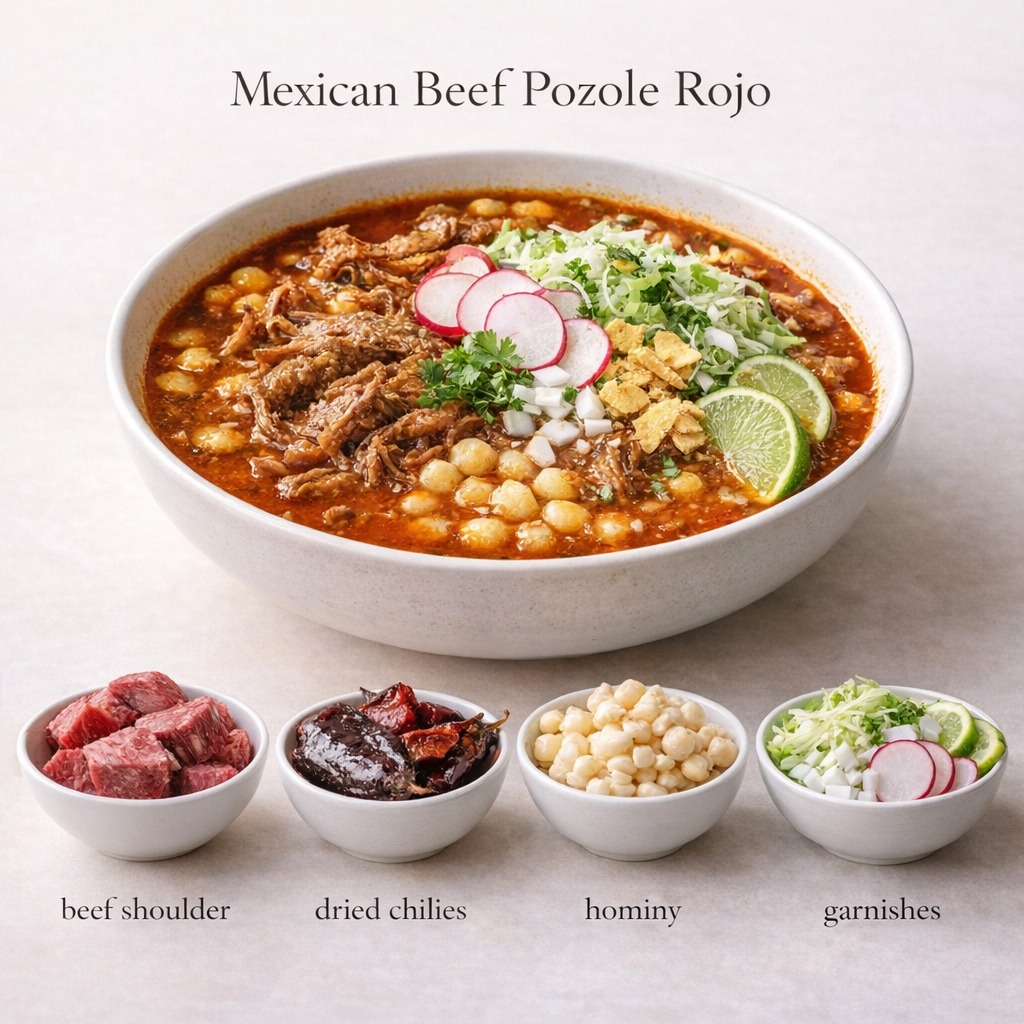
Mexican Beef Pozole Rojo is a rich, comforting soup filled with tender beef, hominy, and a deeply flavored red chile broth. This traditional dish brings together simple ingredients and bold flavors to create a meal that feels both festive and comforting. Whether you prepare it for a family dinner, a special gathering, or a cozy weekend meal, Mexican Beef Pozole Rojo always delivers satisfying results.
There is something special about a simmering pot of pozole filling the kitchen with warm aromas. The combination of slow-cooked beef, earthy chiles, and chewy hominy creates a hearty bowl that feels like pure comfort. While many versions use pork, this beef variation offers a rich and robust flavor that many home cooks love.
A few years ago, I attended a family gathering where a large pot of pozole sat in the center of the table. Everyone customized their bowls with shredded cabbage, sliced radishes, fresh lime, and crunchy tortilla strips. The meal quickly became the highlight of the evening. Since then, Mexican Beef Pozole Rojo has become a favorite recipe whenever I want something warm, filling, and perfect for sharing. Every bowl reminds me that great food often comes from simple ingredients cooked with patience and care.
Ingredients
Equipment
Method
- Place beef, water, onion, garlic, and salt in a large pot. Bring to a boil and reduce to a simmer.
- Cook for 2 to 3 hours until the beef becomes fork-tender.
- Soak dried chiles in hot water for 20 minutes.
- Blend softened chiles with garlic, onion, and soaking liquid until smooth.
- Shred the beef and return it to the broth.
- Add chile sauce, oregano, cumin, pepper, and hominy.
- Simmer for 30 to 45 minutes until flavors combine.
- Serve hot with desired garnishes.
Notes
What Makes Mexican Beef Pozole Rojo So Special?
The Rich Tradition Behind Pozole
Pozole has been enjoyed in Mexico for generations. Traditionally, it features hominy, which is dried corn treated through a process called nixtamalization. This gives the corn its distinctive texture and flavor.
Mexican Beef Pozole Rojo stands out because of its beautiful red broth. Dried red chiles provide both color and depth, creating a soup that is savory, slightly smoky, and incredibly satisfying. Although recipes vary by region and family tradition, the essential elements remain the same: meat, hominy, broth, and fresh garnishes.
Because the ingredients are affordable and easy to find, this dish remains a popular choice for large family meals. Furthermore, it tastes even better the next day, making it ideal for meal preparation.
Why Beef Works So Well
While pork is common in many pozole recipes, beef brings a unique richness. Beef shoulder or beef chuck becomes tender during slow cooking and absorbs the flavors of the broth beautifully.
As the meat cooks, it releases natural juices that enrich the soup. Meanwhile, the long simmer allows the flavors to blend together perfectly. The result is a hearty bowl with deep flavor and excellent texture.
In addition, beef offers a satisfying bite that pairs wonderfully with the soft hominy. Therefore, many home cooks choose beef when they want an especially robust version of this classic dish.
Ingredients and Flavor Components
Essential Ingredients
Mexican Beef Pozole Rojo relies on a handful of key ingredients that work together harmoniously.
The primary ingredients include:
- Beef shoulder or beef chuck
- Water or beef broth
- Onion
- Garlic
- Hominy
- Dried guajillo chiles
- Dried ancho chiles
- Oregano
- Cumin
- Salt
- Black pepper
Each ingredient serves a specific purpose. The beef provides richness, while the chiles contribute color and flavor. Meanwhile, onion and garlic create a strong aromatic base.
Hominy deserves special attention because it gives pozole its signature texture. Unlike regular corn, hominy becomes tender and slightly chewy, making it the perfect addition to soups and stews.
Traditional Garnishes
Garnishes transform Mexican Beef Pozole Rojo from a simple soup into an interactive dining experience.
Popular toppings include:
- Shredded cabbage
- Sliced radishes
- Diced onions
- Fresh cilantro
- Lime wedges
- Tortilla strips
- Avocado slices
These fresh additions balance the richness of the broth. For example, lime juice adds brightness, while cabbage contributes crunch. As a result, every bite feels fresh and flavorful.
Because everyone can customize their bowl, pozole becomes a fun meal for gatherings and celebrations.
How to Prepare Mexican Beef Pozole Rojo
Making the Beef and Broth
Start by placing the beef chunks into a large stockpot. Add water, onion, garlic, and salt. Bring everything to a boil before reducing the heat to a gentle simmer.
As the beef cooks, skim away any foam that rises to the surface. This simple step helps create a cleaner and more flavorful broth.
Allow the beef to simmer for approximately two to three hours. During this time, the meat becomes tender enough to shred easily with a fork.
Once cooked, remove the beef and shred it into bite-sized pieces. Return the meat to the pot so it can continue absorbing flavor.
Creating the Red Chile Sauce
The chile sauce is what gives Mexican Beef Pozole Rojo its distinctive character.
Remove stems and seeds from dried guajillo and ancho chiles. Place the chiles in hot water and allow them to soften for about twenty minutes.
Next, blend the softened chiles with garlic, onion, and a small amount of soaking liquid until smooth.
Strain the mixture if desired. Then add it to the simmering broth.
At this stage, stir in oregano, cumin, and black pepper. The broth immediately develops its beautiful red color while the flavors begin to deepen.
Finally, add the hominy and continue simmering for another thirty to forty-five minutes.
Tips for the Best Mexican Beef Pozole Rojo
Common Mistakes to Avoid
Several small details can make a significant difference in the final dish.
First, avoid rushing the cooking process. Beef requires time to become tender. If the cooking time is shortened, the meat may remain tough.
Second, do not skip the chile soaking step. Properly softened chiles blend more smoothly and create a richer broth.
Third, taste frequently during the final simmer. Adjusting salt gradually allows you to achieve balanced flavor without over-seasoning.
Additionally, use quality dried chiles. Fresh, flexible chiles provide better flavor than older ones that have become brittle and dry.
Storage and Reheating
Mexican Beef Pozole Rojo stores exceptionally well.
Allow the soup to cool completely before transferring it to airtight containers. Refrigerate for up to four days.
For longer storage, freeze individual portions for up to three months. This makes it easy to enjoy homemade pozole whenever a craving strikes.
When reheating, warm the soup slowly over medium heat. Add a splash of water or broth if needed to maintain the desired consistency.
Interestingly, many people believe the flavor improves after a day in the refrigerator because the ingredients have more time to meld together.
Frequently Asked Questions
1. What is the difference between pozole rojo and pozole verde?
Pozole rojo uses red chiles for its broth, while pozole verde uses green ingredients such as tomatillos, green chiles, and herbs.
2. Can I make Mexican Beef Pozole Rojo in a slow cooker?
Yes. Cook the beef on low for 8–10 hours or until tender, then add the chile sauce and hominy during the final hour.
3. What cut of beef works best?
Beef shoulder, chuck roast, or beef shank work particularly well because they become tender during long cooking.
4. Can I use canned hominy?
Absolutely. Canned hominy is convenient and commonly used in home kitchens.
5. Is Mexican Beef Pozole Rojo spicy?
The spice level depends on the chiles used. Guajillo and ancho chiles typically create a mild to medium heat level.
Conclusion
Mexican Beef Pozole Rojo is a timeless comfort food that combines tender beef, hearty hominy, and a flavorful red chile broth. Its rich taste, customizable garnishes, and satisfying texture make it perfect for family dinners, celebrations, and meal prep alike. Although the recipe requires patience, the results are well worth the effort. Once you serve a steaming bowl topped with fresh cabbage, radishes, and lime, it quickly becomes clear why this dish remains a beloved favorite across generations.