
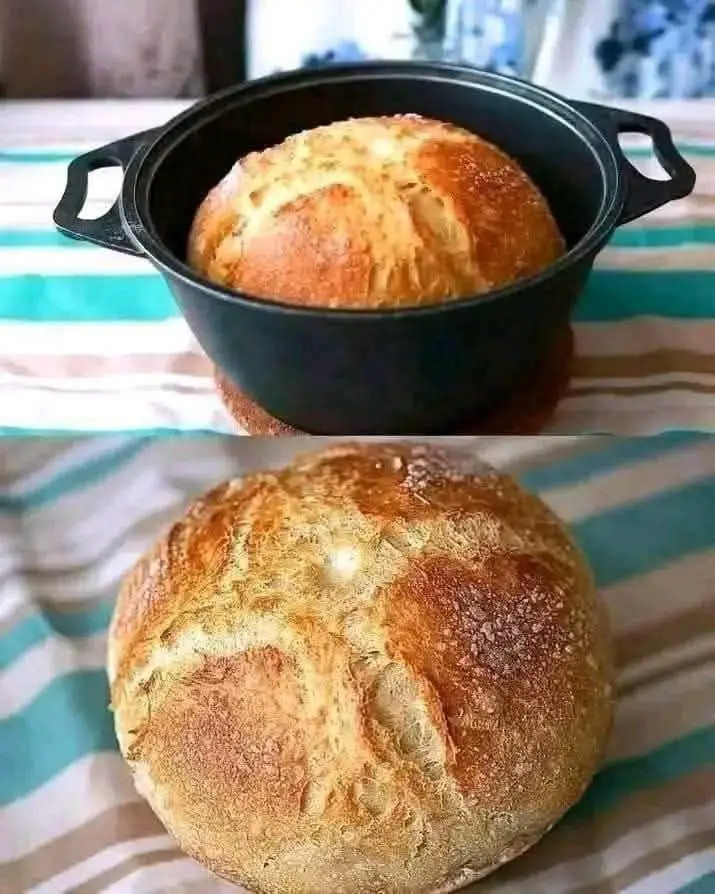
Rustic Homemade Dutch Oven Bread is one of the most satisfying breads you can bake at home. With its golden crust, chewy interior, and artisan-style appearance, this bread delivers bakery-quality results using simple ingredients and minimal effort. Baking bread in a cast-iron Dutch oven creates the perfect environment for steam, which helps develop the crisp crust and soft center that make homemade artisan bread so irresistible.
Many home bakers love this method because it removes much of the intimidation from bread baking. Even beginners can create a beautiful loaf with a crackling crust and airy texture using only flour, water, yeast, and salt. The Dutch oven traps moisture during baking, helping the dough rise beautifully while producing the signature rustic appearance often found in artisan bakeries.
The first time I baked Rustic Homemade Dutch Oven Bread, I was surprised by how simple the process actually felt. I had always assumed artisan bread required advanced skills or expensive equipment. However, once the dough started baking and the smell filled the kitchen, it instantly felt comforting and rewarding. Pulling the golden loaf from the hot Dutch oven and hearing the crust crackle while cooling made the experience unforgettable. Since then, homemade bread baking has become one of my favorite weekend traditions.
Ingredients
Equipment
Method
- Combine flour, yeast, and salt in a large bowl.
- Add warm water and stir until a shaggy dough forms.
- Cover the bowl and let the dough rest for 8 to 12 hours.
- Shape the dough gently into a round loaf.
- Preheat the oven and Dutch oven to 450 degrees Fahrenheit.
- Transfer the dough into the hot Dutch oven, cover, and bake for 30 minutes.
- Remove the lid and bake for another 10 to 15 minutes until golden brown.
- Cool the bread completely before slicing and serving.
Notes
Why Rustic Homemade Dutch Oven Bread Is So Popular
Crisp Crust and Soft Interior
One of the main reasons Rustic Homemade Dutch Oven Bread has become so popular is the incredible texture. The cast-iron Dutch oven creates trapped steam during baking, which allows the bread to rise fully before the crust hardens.
This process creates the signature artisan-style crust that feels crisp and golden while keeping the inside soft and chewy. The contrast between the crunchy exterior and airy interior makes every slice satisfying.
Unlike many store-bought breads, homemade Dutch oven bread also tastes fresher and more flavorful. Slow fermentation and simple ingredients allow the natural flavor of the flour to develop fully.
Additionally, the rustic appearance gives the bread a beautiful handcrafted quality that looks impressive without requiring complicated shaping or decorating techniques.
Beginner-Friendly Artisan Bread
Many people feel nervous about baking bread from scratch, but Dutch oven bread simplifies the process significantly. Because the dough usually requires minimal kneading, the recipe feels approachable even for beginners.
No special bread machines or advanced bakery equipment are necessary. A sturdy Dutch oven and a few pantry staples are enough to produce beautiful results.
The long resting time also helps develop gluten naturally, reducing the need for intense kneading. This relaxed process makes homemade artisan bread more accessible for busy schedules and casual bakers.
Additionally, the forgiving dough works well even if the shaping is imperfect. Rustic bread embraces natural texture and uneven beauty, making it less stressful than highly decorative loaves.
Ingredients That Make the Best Rustic Homemade Dutch Oven Bread
Simple Pantry Staples Create Amazing Bread
One of the best things about Rustic Homemade Dutch Oven Bread is how few ingredients it requires. Most recipes use only flour, water, yeast, and salt.
Bread flour creates the chewiest texture because of its higher protein content, although all-purpose flour also works well for softer bread. Warm water activates the yeast and helps the dough rise properly.
Salt enhances flavor and strengthens the dough structure. Instant yeast or active dry yeast both work effectively in this style of bread.
Because the ingredient list remains so simple, quality matters. Fresh flour and yeast help produce better flavor, texture, and rise.
Some bakers also add herbs, garlic, cheese, or seeds for extra flavor variations while still maintaining the rustic artisan style.
Why the Dutch Oven Matters
The Dutch oven plays a critical role in creating bakery-style bread at home. Its heavy cast iron retains heat extremely well while trapping steam released from the dough during baking.
Steam helps keep the crust soft during the early baking stage, allowing the bread to expand fully before developing its crusty exterior.
Without steam, bread crust can harden too quickly and limit proper rise. The enclosed Dutch oven solves this issue naturally without requiring professional steam ovens.
Preheating the Dutch oven before baking also helps create immediate oven spring, which gives the loaf its impressive height and airy structure.
How to Make Rustic Homemade Dutch Oven Bread
Mixing and Resting the Dough
Begin by combining flour, salt, yeast, and warm water in a large bowl. Stir until a shaggy dough forms and no dry flour remains.
Unlike traditional bread recipes, this dough usually requires very little kneading. Instead, time and hydration allow gluten to develop naturally.
Cover the bowl and let the dough rest for several hours or overnight. During this time, the dough becomes airy, soft, and full of flavor.
The long resting process also creates the irregular air pockets that give artisan bread its rustic texture. Patience during fermentation greatly improves the final loaf.
Once risen, gently shape the dough into a round loaf while trying not to remove too much air.
Baking the Bread in a Dutch Oven
Place the Dutch oven in the oven while preheating so it becomes extremely hot before baking.
Carefully transfer the dough onto parchment paper and lower it into the hot Dutch oven. Cover immediately with the lid to trap steam.
Bake covered during the first portion of cooking to encourage rise and moisture retention. Then remove the lid for the final baking stage so the crust becomes golden brown and crisp.
The finished bread should sound hollow when tapped on the bottom. Allow the loaf to cool before slicing to help the interior finish setting properly.
Freshly baked Rustic Homemade Dutch Oven Bread tastes incredible warm with butter, olive oil, soups, or sandwiches.
Serving and Storage Tips
Best Ways to Serve Dutch Oven Bread
Rustic Homemade Dutch Oven Bread works beautifully with both simple and hearty meals. Fresh slices pair perfectly with soups, stews, pasta dishes, and salads.
Many people also enjoy serving the bread with olive oil, butter, garlic spreads, or cheese boards. The chewy texture and crusty exterior make it ideal for dipping.
For breakfast, toasted slices taste delicious with jam, avocado, or eggs. The sturdy crumb also makes excellent sandwiches and grilled bread.
Because the loaf looks naturally rustic and beautiful, it also works wonderfully as a centerpiece on dinner tables and holiday gatherings.
How to Store Homemade Bread
Homemade bread tastes best within the first two days after baking. Store the loaf at room temperature wrapped loosely in a clean towel or bread bag.
Avoid refrigerating artisan bread because refrigeration can dry out the texture more quickly.
For longer storage, slice the bread and freeze it in airtight bags. Toast frozen slices directly from the freezer when ready to eat.
If the crust softens slightly after storage, reheating the loaf briefly in the oven helps restore crispness.
Frequently Asked Questions
Do I need a Dutch oven to make artisan bread?
A Dutch oven creates the best crust because it traps steam, although other covered oven-safe pots may also work.
Can I use all-purpose flour?
Yes. Bread flour creates a chewier texture, but all-purpose flour still produces delicious bread.
Why is my bread dense?
Dense bread often results from insufficient rising time or inactive yeast.
How long should the dough rest?
Many recipes recommend resting the dough for at least 8 to 12 hours for the best flavor and texture.
Can I add herbs or cheese?
Absolutely. Herbs, roasted garlic, shredded cheese, and seeds all work beautifully in rustic bread recipes.
Conclusion
Rustic Homemade Dutch Oven Bread proves that bakery-style artisan bread can be made successfully in an ordinary home kitchen. The combination of a crisp golden crust and soft chewy interior creates a comforting loaf that feels both rustic and impressive.
Because the recipe relies on simple ingredients and a forgiving process, even beginner bakers can achieve beautiful results. The Dutch oven method simplifies artisan bread baking while delivering flavor and texture that rival professional bakeries.
Whether served alongside soups, shared at dinner tables, or enjoyed warm with butter, Rustic Homemade Dutch Oven Bread quickly becomes one of the most rewarding homemade recipes to bake again and again.