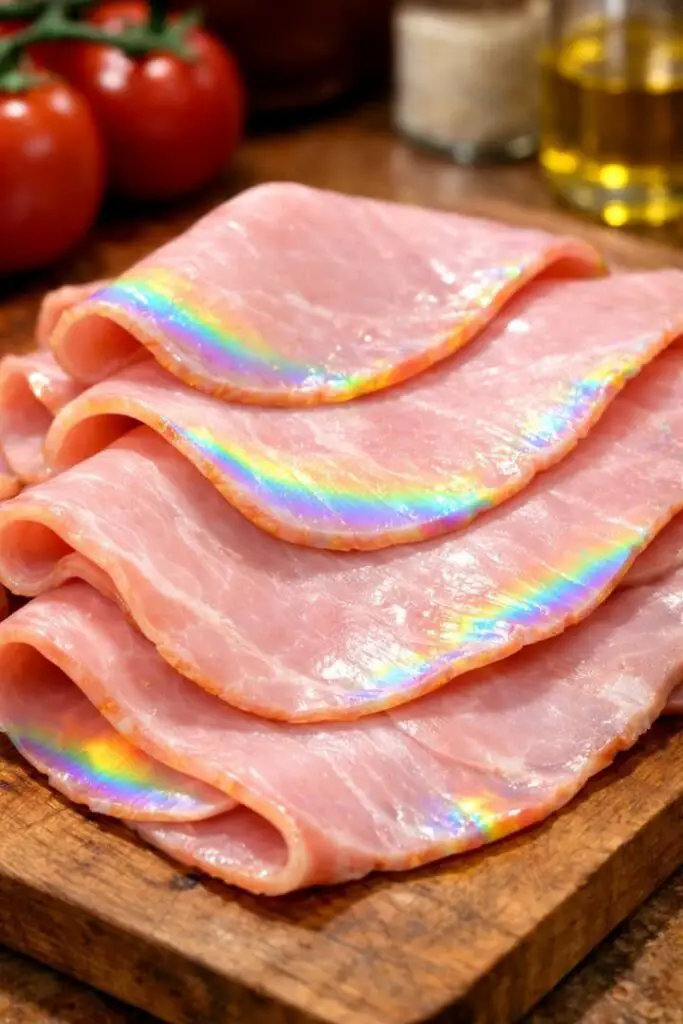
If you’ve ever opened a package of deli ham and noticed a rainbow-like shimmer across the slices, you’re definitely not alone. That colorful sheen can look strange at first, and many people immediately wonder whether the meat has spoiled or become unsafe to eat.
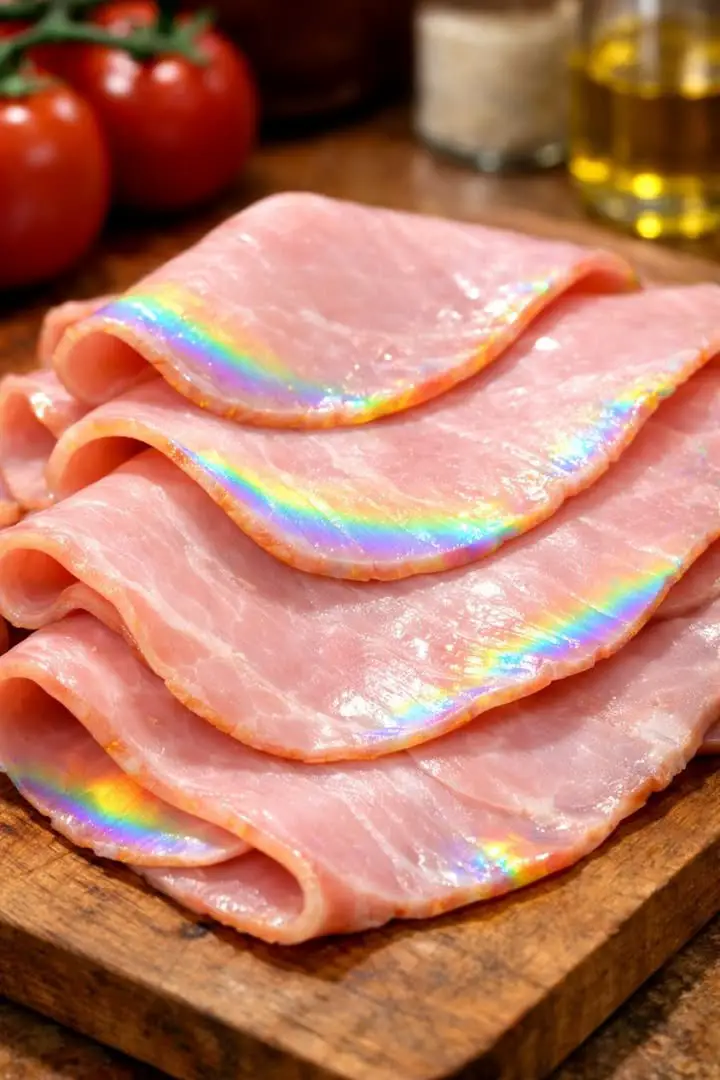
The good news is that, in most cases, the rainbow shine on deli ham is completely normal. The effect is called iridescence, and it happens because of how light reflects off the meat’s surface and muscle fibers. Similar rainbow effects appear on soap bubbles, CDs, and even some fish scales.
While the colorful shine itself usually is not dangerous, it’s still important to know how to tell the difference between harmless iridescence and actual spoilage. Understanding what causes the shine and what warning signs to look for can help you confidently decide whether your deli ham is safe to eat or ready for the trash.
Many people first notice the rainbow effect while making sandwiches or unpacking groceries after a busy shopping trip. At first glance, the shimmering colors can feel alarming, especially if the meat looked perfectly normal at the store. Generations before packaged deli meats became common, families relied heavily on sight and smell to judge freshness, so unusual colors naturally raised concern. Fortunately, modern food science explains that this particular rainbow effect often has nothing to do with spoilage at all. Once people learn what causes the shine, they usually stop worrying every time they open a fresh package of ham.
Ingredients
Equipment
Method
- Check the ham for a rainbow-like shine. This is usually normal iridescence and does not automatically mean the ham is spoiled.
- Smell the ham. Fresh deli ham should smell mild, salty, or slightly smoky. Discard it if it smells sour, rotten, or unpleasant.
- Touch the surface. Safe deli ham should feel slightly moist but not slimy, sticky, or slippery.
- Look for spoilage signs such as mold, green spots, gray coloring, brown discoloration, or excessive slime.
- Keep deli ham refrigerated below 40 degrees F and store it tightly wrapped or in an airtight container.
- Use opened deli ham within 3 to 5 days for best freshness and safety.
Notes
What Causes the Rainbow Shine on Deli Ham?
Light Reflects Off the Meat Fibers
The rainbow effect on deli ham is known as iridescence.
This happens when light reflects and scatters across the surface of the meat in different directions.
The muscle fibers inside sliced ham act almost like tiny mirrors or prisms. As light hits those fibers, the reflected light separates into different colors, creating the rainbow-like appearance.
This same optical effect appears on:
- Soap bubbles
- Oil slicks
- Peacock feathers
- Compact discs
The colorful shine is simply the way light interacts with the meat surface.
Thin Slices Make the Effect More Noticeable
Thinly sliced deli meats often show iridescence more clearly than thick cuts.
That’s because:
- The slicing creates smoother surfaces
- Muscle fibers align more evenly
- Light reflects more uniformly
Highly polished slicing equipment can also make the effect stronger by creating especially smooth meat surfaces.
As a result, prepackaged deli ham and freshly sliced deli meats frequently display this harmless shimmer.
When the Rainbow Shine Is Completely Normal
Fresh Ham Often Shows Iridescence
In many cases, rainbow-colored ham is perfectly fresh and safe to eat.
If the ham:
- Smells normal
- Feels fresh
- Stays within expiration date
- Has proper refrigeration
then the rainbow shine alone is not a sign of spoilage.
Many food experts actually consider mild iridescence common in cured meats like:
- Ham
- Roast beef
- Turkey
- Pastrami
The effect does not impact flavor, texture, or nutritional value.
Curing and Processing Can Increase the Shine
Certain curing ingredients and processing methods make iridescence even more noticeable.
Salt, nitrates, and phosphates used during curing can slightly change how the meat reflects light.
Smoked and cured meats often display stronger rainbow colors because the curing process changes the structure of the muscle fibers.
This explains why deli ham frequently appears shinier than freshly cooked homemade ham.
Signs Your Deli Ham Has Actually Gone Bad
Watch for Discoloration and Mold
Although rainbow shine itself is harmless, there are other warning signs you should never ignore.
Throw away deli ham immediately if you notice:
- Green patches
- Gray coloring
- Brown discoloration
- Mold growth
- Fuzzy spots
These changes indicate spoilage rather than harmless iridescence.
Spoiled meat often looks dull or uneven instead of showing a clean reflective rainbow sheen.
Slimy Texture Is a Major Warning Sign
Fresh deli ham should feel slightly moist but never sticky or slimy.
A slippery coating often means bacterial growth has begun.
If the ham feels:
- Gooey
- Sticky
- Excessively wet
- Slippery
it is safest to discard it immediately.
Texture changes are often more important than color alone when judging meat freshness.
How to Test If Deli Ham Is Still Safe
Use the Smell Test
Your nose is one of the best freshness detectors available.
Fresh ham usually smells:
- Mild
- Slightly salty
- Slightly smoky
- Neutral
Spoiled ham often develops:
- Sour odors
- Ammonia smells
- Rotten scents
- Fermented aromas
If the smell seems unpleasant or unusual, do not eat it.
Check Storage Time Carefully
Even perfectly normal-looking deli meat can spoil if stored too long.
For best safety:
- Refrigerate below 40°F
- Keep tightly sealed
- Eat within 3 to 5 days after opening
Leaving deli ham exposed to air or fluctuating refrigerator temperatures increases spoilage risk significantly.
Best Ways To Store Deli Ham Safely
Keep the Ham Airtight
Exposure to air speeds up spoilage.
Store deli ham in:
- Airtight containers
- Sealed plastic wrap
- Resealable bags
Keeping moisture and air away helps maintain freshness and texture longer.
The coldest part of the refrigerator is usually safest for deli meats.
Avoid Temperature Fluctuations
Repeated warming and cooling allows bacteria to grow more quickly.
Avoid:
- Leaving ham on counters too long
- Frequent refrigerator door exposure
- Warm car rides after shopping
If serving deli meat at gatherings, refrigerate leftovers promptly within two hours.
Frequently Asked Questions
Is rainbow-colored deli ham safe to eat?
Usually yes, as long as it smells fresh and has no slimy texture or discoloration.
Why does sliced ham look metallic or shiny?
Light reflects off the aligned muscle fibers and creates iridescence.
Does iridescence mean the meat contains chemicals?
Not necessarily. It is mainly caused by light reflection and meat structure.
When should I throw deli ham away?
Discard it if it smells sour, feels slimy, or shows gray, green, or moldy spots.
How long does opened deli ham last?
Usually 3 to 5 days when properly refrigerated.
Conclusion
Rainbow shine on deli ham may look unusual, but it is usually a completely harmless optical effect called iridescence. Thin slicing, curing methods, and muscle fiber structure all contribute to the colorful shimmer that sometimes appears on deli meats.
The key is learning to distinguish harmless rainbow sheen from actual spoilage signs like sour odors, slimy texture, mold, or discoloration.
As long as the ham smells fresh, feels normal, and has been stored properly, that shimmering rainbow effect is generally nothing to worry about. Once you understand the science behind it, opening a package of shiny deli ham becomes far less alarming and much easier to judge with confidence.