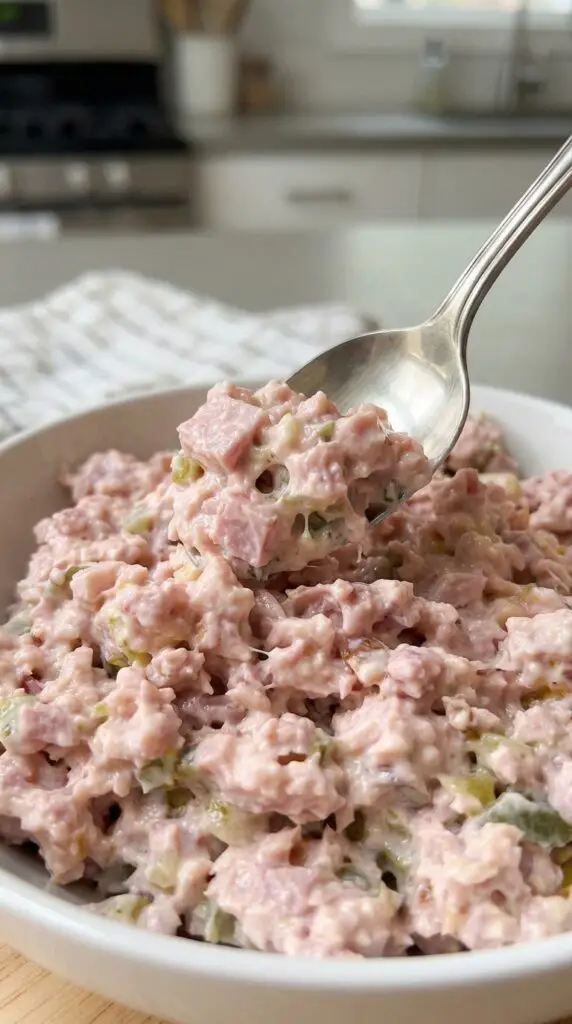
Ham Salad is one of those simple recipes that turns everyday leftovers into something people actually look forward to eating. With chopped ham, creamy mayonnaise, and sweet pickle relish, Ham Salad delivers a salty-sweet balance that works perfectly on sandwiches, crackers, or even straight from the bowl. It’s quick to prepare, uses minimal ingredients, and fits right into busy weeknight cooking or casual gatherings.
This Ham Salad recipe keeps things traditional while still allowing flexibility so you can adjust texture and flavor to your liking. Whether you grew up with it or are trying it for the first time, it’s the kind of dish that feels familiar after just one bite.
I first remember tasting Ham Salad at a family gathering where everything was served on mismatched plates and passed around without ceremony. Someone placed a small sandwich in my hand, and I didn’t think much of it at first. But the moment I bit into it, the creamy texture mixed with salty ham and sweet relish completely changed my expectations. Later, I learned it was made from leftover holiday ham, carefully chopped and mixed by hand in a simple bowl. My grandmother would often stand at the counter, quietly preparing it while telling stories about how nothing in the kitchen should ever go to waste. That memory still sticks with me every time I make it.
The Foundation of Ham Salad Flavor
Choosing the Right Ham
The key to good Ham Salad starts with the ham itself. Ideally, leftover baked ham works best because it has deep flavor and a slightly firm texture that holds up when chopped. As a result, the salad doesn’t turn mushy and keeps a satisfying bite.
If the ham is too soft or overly processed, the texture may become pasty. Therefore, many home cooks prefer using thicker slices or a holiday-style baked ham. Once chopped, the ham should be fine but still slightly chunky so it mixes well without losing structure.
In addition, trimming excess fat helps maintain a cleaner taste. While a little fat adds richness, too much can make the mixture heavy. So, balance is important when preparing the base.
The Role of Texture Balance
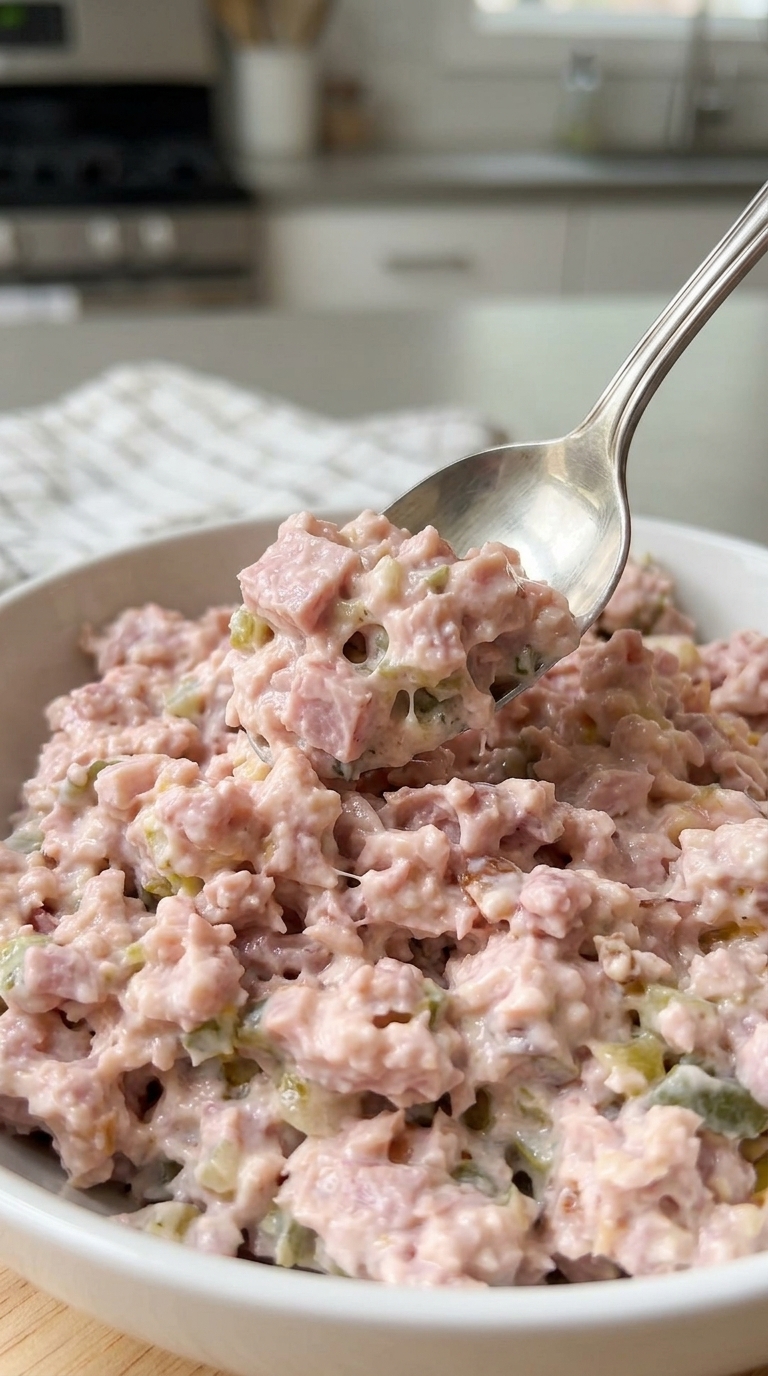
Texture is what separates average Ham Salad from a truly great one. The ham should be finely chopped but not pureed. Because of this, many people use a food processor and pulse carefully instead of blending continuously.
Meanwhile, the relish adds small bursts of softness and tang. This contrast keeps every bite interesting. If the mixture becomes too smooth, it loses character, so a little chunkiness is actually desirable.
Finally, adjusting texture with small additions of mayonnaise helps bind everything together without overwhelming the meat. The goal is a spreadable consistency that still feels hearty and homemade.
Building the Creamy Base
Mayonnaise and Relish Harmony
Mayonnaise forms the creamy backbone of Ham Salad. It binds the chopped ham together while creating a smooth, rich texture. However, the amount used matters. Too much can overpower the ham, while too little can make the mixture dry.
Sweet pickle relish adds brightness and a subtle tang that balances the richness of the mayonnaise. Together, they create a classic flavor combination that defines traditional Ham Salad.
Because of this balance, it’s important to mix gradually. Start with less mayonnaise, then add more as needed. This ensures the texture stays controlled and not overly wet.
Optional Flavor Enhancements
Although the classic version is simple, small additions can elevate the flavor. For example, a touch of mustard can add mild sharpness. Likewise, finely minced onion can introduce a gentle bite without overwhelming the mixture.
Some variations also include chopped hard-boiled eggs, which add creaminess and extra protein. However, these additions should be used sparingly so they don’t overpower the original flavor profile.
In the end, the base should remain recognizable as Ham Salad, with each ingredient supporting the others rather than competing for attention.
Preparing and Mixing Techniques
Proper Chopping Method
How the ham is chopped plays a major role in the final result. A food processor works well, but only when used carefully. Short pulses help control texture and prevent over-processing.
Alternatively, hand chopping gives more control and produces a rustic finish. Although it takes more time, many people prefer it because it reduces the risk of turning the ham into a paste.
Regardless of method, consistency matters. Pieces should be small enough to spread easily but large enough to maintain bite.
Blending for Even Distribution
Once the ham is prepared, mixing becomes the next important step. First, combine the ham with mayonnaise and relish in a large bowl. Then, fold the ingredients together gently until evenly coated.
At this stage, it’s important not to rush. Overmixing can break down the texture and make the salad too soft. Instead, slow folding ensures everything stays balanced.
Finally, tasting and adjusting seasoning helps refine the flavor. A little extra relish or mayonnaise can be added depending on preference, ensuring the final mixture suits personal taste.
Serving and Storing Ham Salad
Classic Serving Ideas
Ham Salad is incredibly versatile when it comes to serving. Traditionally, it’s used as a sandwich spread between soft bread slices. However, it also works well on crackers, sliders, or toasted rolls.
Because of its creamy texture, it pairs especially well with crunchy elements like lettuce or pickles. These additions provide contrast and enhance the overall bite.
It also makes a great appetizer when served in small portions at gatherings. Guests can easily scoop it onto crackers without needing utensils, making it both practical and crowd-friendly.
Storage and Freshness Tips
Proper storage keeps Ham Salad fresh and safe to eat. It should always be refrigerated in an airtight container. When stored correctly, it typically lasts up to one week.
However, it’s best enjoyed within the first few days when the texture is at its peak. Over time, the mixture may release moisture, slightly changing consistency.
Before serving leftovers, a quick stir helps restore balance. If needed, a small spoon of mayonnaise can refresh the texture and bring it back to life.
FAQ
What type of ham works best for Ham Salad?
Leftover baked ham works best because it has firm texture and rich flavor.
Can I make Ham Salad without relish?
Yes, but relish adds sweetness and tang that balance the saltiness of the ham.
How long does Ham Salad last in the fridge?
It typically stays fresh for up to one week when stored properly.
Can I freeze Ham Salad?
Freezing is not recommended because mayonnaise separates after thawing.
What can I serve with Ham Salad?
It pairs well with crackers, bread, sandwiches, or fresh vegetables.
Ingredients
Equipment
Method
- Chop the ham into small, even pieces using a food processor or knife.
- Place chopped ham into a large mixing bowl.
- Add mayonnaise and sweet pickle relish to the bowl.
- Stir until all ingredients are evenly combined and creamy.
- Adjust consistency by adding more mayonnaise or relish if needed.
- Serve chilled as a sandwich spread or with crackers.
Notes
Conclusion
Ham Salad remains a timeless recipe because it transforms simple ingredients into something comforting and satisfying. With chopped ham, creamy mayonnaise, and sweet relish, it delivers a balanced flavor that works in many settings, from quick lunches to party spreads.
Because it is easy to prepare and endlessly adaptable, it continues to be a favorite for using up leftover ham. Whether served on soft bread or enjoyed with crackers, Ham Salad offers a nostalgic taste that feels both familiar and practical. It’s a recipe worth keeping in rotation whenever you need something quick, simple, and reliably delicious.