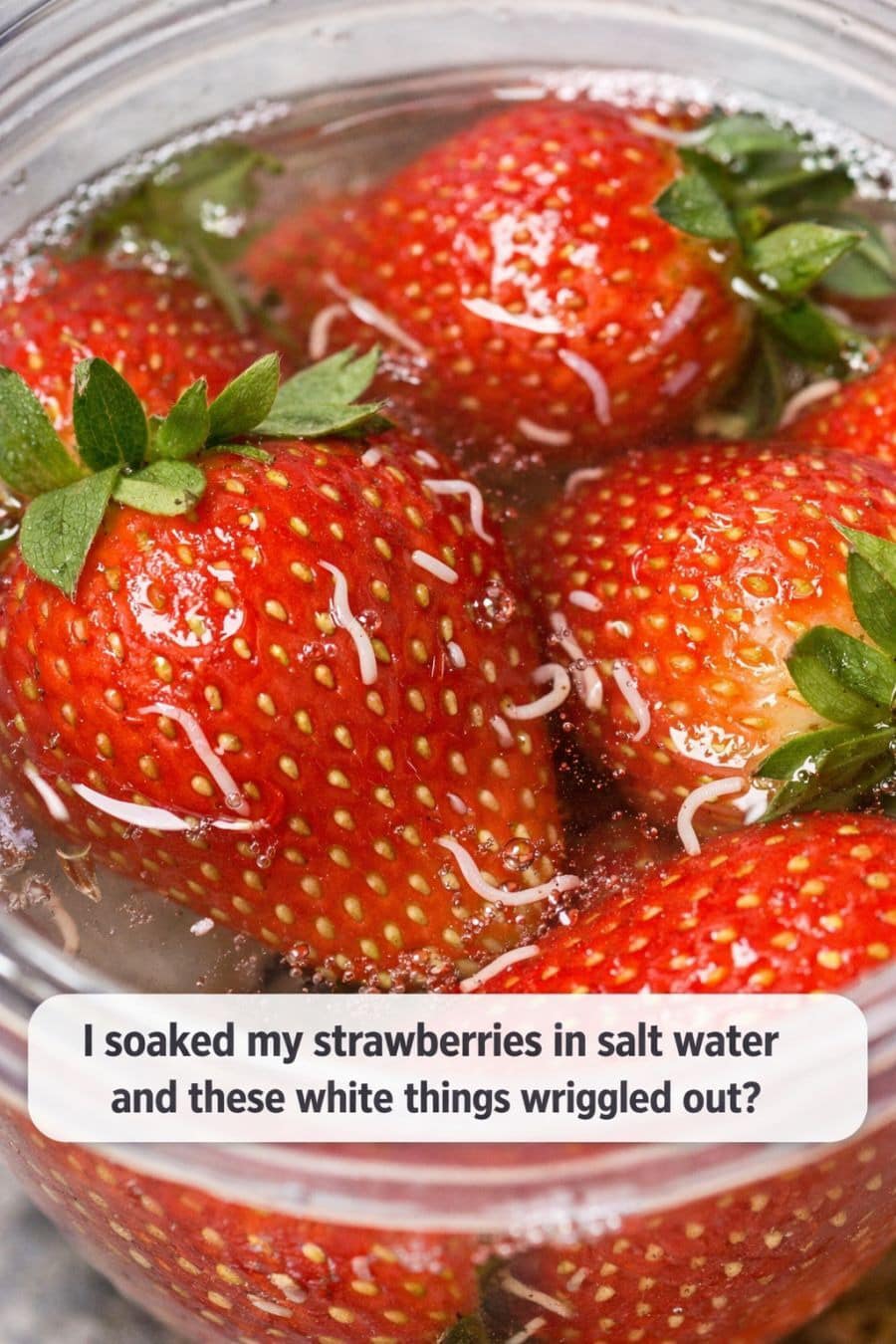
It can be alarming to soak fresh strawberries in a bowl of salt water and watch tiny white worms wriggle out. While it may seem gross, this phenomenon has a scientific explanation. Understanding what’s happening can help you handle your berries safely and confidently.
These tiny white larvae are usually the immature stage of the Spotted Wing Drosophila, a small fruit fly that lays eggs inside soft-skinned fruits such as strawberries, raspberries, and blackberries. They don’t appear magically — the salt water merely exposes larvae that were already present.
I remember once buying organic strawberries from a local farmers market. Excited to make a fresh fruit salad, I soaked the berries in salt water and was shocked to see tiny worms emerge. At first, I panicked, but learning about the Spotted Wing Drosophila helped me understand that this is a natural occurrence in pesticide-free fruit and not a sign the fruit is spoiled.
How Larvae Get Inside Strawberries
The Role of Spotted Wing Drosophila
Unlike regular fruit flies, which lay eggs only on overripe or rotting fruit, Spotted Wing Drosophila has a serrated egg-laying organ that allows it to pierce fresh, ripening fruit. Once inside, the eggs hatch into tiny larvae, which feed on the fruit tissue as they develop.
Why Strawberries Are Vulnerable
Strawberries are soft and porous, making them particularly susceptible to infestation. Fruits grown outdoors or organically are more likely to have these larvae because minimal pesticides are used. Even some commercially grown strawberries can occasionally harbor them, though strict agricultural practices reduce this risk significantly.
Why Salt Water Brings Out the Worms
How Salinity Affects Larvae
When strawberries are soaked in salt water, the larvae react to the sudden change in environment. The salt creates a hostile surrounding that encourages the larvae to wriggle out of the fruit in an attempt to escape.
Myths About Salt Water and Worms
It’s important to note that salt water does not create worms. The larvae were already inside the fruit; soaking simply reveals their presence. This method is commonly used by home gardeners and fruit enthusiasts as a natural way to ensure berries are safe to eat.
Are These Larvae Harmful?
Safety Concerns
The larvae are generally harmless to humans. They are soft-bodied, legless, and only a few millimeters long. While the idea may be unpleasant, ingesting a small amount accidentally is not dangerous.
How to Make Strawberries Safer
Soaking berries in salt water for a few minutes, rinsing thoroughly, and storing them properly reduces the risk of any larvae being left behind. Freezing the fruit also kills the larvae and prevents them from developing further.
How Common Is This Issue?
Organic and Homegrown Berries
The presence of larvae is more common in homegrown, farmers market, or organic berries because these are not treated with strong pesticides. For people who prefer chemical-free produce, understanding this natural phenomenon is important.
Commercial Berries
Large-scale commercial operations implement strict measures to minimize infestations. While it is still possible to find larvae in packaged strawberries, the chances are significantly lower than in fresh, organic, or small-scale grown fruit.
Preventing Infestations in Your Fruit
Storage Tips
Keep strawberries refrigerated in breathable containers to reduce mold and limit insect activity. Avoid leaving them out at room temperature for long periods.
Washing Methods
Rinse berries gently in cold water before soaking. When using salt water, a tablespoon of salt per cup of water is usually sufficient. Soak for 5–10 minutes, then rinse thoroughly. This simple step can help remove any hidden larvae and clean the fruit effectively.
FAQ
1. Why do worms come out of strawberries in salt water?
The larvae inside the fruit react to the salt, which makes them wriggle out to escape.
2. Are these worms harmful if accidentally eaten?
No, they are generally harmless to humans and pose no health risk.
3. Can freezing strawberries kill the larvae?
Yes, freezing kills larvae and prevents further development.
4. How can I reduce the risk of larvae in my berries?
Buy high-quality berries, refrigerate promptly, and soak in salt water before eating.
5. Does organic fruit have more larvae than conventional fruit?
Yes, because pesticides are minimal or absent, making organic berries more likely to contain larvae.
Conclusion
Finding tiny white worms in strawberries may be unsettling, but it’s a natural occurrence in fresh fruit, especially organic or homegrown varieties. The larvae are harmless, and simple measures like soaking in salt water, rinsing thoroughly, and proper storage can ensure your strawberries are safe and enjoyable. Understanding this process helps you enjoy fresh fruit with confidence, without unnecessary panic.
More Dessert
- Can’t Believe I’ve Been Drinking Coca-Cola for Years and Just Noticed the ‘Hidden Detail’ in the Logo!
- The Power of the Walnut: 5 Science-Backed Health Benefits (And How Many You Should Actually Eat)
- The Mystery of Lobster’s Green Goodies: What Is Tomalley and Should You Eat It?
- Southern Tea Cake Cookies Recipe: Soft Buttery Classic Cookies