
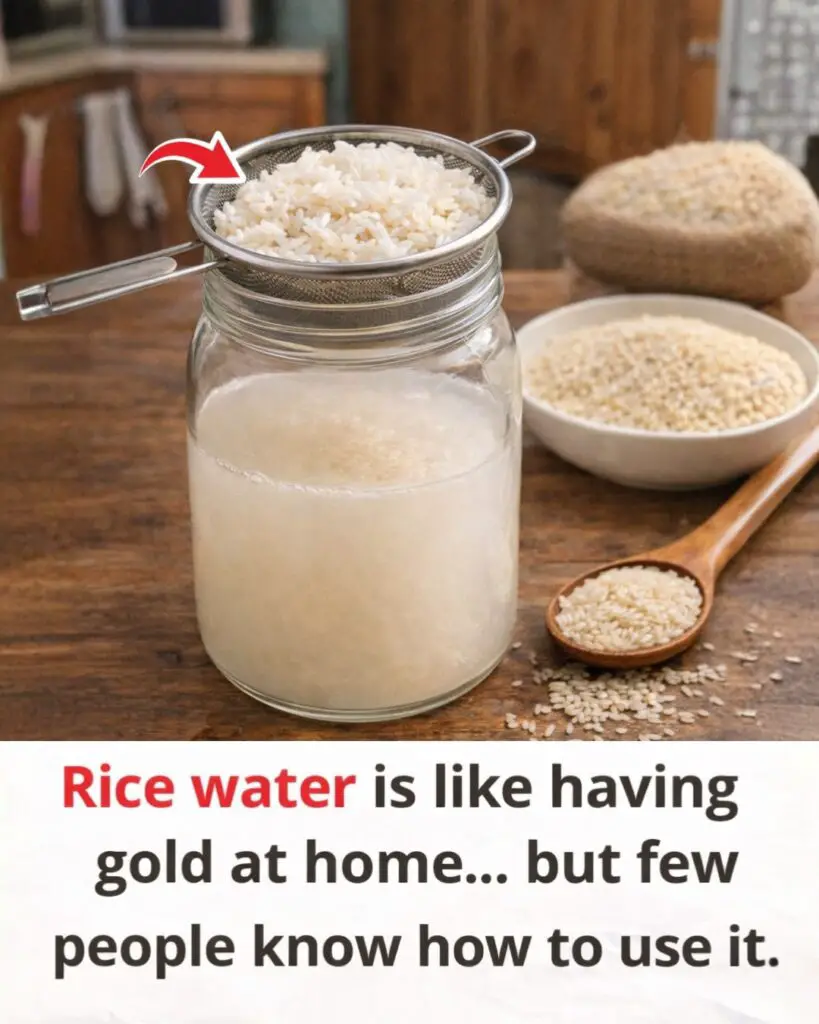
For centuries, women in Japan, Korea, and Southeast Asia have relied on rice water as a natural beauty treatment for glowing skin and long, resilient hair. Long before modern serums and conditioners existed, this simple kitchen byproduct played a central role in traditional beauty rituals.
Today, research highlights what tradition already knew. Rice water contains antioxidants, amino acids, vitamins B and E, ferulic acid, and inositol—a carbohydrate that helps strengthen hair. Even better, you likely make rice regularly and pour this nutrient-rich liquid down the drain without realizing its value.
Instead of wasting it, you can transform rice water into an easy, affordable addition to your self-care routine.
🌾 What Is Rice Water?
Rice water is the cloudy liquid left behind after soaking, rinsing, or boiling rice. As rice sits in water, it releases starches and beneficial plant compounds into the liquid.
You can obtain rice water in three simple ways:
- Soaking raw rice for 30 minutes or more
- Rinsing rice thoroughly before cooking
- Boiling rice and straining off the remaining water
Among these methods, fermented rice water has gained the most attention for its enhanced potency. During fermentation, beneficial compounds become more concentrated and the pH shifts slightly, which may benefit both hair and skin.
✨ Science-Backed Benefits of Rice Water
For Hair
1. Strengthens Hair Strands
Rice water contains inositol, which penetrates damaged hair and helps repair it from within. Studies suggest that inositol remains inside the hair shaft even after rinsing, offering ongoing protection.
As a result, hair may feel smoother, stronger, and less prone to breakage.
2. Improves Shine and Smoothness
The starch in rice water coats the hair shaft lightly. This coating smooths the cuticle, which enhances shine and reduces frizz.
Many people report softer, silkier hair after consistent use.
3. Reduces Tangling
Because rice water smooths the outer layer of hair, it may reduce friction between strands. Consequently, combing becomes easier and hair experiences less mechanical damage.
For Skin
1. Soothes Irritation
Rice water contains antioxidants and mild anti-inflammatory compounds. These elements may calm redness and irritation, particularly for sensitive skin.
Many people use it as a gentle facial rinse after sun exposure or minor irritation.
2. Supports Skin Barrier Function
The amino acids and vitamins in rice water help nourish the skin barrier. A strong barrier locks in moisture and protects against environmental stressors.
Over time, this can lead to softer, more balanced skin.
3. Brightens and Evens Skin Tone
Ferulic acid and phenolic compounds in rice water help combat oxidative stress. While it does not bleach the skin, consistent use may promote a more radiant appearance.
🧪 How to Make Rice Water at Home
Method 1: Simple Soaked Rice Water
- Rinse ½ cup of uncooked rice to remove dirt.
- Add 2–3 cups of clean water.
- Let it soak for 30–60 minutes.
- Strain and store the liquid in a clean container.
You can refrigerate it for up to five days.
Method 2: Boiled Rice Water
- Cook rice in extra water.
- Strain the excess liquid once rice finishes cooking.
- Allow the water to cool completely before use.
This method produces a more concentrated solution. If it feels too thick, dilute with plain water.
Method 3: Fermented Rice Water (Most Potent)
- Prepare soaked rice water using Method 1.
- Leave the strained liquid at room temperature for 24–48 hours.
- Once it develops a slightly sour smell, refrigerate immediately.
Fermentation increases antioxidant levels and may improve effectiveness for hair strength and shine.
Always dilute fermented rice water before applying, especially on sensitive skin.
💆 How to Use Rice Water for Hair
- Shampoo your hair as usual.
- Pour rice water onto your scalp and hair.
- Massage gently for 3–5 minutes.
- Leave on for 10–20 minutes.
- Rinse thoroughly with lukewarm water.
Use once or twice weekly. Overuse may cause stiffness due to starch buildup.
If your hair feels dry, follow with a light conditioner.
🌿 How to Use Rice Water for Skin
As a Facial Rinse
After cleansing, splash diluted rice water onto your face. Let it sit for 5–10 minutes, then rinse.
As a Toner
Apply with a cotton pad and allow it to absorb naturally.
As a Soothing Bath Additive
Add a cup of rice water to warm bathwater to gently soften skin.
Always perform a patch test before first use to check for sensitivity.
⚠️ Important Tips and Precautions
- Always store rice water in the refrigerator.
- Discard if it smells strongly unpleasant.
- Dilute fermented rice water before applying.
- Avoid using on broken or irritated skin.
- Limit hair use to prevent protein or starch overload.
While rice water benefits many people, results vary. Consistency matters more than frequency.
🌟 Why Fermented Rice Water Stands Out
Fermented rice water lowers in pH, which may help smooth the hair cuticle and enhance shine. It also increases antioxidant levels compared to plain soaked water.
However, because it becomes more potent, dilution is essential. A 1:1 ratio of fermented rice water to plain water works well for most people.
Many users report stronger, thicker-feeling hair within weeks of consistent use.
💡 Final Thoughts
Rice water proves that powerful beauty solutions often hide in plain sight. Instead of discarding this nutrient-rich liquid, you can turn it into a simple, affordable treatment for hair and skin.
With antioxidants, amino acids, vitamins, and strengthening compounds, rice water offers science-supported benefits without expensive products. Whether you choose soaked, boiled, or fermented rice water, consistency and proper preparation make the difference.
Next time you cook rice, pause before pouring the water away. That cloudy liquid might be the simplest beauty secret sitting right in your kitchen.