
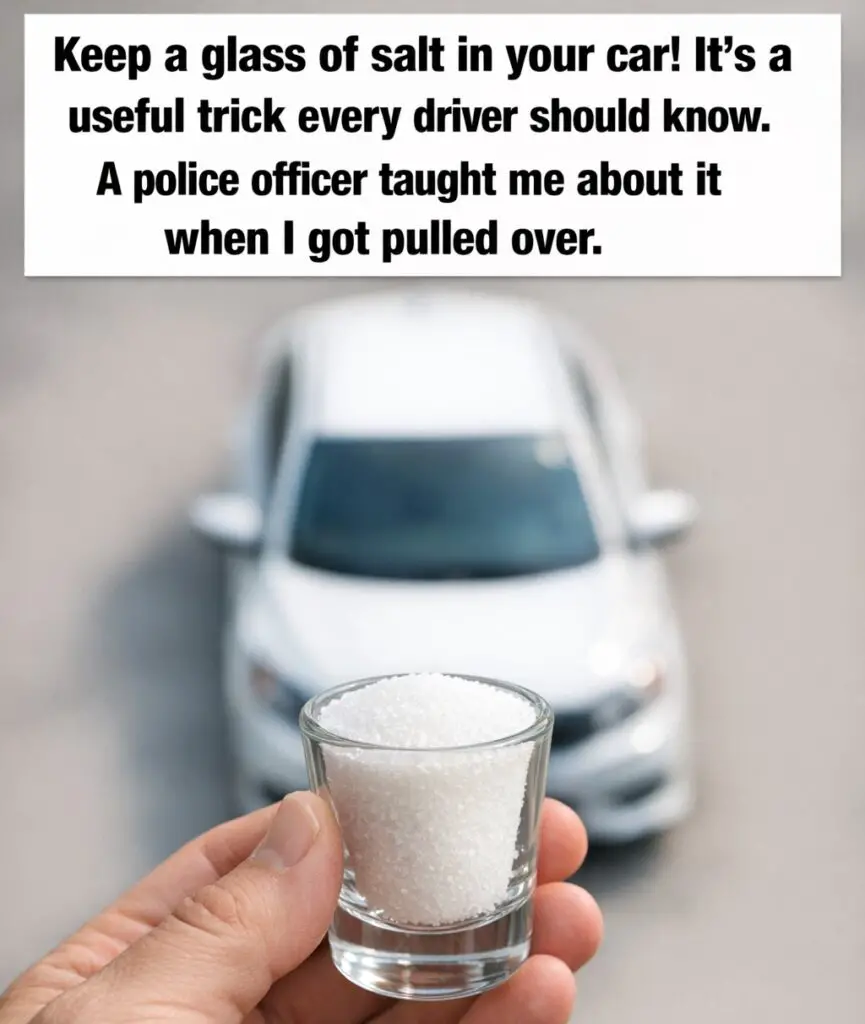
You’ve probably heard strange car “hacks” online, but this one actually has real, practical uses—especially during cold weather or emergencies. While you should never leave loose salt scattered in your vehicle, keeping a small container of salt in your car can be surprisingly helpful when used correctly.
Here’s what salt can do for drivers—and what it absolutely should not be used for.
Why Salt Can Be Useful in a Car
Salt works because it lowers the freezing point of water and absorbs moisture. These two properties make it useful for winter driving, fog prevention, and minor emergencies.
However, salt must be handled carefully to avoid damage to your vehicle.
1. Emergency De-Icing for Locks and Windows
Frozen door locks and iced-over windows are common winter problems.
How it works:
Salt disrupts ice formation, helping it melt faster.
How to use safely:
- Mix 1 part salt with 2 parts warm water
- Pour into a spray bottle
- Lightly spray frozen locks or icy window edges
This can quickly free locks or loosen ice when you’re stuck.
Important warning:
Never pour dry salt directly on car paint or metal. Salt can cause corrosion and long-term damage if not rinsed off.
2. Temporary Traction Aid for Stuck Tires
If your car is stuck on ice and you have nothing else available, salt can offer limited help.
How to use:
- Sprinkle a small amount of salt in front of or behind the tires
- Allow it to melt surface ice
- Attempt to move slowly
This works best in emergencies when sand, gravel, or cat litter are not available.
Limitations:
Salt melts ice but can leave a wet surface. It’s a short-term solution, not a replacement for proper traction aids.
3. Absorb Moisture and Reduce Window Fog
Salt naturally absorbs moisture, making it useful inside the car.
How to use:
- Place salt in a breathable container (sock, cloth bag, or perforated cup)
- Keep it under a seat or on the dashboard
This helps reduce interior humidity, which can lessen window fogging—especially overnight.
Replace the salt once it becomes damp.
4. Emergency Cleanup for Spills
Salt can help absorb liquid spills.
Useful for:
- Coffee or water spills
- Snow melt from boots
Sprinkle salt on the spill, let it absorb moisture, then vacuum or wipe clean.
What NOT to Do With Salt in Your Car
To avoid damage or safety risks, never:
- Leave open containers of salt on seats or carpets
- Pour salt directly onto metal surfaces
- Store salt near electrical components
- Use salt as a permanent traction solution
Salt is helpful in moderation, but careless use can cause rust and interior damage.
How to Store Salt Safely in Your Vehicle
- Use a sealed or breathable container
- Keep it in the trunk or emergency kit
- Label it clearly
- Pair it with gloves and a small shovel for winter driving
This turns salt into a useful part of your emergency preparedness kit.
The Bottom Line
Keeping a small container of salt in your car isn’t a gimmick—it’s a practical, low-cost emergency tool when used correctly. From de-icing locks to reducing moisture and helping with minor traction issues, salt can be useful in a pinch.
Just remember: use it carefully, sparingly, and never directly on your car’s paint or metal.
Smart preparation beats last-minute panic—especially on cold roads.