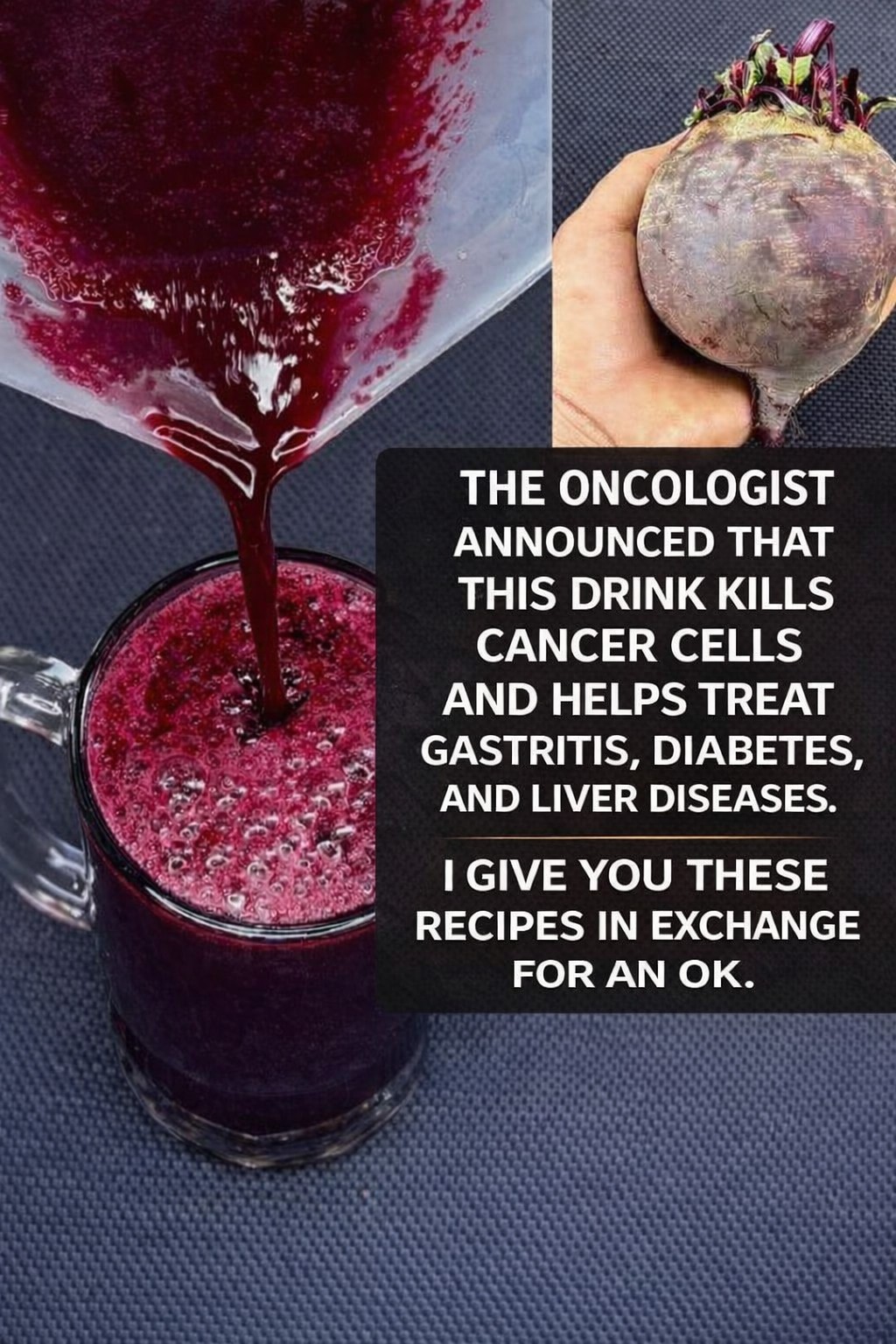
Headlines like “ALERT! Beetroot juice kills cancer cells in 42 days” spread fast because they offer hope, simplicity, and a clear promise. Unfortunately, this claim is not supported by scientific evidence. While beetroot is a nutritious food with real health benefits, presenting it as a cancer cure is misleading and potentially dangerous.
Let’s look carefully at what science actually shows, what it does not show, and why claims like this need to be handled with caution.
What Beetroot Really Contains
Nutrients With Proven Health Benefits
Beetroot is undeniably healthy. It contains vitamins, minerals, and plant compounds that support general wellness.
Beets are rich in folate, potassium, fiber, and vitamin C. They also contain betalains, natural pigments that act as antioxidants and help reduce inflammation in the body. In addition, beets are high in dietary nitrates, which can improve blood flow and support heart health.
These properties make beetroot a smart addition to a balanced diet. However, nutritional value does not equal medicinal cure.
What Lab Studies Actually Show
Some laboratory and animal studies have explored beetroot extracts in controlled environments. In test tubes, concentrated beet compounds have shown the ability to slow the growth of certain cancer cells.
This is where many headlines stop—but this is also where scientific rigor begins.
Lab studies are early-stage research. They do not account for digestion, metabolism, dosage, or how the human body actually behaves. Many substances that affect cancer cells in a petri dish fail completely in human trials.
The Critical Missing Evidence
No Human Clinical Trials Prove This Claim
There are no peer-reviewed human clinical trials showing that drinking beetroot juice cures cancer, shrinks tumors, or eliminates cancer cells in any set timeframe—42 days or otherwise.
Cancer treatment research requires large, controlled studies with long-term follow-up. Beetroot juice has never passed this level of testing as a cancer therapy.
The “42 days” claim appears to come from anecdotal stories or misinterpretations of small, uncontrolled observations. Anecdotes are not evidence. They cannot establish cause, effectiveness, or safety.
Why the Claim Is Dangerous
Claims like “beetroot juice kills cancer cells” can lead people to delay or abandon proven medical treatments such as surgery, chemotherapy, radiation, or immunotherapy.
Cancer is not a single disease. It involves complex biological processes that vary by type, stage, genetics, and individual health. No single food or juice can treat all cancers.
False certainty can cost lives.
Can Beetroot Help at All?
Supportive Nutrition, Not Treatment
Beetroot can be part of a healthy diet during or after cancer treatment, if approved by a healthcare provider. Its antioxidants may support overall health, energy levels, and digestion.
However, beetroot juice should be viewed as supportive nutrition, not medicine.
In some cases, high nitrate intake or interactions with medications may not be appropriate. This is another reason why medical guidance matters.
What Doctors and Researchers Agree On
Medical professionals consistently agree on this point:
No food, juice, herb, or supplement can cure cancer on its own.
Nutrition plays a role in prevention and recovery, but cancer treatment requires evidence-based medical care tailored to the individual.
How to Spot Health Misinformation Online
Red Flags to Watch For
Sensational health claims often share common warning signs:
They promise fast results with exact timelines
They use words like “kills,” “cures,” or “miracle”
They rely on anecdotes instead of clinical studies
They discourage conventional medical treatment
When you see these patterns, skepticism is not negativity—it is protection.
A Better Question to Ask
Instead of asking, “Does this cure cancer?” ask:
“What does high-quality human research actually show?”
If the answer is unclear or absent, the claim should not be trusted.
The Bottom Line
Beetroot juice does not kill cancer cells in 42 days. There is no scientific proof that it cures cancer in humans, at any time frame.
Beets are nutritious. They are healthy. They can be enjoyed as part of a balanced diet. But they are not a cancer treatment.
Real hope comes from accurate information, early diagnosis, and evidence-based medical care—not from viral headlines that oversimplify a complex disease.
If you or someone you care about is dealing with cancer, always consult qualified healthcare professionals and rely on treatments supported by solid scientific evidence.
More Home Remedies
- California Mom Issues Urgent Fireworks Warning After Teen Suffers Devastating Hand Injuries
- This Is the Silent Disease That Can Strike Without Warning
- The Midnight Ache: Understanding Nighttime Leg Cramps and How to Find Relief
- My 8-Year-Old Has Been Experiencing This for Two Months—Understanding Hives in Children