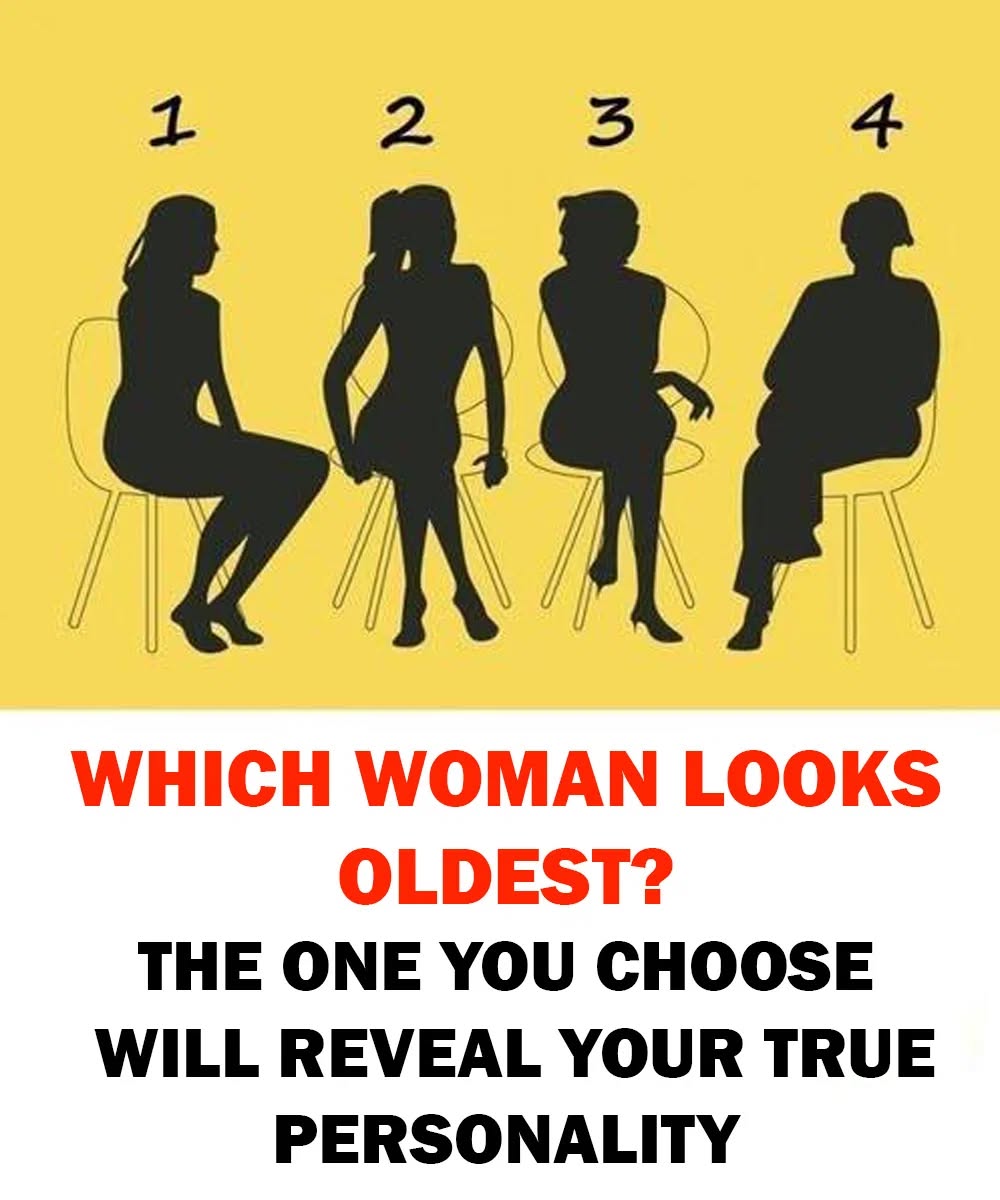
Every few weeks, a new viral image floods social media asking a strange but oddly irresistible question:
“Which woman looks oldest?”
Then comes the hook:
“The one you choose reveals your true personality.”
Millions of people stop scrolling long enough to pick an answer. Some confidently choose Woman #1. Others insist #4 “obviously” looks oldest. Friends debate in the comments. Entire arguments break out over body posture, hairstyles, and hidden clues.
But here’s the truth most of these viral posts never explain:
These quizzes are not real psychological tests.
They don’t scientifically reveal your intelligence, honesty, emotional depth, or future. What they actually reveal is something far more interesting: how quickly the human brain creates assumptions from incomplete visual information.
And honestly? That’s fascinating enough on its own.
Let’s break down why these viral “which woman looks oldest?” images spread so quickly, what psychology is really happening in your brain when you choose an answer, and why people love personality quizzes even when they know they aren’t scientifically accurate.
Why These Viral Personality Tests Become So Popular
The internet loves quick decisions.
Especially decisions that feel personal.
A viral image quiz works because it combines:
- Curiosity
- Judgment
- Self-discovery
- Social comparison
- Instant gratification
Your brain sees four silhouettes and immediately begins analyzing:
- Posture
- Clothing shape
- Hair style
- Body language
- Energy
- Confidence
- Cultural stereotypes
Within seconds, you choose one.
That instant reaction creates emotional investment.
Now you want to know:
“What does my answer mean?”
That’s the psychological trap that makes these quizzes so addictive.
Your Brain Loves Finding Patterns
Humans naturally search for meaning everywhere.
Our brains constantly interpret:
- Faces
- Shapes
- Emotions
- Movements
- Social cues
Even when information is limited, the brain fills in missing details automatically.
That’s exactly what happens with silhouette personality quizzes.
The image gives only partial information:
- No real faces
- No age data
- No context
- No voice
- No movement
Yet your brain instantly builds a story anyway.
That’s not weakness.
That’s normal human psychology.
Why Different People Choose Different Women
One person may think Woman #4 looks oldest because:
- She appears relaxed
- Her posture feels mature
- Her hairstyle seems conservative
Another person might choose Woman #2 because:
- She sits differently
- Her body language appears tense
- Her pose feels older to them
Someone else chooses Woman #1 because:
- Crossed legs feel formal
- Long hair appears traditional
- The silhouette feels sophisticated
None of these reactions are objectively correct.
They reflect personal perception.
The Psychology Behind Snap Judgments
Humans form first impressions incredibly fast.
Research suggests the brain can make social judgments within milliseconds.
Your mind instantly evaluates:
- Confidence
- Energy
- Trustworthiness
- Attractiveness
- Age
- Emotion
Most of this happens subconsciously.
That’s why viral quizzes feel strangely revealing even when they’re scientifically meaningless.
Your choice feels personal because it comes from instinctive perception.
What These Quizzes Actually Reveal
Contrary to the dramatic captions, these tests do not reveal:
- Your destiny
- Your hidden personality
- Your intelligence
- Your emotional maturity
- Your future
What they may reveal instead includes:
- Visual preferences
- Cultural conditioning
- Personal experiences
- Social assumptions
- Biases about age and appearance
And honestly, that’s still interesting.
The Barnum Effect: Why These Results Feel Accurate
Most viral personality quizzes rely on something called:
The Barnum Effect
This psychological phenomenon occurs when people accept vague, general descriptions as uniquely accurate for themselves.
Examples include:
- “You are kind but sometimes misunderstood.”
- “You value honesty but dislike being hurt.”
- “You enjoy independence yet appreciate close relationships.”
These statements apply to almost everyone.
But because they feel personal, the brain accepts them as meaningful.
That’s why people often say:
“Wow… this is SO me.”
Even when millions of others receive the exact same description.
Why Humans Love Personality Quizzes
People naturally want to understand themselves.
That desire drives:
- Astrology
- Personality tests
- Horoscope reading
- Tarot cards
- Online quizzes
- Social media trends
Self-discovery feels emotionally rewarding.
Even entertainment-based quizzes create moments of reflection:
- “Why did I pick that?”
- “What does that say about me?”
- “Do others see things differently?”
The conversation becomes the real attraction.
Social Media Amplifies the Obsession
These viral images are designed perfectly for social media algorithms.
Why?
Because they encourage:
- Comments
- Arguments
- Tagging friends
- Sharing
- Emotional reactions
People love comparing answers.
One comment says:
“Definitely #4.”
Another replies:
“No way, it’s obviously #2!”
Suddenly the post explodes with engagement.
That’s exactly why these images keep spreading online.
Appearance-Based Judgments Are Deeply Human
Humans constantly make assumptions based on appearance.
Without realizing it, people often associate:
- Hairstyles with age
- Posture with confidence
- Clothing with personality
- Body language with emotion
These assumptions develop from:
- Culture
- Media exposure
- Personal experiences
- Social conditioning
Viral quizzes exploit these mental shortcuts.
Why These Tests Are Not Scientific
Real psychological evaluation is extremely complex.
Professional personality assessments require:
- Research validation
- Statistical analysis
- Controlled testing
- Behavioral measurement
- Long-term observation
A silhouette image cannot accurately determine:
- Intelligence
- Emotional stability
- Honesty
- Leadership ability
- Compatibility
- Mental health
The brain simply enjoys pretending it can.
The Danger of Overthinking These Quizzes
Most personality quizzes are harmless fun.
However, problems arise when people begin treating them as:
- Scientific truth
- Emotional validation
- Relationship guidance
- Character judgment
A random visual choice cannot define your identity.
Real personality develops through:
- Experiences
- Values
- Relationships
- Habits
- Decisions
- Growth over time
Humans are far more complicated than internet quizzes suggest.
Why People Defend Their Choices So Strongly
Interestingly, people often become emotionally attached to their answer.
Why?
Because once the brain makes a decision, it naturally seeks evidence supporting it.
Psychologists call this:
Confirmation Bias
You begin noticing details that justify your choice while ignoring contradictory information.
For example:
- “Woman #4 has older posture.”
- “Woman #1 sits more elegantly.”
- “Woman #2 looks tense and tired.”
The brain wants consistency.
How Culture Shapes Perception of Age
Different cultures associate aging with different visual traits.
Some people associate:
- Conservative posture with age
- Relaxed posture with youth
- Long hair with younger women
- Short hairstyles with maturity
Others interpret the same clues completely differently.
That’s why these quizzes produce endless disagreement.
There is no universal answer.
The Fascination With Aging
Part of the viral appeal comes from society’s obsession with aging itself.
Humans constantly analyze:
- Youth
- Beauty
- Energy
- Appearance
- Maturity
Social media intensifies this focus dramatically.
A simple silhouette becomes a projection screen for cultural ideas about:
- femininity
- aging
- confidence
- attractiveness
Why the Brain Enjoys “Hidden Meaning”
Humans hate randomness.
We prefer believing:
- choices matter
- instincts reveal truth
- hidden meanings exist
Even meaningless patterns can feel significant.
That’s why people enjoy:
- optical illusions
- riddles
- personality quizzes
- symbolic interpretations
The brain loves solving mysteries — even invented ones.
The Emotional Comfort of Identity Labels
Personality quizzes often provide simple labels:
- Independent
- Sensitive
- Strong
- Creative
- Loyal
- Introverted
These labels feel comforting because they simplify identity.
Real humans are complicated.
Quizzes make personality feel understandable.
That emotional clarity is appealing.
Why These Quizzes Rarely Disappear
Even when people know the quizzes aren’t scientifically real, they still participate.
Because the real goal isn’t accuracy.
The real goals are:
- entertainment
- curiosity
- conversation
- self-reflection
- connection
And those needs never disappear.
What Actually Shapes Personality
Real personality develops through a combination of:
- genetics
- upbringing
- trauma
- relationships
- environment
- experiences
- habits
- personal choices
Psychologists study personality using complex frameworks like:
- The Big Five Personality Traits
- Behavioral analysis
- Cognitive patterns
- Emotional regulation
A single image cannot capture that complexity.
A Healthier Way to Enjoy These Quizzes
The best approach is simple:
Enjoy them as entertainment.
Use them for:
- conversation starters
- harmless fun
- visual curiosity
- self-reflection
But avoid treating them as:
- scientific fact
- emotional diagnosis
- proof about yourself or others
Why Humans Will Always Love Personality Tests
At their core, these viral posts tap into one universal human desire:
The desire to understand ourselves.
People constantly ask:
- Who am I?
- How do others see me?
- Why do I think the way I do?
Even silly internet quizzes temporarily satisfy that curiosity.
That’s why they continue spreading year after year.
Final Thoughts
The viral “Which Woman Looks Oldest?” quiz doesn’t truly reveal your hidden personality.
But it does reveal something important about human psychology:
our brains instinctively search for meaning, patterns, and identity everywhere we look.
Your answer probably reflects:
- perception
- assumptions
- experiences
- visual interpretation
—not your destiny or psychological profile.
Still, these quizzes remain fascinating because they spark conversation, curiosity, and self-reflection in ways people genuinely enjoy.
And maybe that’s the real reason they never disappear from the internet.