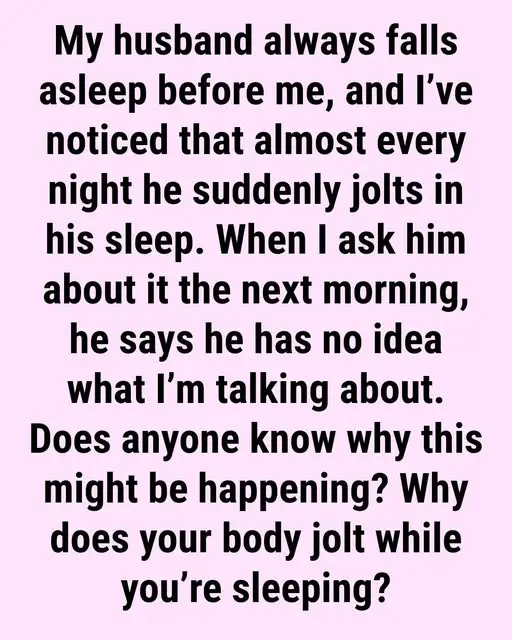
Almost everyone has experienced that strange moment when they’re drifting off to sleep and suddenly feel a sharp jolt through the body. Sometimes it feels like falling off a cliff, tripping over something, or missing a step in the dark. In an instant, the body jerks awake, the heart races briefly, and sleep suddenly feels impossible for a few moments.
Although this experience can feel alarming, it is usually completely normal. These sudden sleep twitches are known as hypnic jerks, and they happen to millions of people around the world. In most cases, they are harmless involuntary muscle contractions that occur during the transition between wakefulness and sleep.
A man once joked that every night he felt like he was falling into a hole just before falling asleep. His wife noticed his entire body would twitch suddenly, sometimes strong enough to shake the bed. At first, both worried something serious might be wrong. However, after learning about hypnic jerks, they discovered the experience was extremely common and often triggered by stress, exhaustion, and late-night caffeine. Once they improved their sleep habits, the sudden jolts became far less frequent and much less concerning.
What Is a Hypnic Jerk?
The Science Behind Sleep Starts
A hypnic jerk, also called a sleep start or hypnagogic jerk, is a sudden involuntary muscle contraction that occurs as the brain transitions from wakefulness into sleep.
This usually happens during the earliest stage of non-REM sleep, when the body begins relaxing and slowing down. During this transition, muscles loosen, breathing slows, and brain activity starts changing into sleep patterns.
However, the nervous system does not always shift smoothly into sleep mode. Sometimes the brain briefly misinterprets muscle relaxation as a sign that the body is falling or losing control. As a result, the brain sends a sudden signal to the muscles, causing a quick jolt or twitch.
Many people also experience a vivid sensation alongside the jerk, including:
- Falling
- Tripping
- Slipping
- Sudden imbalance
- A brief dream fragment
These sensations often happen so quickly that people wake immediately afterward feeling startled or confused.
Although hypnic jerks can feel intense, sleep experts generally consider them a normal part of human sleep physiology.
How Common Are Hypnic Jerks?
Hypnic jerks are extremely common. Studies estimate that roughly 60–70% of adults experience them occasionally.
Some people experience them only a few times per year, while others notice them several times per week during stressful or exhausting periods.
Men and women both experience hypnic jerks, and they can occur at almost any age. However, adults often notice them more because stress, sleep deprivation, and stimulant use become more common later in life.
Interestingly, many people are unaware they even experience these muscle jerks until a partner notices them during sleep.
In most cases, occasional hypnic jerks do not indicate any underlying neurological disease or sleep disorder.
Why Your Body Jolts During Sleep
The Brain’s Confusing Transition Into Sleep
The transition between wakefulness and sleep is surprisingly complex. The brain gradually shifts control over breathing, muscle movement, awareness, and heart rate as the body enters sleep mode.
During this process, muscle tone naturally decreases. The body begins relaxing deeply in preparation for sleep.
However, when someone is extremely exhausted or falls asleep very quickly, the brain may transition too rapidly between stages. Some scientists believe the brain occasionally misinterprets this rapid relaxation as a physical fall or loss of stability.
In response, the nervous system activates protective reflexes designed to prevent falling or injury. This produces the sudden muscle contraction people experience as a hypnic jerk.
The sensation often feels dramatic because the body is caught between wakefulness and unconsciousness at that exact moment.
Even though the experience feels strange, it is usually just evidence of the brain and nervous system communicating during sleep transitions.
Stress and Anxiety Increase Sleep Jerks
Stress plays a major role in hypnic jerks. When the nervous system remains overstimulated during the day, the body often struggles to relax fully at night.
High stress levels increase adrenaline and nervous system activity, making muscle twitching more likely during sleep onset.
Anxiety can also keep the brain partially alert even while the body begins falling asleep. This mixed state of relaxation and alertness may contribute to sudden jolts or sensations of falling.
People under emotional pressure often notice hypnic jerks becoming more frequent during:
- Busy work periods
- Emotional stress
- Lack of sleep
- Major life changes
- Excessive worrying
Fortunately, reducing stress levels often decreases the frequency of sleep starts significantly.
Common Triggers That Make Hypnic Jerks Worse
Caffeine and Stimulants
Caffeine stimulates the nervous system and increases alertness, which can interfere with the body’s natural sleep transition.
Coffee, energy drinks, soda, pre-workout supplements, and some medications may increase the likelihood of hypnic jerks, especially when consumed late in the day.
Nicotine and other stimulants can produce similar effects by keeping the brain more alert during bedtime.
Because stimulants increase nervous system activity, muscles may remain more reactive during early sleep stages.
Reducing caffeine intake several hours before bedtime often helps minimize nighttime jolts and improve sleep quality overall.
Sleep Deprivation and Exhaustion
Extreme fatigue is one of the strongest triggers for hypnic jerks. Ironically, the more exhausted someone becomes, the more likely their nervous system may react dramatically during sleep onset.
When people stay awake too long, the brain rushes more quickly into sleep once they finally lie down. This rapid transition may increase the likelihood of sleep starts.
Irregular sleep schedules can also confuse the body’s internal sleep rhythms. Shift work, inconsistent bedtimes, and frequent late nights often contribute to disrupted sleep transitions.
Overexertion from intense exercise may occasionally trigger hypnic jerks as well, especially if workouts occur close to bedtime.
Maintaining a consistent sleep routine helps stabilize the body’s sleep cycles and reduce sudden nighttime muscle contractions.
When Hypnic Jerks May Need Medical Attention
Normal Sleep Jerks vs. Sleep Disorders
Most hypnic jerks are harmless and require no treatment. However, certain symptoms may suggest a more serious sleep issue.
Medical evaluation may help if jerks:
- Happen constantly throughout the night
- Cause severe sleep disruption
- Lead to insomnia or exhaustion
- Include pain or unusual movements
- Occur alongside breathing problems
Conditions like restless legs syndrome, periodic limb movement disorder, or sleep apnea sometimes involve nighttime movements that resemble hypnic jerks.
Unlike occasional sleep starts, these conditions often repeatedly interrupt sleep quality and cause daytime fatigue.
A healthcare provider can determine whether symptoms fit normal sleep behavior or require further evaluation.
Simple Ways to Reduce Sleep Jolts
Many people can reduce hypnic jerks naturally through healthier sleep habits.
Helpful strategies include:
- Maintaining a consistent bedtime
- Reducing caffeine late in the day
- Managing stress levels
- Avoiding intense exercise before bed
- Creating a calm nighttime routine
- Limiting screen exposure before sleep
Relaxation techniques like meditation, reading, stretching, or deep breathing may also calm the nervous system before bed.
Getting enough sleep consistently remains one of the most effective ways to reduce nighttime muscle jerks naturally.
Frequently Asked Questions
Are hypnic jerks dangerous?
Usually not. Hypnic jerks are generally harmless and extremely common.
Why does it feel like falling when falling asleep?
The brain may briefly misinterpret muscle relaxation as a loss of balance or falling sensation.
Can stress make sleep jerks worse?
Yes. Stress and anxiety increase nervous system activity and can trigger more frequent hypnic jerks.
Does caffeine contribute to hypnic jerks?
Yes. Caffeine and stimulants may increase muscle activity and interfere with smooth sleep transitions.
When should I see a doctor about sleep jerks?
You should seek medical advice if jerks severely disrupt sleep, occur constantly, or involve unusual symptoms.
Conclusion
That sudden jolt just as you fall asleep can feel strange, startling, and sometimes even frightening. However, hypnic jerks are usually a completely normal part of the body’s transition into sleep.
Stress, exhaustion, caffeine, and irregular sleep patterns often make these muscle contractions more noticeable. Fortunately, improving sleep habits and calming the nervous system can significantly reduce how often they occur.
Although the sensation may feel dramatic, it is usually nothing more than the brain briefly misinterpreting the body’s relaxation during early sleep. In most cases, these nighttime jolts are harmless reminders of how complex and fascinating the human sleep process truly is.
More Creative Crafts
- The Quiet Language of a Yellow Ribbon: What It Means When You See One on a Dog
- Finding Head Lice in a Loved One’s Hair: What It Means and the Best Way to Handle It
- Can the Shape of Your Legs Reveal Your Personality? Separating Myth From Reality
- What Does the Last Digit of Your Birth Year Say About You? A Gentle Guide to Self-Reflection and Life’s Beautiful Numbers