
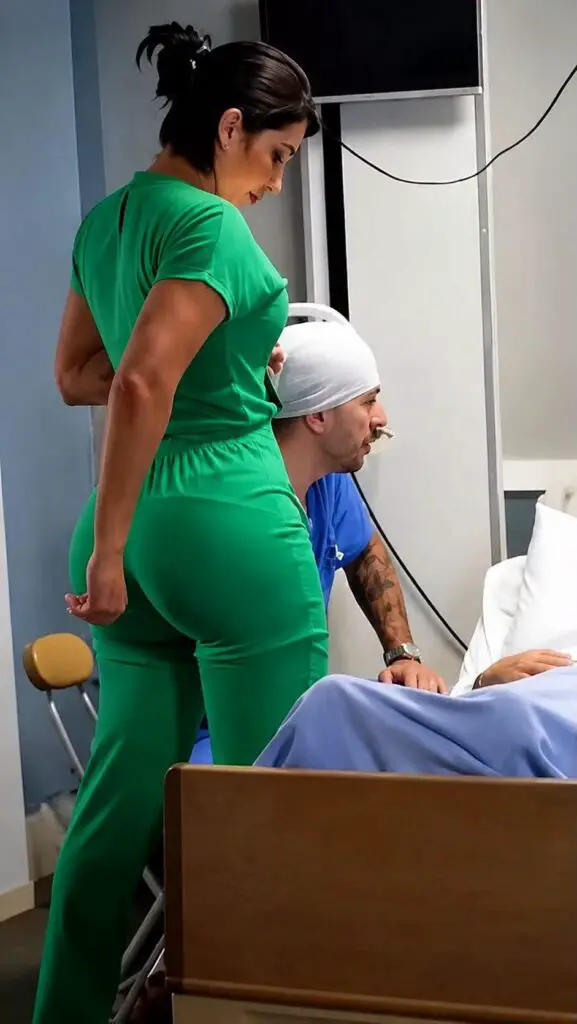
Social media has become one of the fastest ways for dramatic videos to reach millions of viewers. Clips that evoke strong emotions—whether surprise, concern, or admiration—are often shared within minutes, sometimes before anyone verifies their authenticity. Recently, one hospital-themed video captured widespread attention after appearing to show a nurse urgently responding to an unconscious patient in an intensive care unit.
The footage looked convincing. Medical monitors displayed vital signs, hospital equipment surrounded the patient, and healthcare workers appeared to move quickly in an apparent emergency. Many viewers believed they were watching a real-life rescue and praised the nurse’s calm response under pressure.
However, as the video spread across multiple platforms, questions began to emerge. Some healthcare professionals pointed out that certain actions shown in the clip did not fully reflect standard medical procedures. Others wondered why no additional information about the patient or hospital had been released.
Those questions eventually led to an important discovery.
The Full Story Behind the Video
Additional context later revealed that the dramatic ICU scene was not footage of an actual medical emergency.
Instead, it had been created as part of a staged advertisement promoting an energy-related consumer product. The patient portrayed in the video was an actor, and the hospital setting served as a dramatic visual metaphor rather than documentation of real healthcare.
Although the campaign successfully attracted attention, many viewers expressed disappointment after learning that the emotional scene had been fictional.
For some people, the biggest concern wasn’t the advertisement itself but the fact that many initially believed they were witnessing genuine medical care.
Why Hospital Settings Create Strong Emotional Reactions
Hospitals represent places where lives are often saved during critical moments.
Because of this, scenes involving:
- Emergency departments
- Intensive care units
- Ambulances
- Operating rooms
- Healthcare professionals
naturally evoke strong emotional responses.
Most people instinctively associate these environments with real emergencies, making realistic portrayals especially powerful.
When fictional scenes closely resemble authentic medical situations, confusion can occur if viewers are not immediately aware that the content is dramatized.
The Speed of Viral Content
Modern social media platforms allow videos to spread around the world within minutes.
In many cases, people share emotional content before:
- Checking its original source.
- Reading the description.
- Confirming whether it’s authentic.
- Looking for additional reporting.
As a result, staged or fictional videos can sometimes be mistaken for real events until further information becomes available.
Why Authenticity Matters Online
The widespread reaction to this video highlights an important challenge in today’s digital world: distinguishing authentic events from carefully produced content.
While advertisements, short films, and awareness campaigns frequently use realistic settings, problems can arise when viewers mistake dramatizations for actual news.
Medical professionals have noted that hospital environments carry a special level of public trust. Images of doctors, nurses, and emergency care naturally encourage viewers to believe they are witnessing real-life situations.
For this reason, many people believe creators should clearly identify fictional or promotional material to avoid unnecessary confusion.
The Real Work of Intensive Care Teams
Although the viral clip was staged, it also reminded many viewers of the demanding work performed every day by healthcare professionals.
Intensive care units care for patients with serious or life-threatening illnesses or injuries.
Healthcare teams working in these environments often include:
- Critical care physicians
- Registered nurses
- Respiratory therapists
- Pharmacists
- Medical technicians
- Specialists from multiple disciplines
These professionals work together around the clock to monitor patients, respond to emergencies, and provide highly specialized treatment.
Unlike fictional portrayals, real medical emergencies require carefully coordinated teamwork based on established clinical protocols.
Emotional Content Spreads Quickly
Research consistently shows that emotionally charged content spreads faster online than ordinary information.
Videos that trigger feelings such as:
- Shock
- Fear
- Inspiration
- Sympathy
- Anger
- Curiosity
are more likely to receive comments, shares, and reactions.
Because of this, advertisers, filmmakers, and content creators sometimes use emotionally powerful storytelling to capture attention.
However, when realistic scenarios closely resemble actual emergencies, audiences may misunderstand the intended message if important context is missing.
Tips for Evaluating Viral Videos
Before sharing dramatic online content, it can be helpful to pause and ask a few simple questions:
- Who originally posted the video?
- Is it labeled as an advertisement or dramatization?
- Have reliable news organizations reported the event?
- Does the video include enough context?
- Are there independent sources confirming what happened?
Taking a few moments to verify information can help reduce the spread of misinformation and prevent misunderstandings.
The Responsibility of Content Creators
As online platforms continue to grow, many experts encourage creators to balance creativity with transparency.
Using realistic settings—particularly hospitals, emergency services, or other sensitive environments—can have a powerful emotional impact. Clearly indicating when content is fictional or promotional helps audiences understand what they are watching while preserving trust in genuine reporting.
Responsible storytelling not only protects viewers from confusion but also shows respect for professionals whose real work inspires these portrayals.
Lessons About Trust in the Digital Age
The widespread discussion surrounding this staged hospital video illustrates how easily realistic content can influence public perception. In an era where millions of people receive news through social media feeds, even a short clip can shape opinions before its full context becomes available.
Healthcare settings naturally inspire trust because they are associated with real people facing genuine medical emergencies. When fictional scenarios closely resemble authentic events, viewers may understandably assume they are watching actual footage.
This case serves as a reminder that emotional reactions are normal—but taking a moment to verify information before sharing it is equally important.
Why Media Literacy Matters
Digital literacy has become an essential skill for internet users of all ages.
Simple habits can help people better evaluate the content they encounter online:
- Check whether the video comes from a verified source.
- Look for descriptions indicating that the footage is an advertisement or dramatization.
- Compare the story with reports from established news organizations.
- Be cautious of clips that lack context or appear heavily edited.
- Avoid sharing sensational content until its authenticity has been confirmed.
These steps help reduce the spread of misinformation while encouraging more informed online discussions.
Respecting Real Healthcare Professionals
Although the viral video was fictional, it also highlighted the tremendous respect many people have for healthcare workers.
Doctors, nurses, paramedics, respiratory therapists, and countless other medical professionals work in demanding environments every day. They regularly care for critically ill patients, make rapid decisions under pressure, and provide compassionate support to families during difficult moments.
Their work requires years of education, continuous training, and teamwork that cannot be fully captured in a brief dramatized clip.
Recognizing the difference between entertainment and real medical practice helps preserve appreciation for those who dedicate their careers to patient care.
Final Thoughts
The viral ICU rescue video demonstrates how powerful visual storytelling can be—and how easily realistic scenes can blur the line between fiction and reality when viewed without context.
While the advertisement successfully captured public attention, it also prompted valuable conversations about responsible content creation, media literacy, and the importance of verifying information before reacting or sharing.
As digital platforms continue to shape how people consume news and entertainment, viewers and creators alike share a responsibility to promote transparency and accuracy. Taking a few extra moments to confirm the source of a dramatic video can prevent misunderstandings and encourage healthier online conversations.
Ultimately, this incident is a reminder that not everything appearing authentic on social media reflects real events. By approaching viral content with curiosity, critical thinking, and a willingness to seek reliable information, we can better navigate today’s fast-moving digital landscape.