
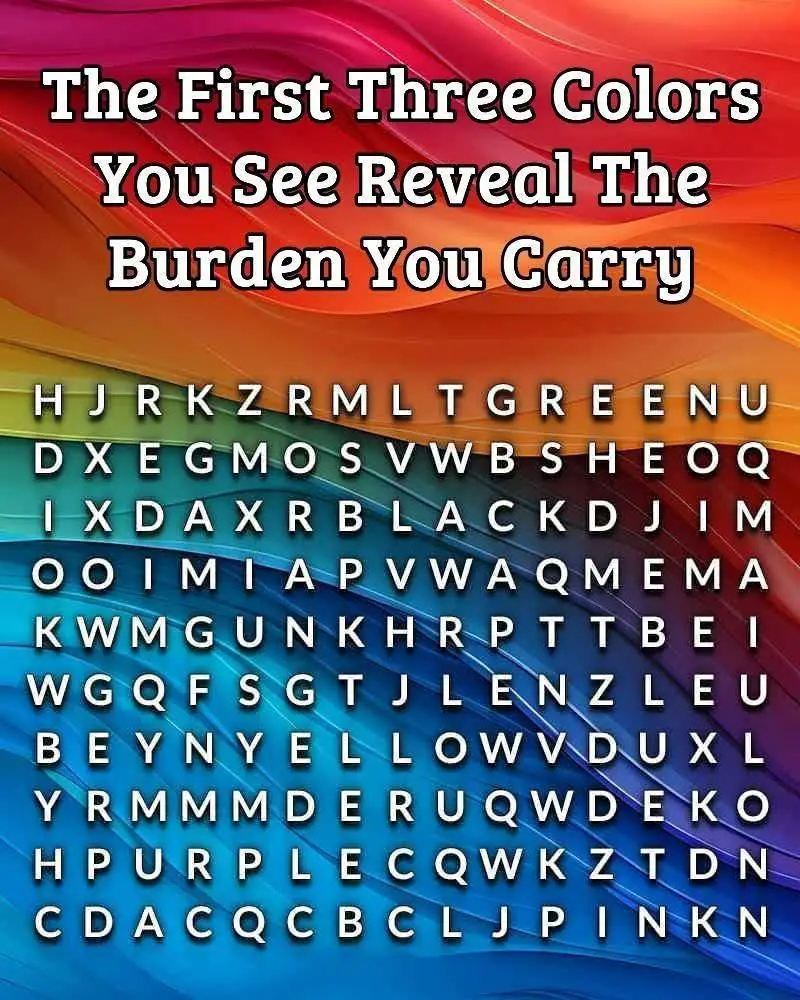
Colors influence our lives more than most people realize. From the clothes we wear to the environments we create, color quietly affects mood, emotions, decisions, and even memory. While many people view color simply as a visual experience, psychologists have long studied the powerful connection between color and the human mind.
A fascinating theory suggests that the first three colors you naturally notice can reveal the emotional burdens you carry beneath the surface. Whether you believe color perception reflects subconscious thoughts or simply serves as a tool for self-reflection, the exercise offers an intriguing opportunity to better understand yourself.
The idea is simple. Without overthinking, observe your surroundings and identify the first three colors that immediately catch your attention. According to personality and color psychology theories, those colors may provide clues about hidden concerns, emotional pressures, unresolved feelings, and personal challenges.
While this exercise is not a scientific diagnosis or fortune-telling method, it can encourage meaningful self-awareness and personal growth.
Why Colors Affect Human Emotions
Human beings respond to color on both conscious and subconscious levels.
Researchers have found that colors can influence mood, behavior, and perception. Certain colors create feelings of calm, while others stimulate energy, excitement, or caution. Marketing professionals use color strategically, interior designers rely on color psychology, and artists have understood its emotional power for centuries.
The reason colors affect us so deeply may be connected to both biology and experience.
For example:
- Red often signals urgency or danger.
- Blue frequently evokes calmness and stability.
- Green reminds us of nature and growth.
- Yellow attracts attention and stimulates mental activity.
Over time, personal experiences also shape our reactions. A color associated with positive memories may create comfort, while another linked to difficult experiences may trigger emotional responses.
Because of this connection between color and emotion, some psychologists believe our attention naturally gravitates toward colors that reflect our current mental state.
How the Color Exercise Works
The exercise itself is remarkably simple.
Find a comfortable place where you can observe your surroundings naturally.
Take a few slow breaths and allow yourself to relax.
Rather than searching intentionally for specific colors, simply notice what stands out first.
Write down the first three colors that catch your attention.
The key is spontaneity.
The goal is not to choose favorite colors. Instead, it is to observe which colors naturally draw your focus before conscious thought takes over.
Once you identify the three colors, each one can be interpreted as representing a different layer of emotional experience.
The first color may symbolize your primary burden.
The second color may represent ongoing pressures and responsibilities.
The third color may reveal subtle emotional influences operating beneath conscious awareness.
The Meaning of the First Color
The first color often reflects the emotional issue demanding the most attention in your life right now.
Red
If red appears first, you may be carrying unresolved conflict, frustration, or emotional intensity.
Red is associated with passion, determination, and energy, but it can also indicate stress, anger, or pressure.
People drawn to red may feel overwhelmed by responsibilities or struggling with situations requiring immediate action.
Blue
Blue often points toward emotional fatigue, sadness, or a desire for peace.
Those noticing blue first may be processing disappointment, loneliness, or emotional exhaustion.
At the same time, blue can indicate wisdom and reflection, suggesting a need to slow down and heal.
Green
Green frequently symbolizes responsibility.
You may feel burdened by obligations related to family, work, finances, or personal expectations.
While green represents growth, it can also indicate anxiety connected to maintaining balance.
Yellow
Yellow is linked to mental activity.
People who notice yellow first may be experiencing anxiety, overthinking, or concern about future outcomes.
Often, individuals who appear cheerful outwardly carry significant internal tension.
Purple
Purple symbolizes emotional depth, spirituality, and creativity.
Its appearance may suggest unresolved personal questions, creative frustration, or a search for purpose and meaning.
Black or Gray
Black and gray often reflect grief, limitation, uncertainty, or fear.
These colors may indicate unresolved emotional wounds or concerns about the future.
White
White can symbolize emotional restraint.
People noticing white first may be suppressing feelings while attempting to maintain control and stability.
The Meaning of the Second Color
The second color often highlights secondary burdens—important issues that influence daily life without dominating it completely.
These burdens typically involve relationships, practical challenges, or ongoing concerns.
For example:
- Red may indicate ongoing tension with another person.
- Blue may reflect concern for loved ones.
- Green may point to financial or caregiving responsibilities.
- Yellow may reveal fear of failure or judgment.
- Purple may represent unexpressed creativity.
- Black may indicate lingering fears.
- White may suggest emotional isolation.
Unlike the first color, which often represents an immediate concern, the second color frequently points toward situations requiring ongoing management.
These pressures may not be overwhelming individually, but together they consume mental and emotional energy.
The Hidden Message of the Third Color
The third color often reveals the most subtle burden.
These concerns may not occupy your thoughts daily, yet they influence decisions, emotions, and behavior behind the scenes.
For instance:
Red
A hidden desire for change or unresolved passion.
Blue
Fear of loss or lingering sadness.
Green
Subconscious guilt regarding responsibilities.
Yellow
Quiet self-doubt or indecision.
Purple
Creative dissatisfaction or spiritual longing.
Black
Avoidance of unresolved emotional issues.
White
A deep need for clarity and simplicity.
The third color is particularly valuable because it often reveals issues that remain unnoticed until they begin affecting overall well-being.
Looking at Color Combinations
While individual colors provide insight, combinations often tell a more complete story.
Red, Yellow, and Black
This combination may suggest stress, anxiety, and uncertainty operating simultaneously.
Blue, Gray, and White
Often associated with emotional exhaustion, grief, and a desire for healing.
Green, Blue, and Yellow
May indicate someone balancing responsibilities while managing emotional strain and future worries.
Purple, Green, and Yellow
Often appears among creative individuals feeling torn between personal aspirations and practical obligations.
The goal is not to assign absolute meaning but to encourage thoughtful reflection about current life circumstances.
How Awareness Can Lead to Healing
One of the greatest benefits of this exercise is increased self-awareness.
Many people move through life carrying emotional burdens they rarely acknowledge.
By recognizing those feelings, it becomes easier to address them constructively.
For example:
If red appears frequently, stress management techniques may help.
If blue dominates your attention, emotional support and self-care could be beneficial.
If green stands out repeatedly, stronger boundaries may reduce feelings of overwhelm.
If yellow appears often, mindfulness practices can calm excessive worry.
If purple emerges, creative expression may provide relief.
If black or gray appears consistently, deeper emotional exploration may be necessary.
If white dominates, creating opportunities for honest emotional expression may help restore balance.
Awareness does not solve problems instantly.
However, recognizing a burden is often the first step toward reducing its weight.
The Relationship Between Colors and Daily Life
Colors surround us constantly.
The walls in our homes, the clothes we choose, and the environments we create all influence emotional experience.
Many people intentionally incorporate calming colors into living spaces or energizing colors into work environments.
Paying attention to color preferences and reactions can provide valuable information about changing emotional needs.
For example:
Someone experiencing stress may naturally gravitate toward calming blues.
A person seeking motivation may become drawn to reds or oranges.
An individual craving balance may prefer greens.
These preferences often shift as circumstances change.
Color awareness can therefore become an ongoing tool for emotional self-monitoring.
What This Exercise Really Teaches Us
The most important lesson is not whether colors possess mystical meaning.
Rather, it is the realization that self-reflection matters.
The exercise encourages people to pause, observe, and consider what emotions may be influencing their lives.
In a world filled with distractions, many individuals rarely stop long enough to examine their inner experiences.
Even a simple observation about color can create an opportunity for greater understanding.
When approached thoughtfully, the first three colors you notice can become a doorway to self-awareness, emotional resilience, and personal growth.
Final Thoughts
The first three colors you see may reveal more than visual preference. They can serve as symbolic reflections of your emotional landscape, highlighting burdens, responsibilities, fears, hopes, and hidden desires.
Whether you notice red, blue, green, yellow, purple, black, gray, or white, each color invites reflection rather than judgment.
The exercise is not about predicting the future or diagnosing problems. Instead, it offers a simple yet powerful reminder that understanding yourself begins with paying attention.
Sometimes the answers we seek are already present in the world around us.
All we have to do is notice them.