A kitchen countertop is one of the most valuable pieces of real estate in any home. It serves as a workspace, a gathering spot, and often the visual centerpiece of the entire kitchen. Yet many of us unknowingly turn this important area into a storage zone for items that don’t belong there.
When I first moved into my home, I believed keeping everything visible would make cooking easier. My bread sat beside the toaster. Cookbooks were stacked in the corner. A knife block occupied prime workspace. Before long, my countertops looked cluttered, cleaning became a chore, and some foods even spoiled faster than they should have.
The truth is that kitchen counters are exposed to heat, humidity, sunlight, grease, and constant activity. Many items suffer when stored in these conditions.
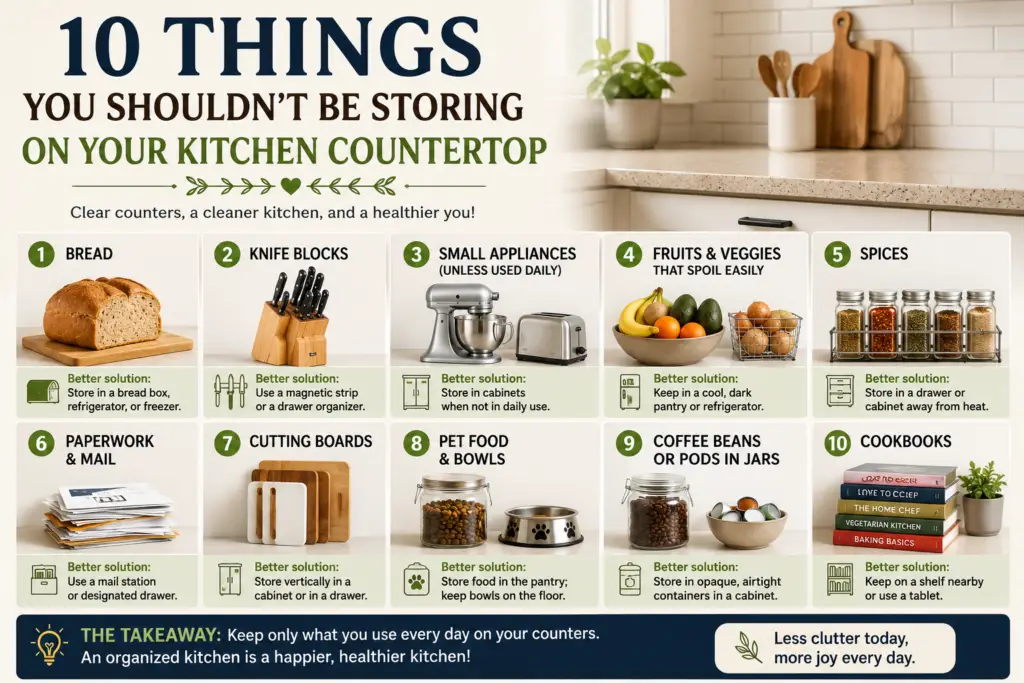
If you want a cleaner, more organized, and more efficient kitchen, these are the ten items you should remove from your countertops today—and where you should store them instead.
Why Countertop Clutter Matters
Before diving into the list, it’s worth understanding why countertop storage can be problematic.
Excessive clutter can:
- Make kitchens appear smaller
- Create cleaning challenges
- Collect dust and grease
- Reduce food preparation space
- Increase food spoilage
- Create safety hazards
- Make kitchens feel stressful rather than inviting
Professional organizers often recommend keeping at least 70% of your countertop space clear. This creates a more functional and visually appealing environment.
Let’s explore the most common countertop mistakes.
1. Bread
Fresh bread may look beautiful displayed in a basket, but your countertop isn’t always the best place to store it.
Why It’s a Problem
Bread exposed to air tends to:
- Dry out quickly
- Become stale
- Develop mold faster in humid environments
- Lose its freshness within days
Warm kitchens accelerate these issues.
Better Storage Solution
Store bread in:
- A bread box
- A cool pantry
- The refrigerator for extended freshness
- The freezer for long-term storage
A quality bread box protects bread from excess moisture while allowing enough airflow to prevent mold growth.
2. Knife Blocks
Knife blocks have been a kitchen staple for decades, but they may not be the smartest use of countertop space.
Why It’s a Problem
Knife blocks:
- Occupy valuable workspace
- Collect dust and food debris
- Can harbor bacteria inside slots
- Make cleaning difficult
- Often sit close to food preparation areas
Better Storage Solution
Consider:
- Magnetic wall strips
- Drawer knife organizers
- In-drawer knife trays
- Dedicated knife cabinets
These options save space while keeping knives protected and easily accessible.
3. Small Appliances You Rarely Use
Many kitchens become appliance museums.
Stand mixers, waffle makers, air fryers, blenders, juicers, bread machines, and food processors often remain on countertops despite being used only occasionally.
Why It’s a Problem
Unused appliances:
- Create visual clutter
- Reduce workspace
- Collect grease and dust
- Make kitchens appear crowded
Better Storage Solution
Ask yourself one question:
“Did I use this appliance this week?”
If the answer is no, store it in:
- Lower cabinets
- Pantry shelves
- Appliance garages
- Utility closets
Exceptions include appliances used daily, such as coffee makers or electric kettles.
4. Certain Fruits and Vegetables
While fruit bowls create a welcoming look, not all produce belongs on display.
Why It’s a Problem
Many fruits and vegetables deteriorate faster at room temperature.
Examples include:
- Avocados
- Potatoes
- Onions
- Tomatoes
- Garlic
- Peaches
Some produce emits ethylene gas, which accelerates ripening and spoilage of nearby items.
Better Storage Solution
Store produce according to its needs:
- Potatoes in cool, dark places
- Onions in ventilated baskets
- Avocados based on ripeness
- Tomatoes away from direct sunlight
Only keep fruits like bananas, apples, or citrus fruits on display if you consume them quickly.
5. Spices
Many people proudly display colorful spice racks near the stove.
Unfortunately, this is one of the worst locations for preserving flavor.
Why It’s a Problem
Heat, moisture, and sunlight degrade spices by:
- Reducing potency
- Destroying aromatic oils
- Causing flavor loss
- Shortening shelf life
The area above or beside a stove experiences frequent temperature changes that accelerate spice deterioration.
Better Storage Solution
Store spices:
- Inside cabinets
- In pantry drawers
- In pull-out organizers
- Away from heat and sunlight
Properly stored spices maintain freshness significantly longer.
6. Mail and Paperwork
The kitchen often becomes the default dumping ground for:
- Bills
- School forms
- Receipts
- Coupons
- Advertisements
Why It’s a Problem
Paper clutter:
- Creates visual chaos
- Increases stress
- Makes important documents difficult to find
- Can become stained by food or liquids
Better Storage Solution
Create a dedicated command center elsewhere in your home.
Options include:
- Entryway organizers
- Home office filing systems
- Wall-mounted mail stations
- Designated drawers
Keep paperwork away from cooking zones whenever possible.
7. Cutting Boards
Many households stack cutting boards in countertop corners.
Why It’s a Problem
Cutting boards:
- Consume usable workspace
- Create visual clutter
- Collect grease and dust
- Can become difficult to access
Better Storage Solution
Store boards:
- Vertically inside cabinets
- In drawer dividers
- Using cabinet organizers
- On pull-out racks
Vertical storage keeps boards organized and easy to grab when needed.
8. Pet Food and Feeding Supplies
Pet owners often store bowls, food containers, and treats on kitchen counters for convenience.
Why It’s a Problem
Pet supplies can:
- Attract pests
- Create odors
- Occupy food preparation areas
- Increase contamination risks
Better Storage Solution
Store pet food:
- In airtight containers
- Inside pantries
- In utility rooms
Keep feeding stations on washable mats in designated pet areas.
9. Coffee Beans in Clear Containers
Coffee lovers often display beans in decorative glass jars.
While attractive, this practice can damage coffee quality.
Why It’s a Problem
Coffee’s biggest enemies are:
- Light
- Heat
- Air
- Moisture
Exposure causes beans to lose flavor rapidly.
Better Storage Solution
Store coffee in:
- Opaque containers
- Airtight canisters
- Cool cabinets
- Pantry shelves
This helps preserve freshness and aroma for much longer.
10. Cookbooks
Cookbooks bring warmth and personality to a kitchen.
However, they may not belong on your countertop.
Why It’s a Problem
Countertop cookbooks:
- Occupy workspace
- Collect grease
- Attract dust
- Become stained from spills
Better Storage Solution
Store cookbooks on:
- Nearby bookshelves
- Kitchen bookcases
- Floating shelves
- Closed cabinets
For frequently used recipes, consider digital alternatives or tablet displays.
Bonus Items That Also Don’t Belong on Counters
Beyond the main ten, consider relocating:
Medications
Heat and humidity can reduce medication effectiveness.
Cleaning Supplies
They can contaminate food preparation areas.
Decorative Items
Excessive decorations create unnecessary clutter.
Plastic Bags
These often accumulate and create visual disorder.
Reusable Water Bottles
Store them in cabinets when not in use.
How to Create a Clutter-Free Countertop
Professional organizers recommend following these simple rules:
Rule 1: Prioritize Function
Only keep items you use daily on display.
Rule 2: Create Zones
Designate areas for:
- Food preparation
- Cooking
- Cleaning
- Small appliances
Rule 3: Use Vertical Space
Install:
- Shelves
- Hooks
- Magnetic strips
- Wall organizers
Rule 4: Declutter Weekly
Spend five minutes each week returning misplaced items to their proper homes.
Rule 5: Follow the One-In, One-Out Rule
When bringing in a new kitchen item, remove or relocate another.
Benefits of Clear Countertops
Once you remove unnecessary items, you’ll notice several improvements:
Easier Cleaning
Less clutter means faster wiping and sanitizing.
More Workspace
Food preparation becomes easier and safer.
Better Organization
You’ll know exactly where everything belongs.
Reduced Stress
Research consistently shows that organized environments promote calm and productivity.
Improved Kitchen Appearance
Even older kitchens appear larger and more attractive when counters remain clear.
Frequently Asked Questions
Should anything stay on kitchen countertops?
Yes. Daily-use items such as coffee makers, fruit bowls, or cooking utensils may deserve permanent space if they support your routine.
How much countertop should remain clear?
Professional organizers recommend keeping approximately 70% of countertop space empty.
Are decorative items okay?
A few carefully chosen decorative elements are fine. The key is moderation.
What if I have limited cabinet space?
Consider adding shelving, drawer organizers, cabinet inserts, or appliance storage solutions.
Is countertop organization really that important?
Absolutely. Organized countertops improve efficiency, cleanliness, and overall kitchen enjoyment.
Final Thoughts
Your kitchen countertop should support your daily life—not become a storage unit.
By removing bread, knife blocks, unnecessary appliances, spices, paperwork, cutting boards, pet supplies, coffee containers, cookbooks, and certain produce, you’ll create a cleaner, more functional kitchen that feels larger and more inviting.
Small changes often create the biggest transformations. Start with just one item today. Then another tomorrow.
Before long, you’ll discover that a clear countertop isn’t just about appearance—it’s about creating a kitchen that works better, feels calmer, and makes everyday cooking more enjoyable.
Sometimes the secret to a beautiful kitchen isn’t adding more things.
It’s simply having fewer things in the right places.