
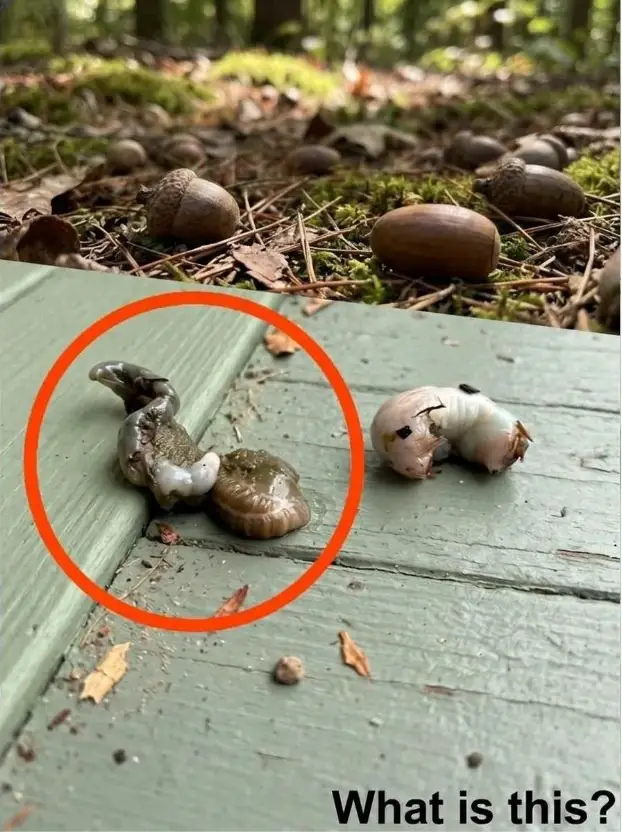
You’ve probably seen strange photos online that make people stop scrolling instantly. One recent image showed what looked like tiny white creatures bursting out of acorns, leaving thousands of people asking the same question:
“What on earth is that?”
At first glance, the image looks unsettling. Some people thought it was a fungus. Others guessed parasites, alien creatures, or even melted plastic. But the real answer is something far more fascinating—and completely natural.
What you’re actually seeing is the life cycle of the acorn weevil, one of nature’s strangest little survival experts.
While it may look disturbing at first, this process happens in forests all around the world every autumn. In fact, chances are high that you’ve walked past infested acorns many times without ever noticing.
Let’s explore what these mysterious white creatures really are, why they appear inside acorns, and what role they play in nature.
What Are Those White Worm-Like Creatures?
The strange white creatures emerging from the acorns are acorn weevil larvae.
These larvae come from a small insect called the acorn weevil, a beetle with a long snout that belongs to the Curculio family.
Adult acorn weevils are harmless insects commonly found near oak trees.
How The Process Begins
During late summer, female acorn weevils search for young acorns still hanging on oak trees.
Using their long snout, they carefully drill a tiny hole into the shell of the acorn.
Then they deposit eggs inside.
Once the eggs hatch, the larvae begin feeding safely inside the acorn, hidden from predators and protected from the outside world.
Why The Acorn Becomes Their Home
The inside of an acorn contains nutrients that help the larvae grow.
The developing grub slowly eats the nut from the inside while remaining hidden.
From the outside, the acorn may appear completely normal for weeks or even months.
That’s why many people never realize anything is living inside until the larvae suddenly emerge.
Why The Image Looks So Shocking
Most people rarely witness insect life cycles up close.
The contrast between a familiar object like an acorn and a strange pale larva creates an immediate emotional reaction.
The Surprise Factor
The image becomes especially startling because:
- the larvae look soft and oversized
- they appear suddenly from inside solid acorns
- most people never expect living creatures inside nuts
Social media thrives on surprising nature images because humans are naturally curious about unfamiliar things.
Why The Larvae Look White
The larvae appear pale or creamy white because they spend most of their lives protected inside the dark acorn shell.
Without sunlight exposure, their bodies remain light-colored and soft.
As they mature underground later in life, they gradually develop into adult beetles.
The Life Cycle Of The Acorn Weevil
The acorn weevil follows a surprisingly complex life cycle tied closely to oak trees.
Step 1: Egg Laying
In late summer or early fall:
- female weevils drill into acorns
- eggs are deposited inside
- the hole often seals naturally
The acorn continues growing while the larvae develop unnoticed.
Step 2: Feeding Inside The Acorn
After hatching, the larvae begin eating:
- the inner nut meat
- stored nutrients
- soft internal tissue
This provides everything they need to grow.
Step 3: Escape
Once mature, the larvae chew a small exit hole through the shell.
This is the stage most people see in viral photos.
The grub then crawls out and drops to the soil below.
Step 4: Underground Transformation
After leaving the acorn:
- the larva burrows underground
- forms a protective chamber
- transforms into an adult beetle
Some may remain underground for one or even two years before emerging.
Are Acorn Weevil Larvae Dangerous?
No.
Acorn weevil larvae are harmless to humans and pets.
They:
- do not bite
- do not sting
- do not spread disease
- are not toxic
Although they may look unpleasant, they are simply part of a natural forest ecosystem.
Can Humans Accidentally Eat Them?
Technically yes, though it’s uncommon.
People collecting wild acorns for food sometimes discover larvae inside damaged nuts.
While unpleasant, accidentally consuming one would generally not cause harm.
In many parts of the world, insect larvae are actually eaten intentionally as protein sources.
Why So Many Acorns Become Infested
Oak trees produce enormous numbers of acorns every year.
This strategy helps ensure that at least some seeds survive despite:
- insects
- squirrels
- birds
- weather
- disease
Nature’s Numbers Game
Not every acorn becomes a tree.
Many become food for wildlife instead.
Acorn weevils are simply one of many creatures that depend on oak trees for survival.
Even heavily infested forests continue producing enough healthy acorns to regenerate naturally.
How Squirrels Sometimes Detect Bad Acorns
One fascinating discovery is that squirrels may detect infested acorns.
Studies suggest squirrels sometimes avoid storing infected acorns because:
- larvae damage the nut
- infested acorns spoil faster
- healthy acorns survive longer in storage
Nature’s Survival Intelligence
Animals constantly develop survival strategies.
Squirrels appear capable of identifying:
- weight differences
- internal damage
- subtle odors
This helps them build better winter food supplies.
Why Oak Trees Matter So Much
Oak trees support entire ecosystems.
A single mature oak tree may provide food and shelter for:
- birds
- insects
- squirrels
- deer
- fungi
- pollinators
Acorn weevils are only one tiny part of this larger ecological web.
Forest Ecosystems Depend On Balance
Even insects that appear destructive play important roles.
Acorn weevils help:
- recycle nutrients
- feed predators
- maintain biodiversity
Nature works through balance rather than perfection.
Why Humans Fear Strange Natural Images
Images like this often go viral because humans instinctively react strongly to unfamiliar biological forms.
The Psychology Of “Creepy” Creatures
Scientists call this reaction disgust sensitivity.
Humans evolved to notice unusual textures, parasites, and hidden organisms because awareness once improved survival.
Things that trigger discomfort often include:
- wriggling movements
- hidden insects
- clustered patterns
- unexpected biological behavior
Even harmless creatures can feel unsettling because our brains evolved to pay close attention to them.
Curiosity Always Follows Fear
Interestingly, people are often equally fascinated and disturbed at the same time.
That combination drives viral engagement online.
Common Misconceptions About The Image
Many false explanations circulate whenever these images appear online.
Myth: It’s A Parasite Dangerous To Humans
False.
Acorn weevil larvae live specifically inside acorns and do not infect people.
Myth: It’s A Fungus Or Disease
False.
The white structures are insect larvae, not mold or fungus.
Myth: It’s Genetically Modified
False.
This process has existed naturally for thousands of years.
Myth: The Acorns Are Rotting
Not exactly.
The larvae consume the inside of the acorn, but the process is biological feeding, not simple decay.
Can You Prevent Infested Acorns In Your Yard?
If you have oak trees, some infested acorns are completely normal.
However, you can reduce numbers by:
- regularly raking fallen acorns
- removing damaged nuts
- reducing leaf litter buildup
Why Complete Elimination Is Difficult
Because the larvae spend much of their life underground, total removal is nearly impossible in natural environments.
Fortunately, they rarely cause serious problems for homeowners.
The Strange Beauty Of Nature
One reason these images fascinate people is because they reveal hidden worlds we normally never see.
Inside every forest:
- insects reproduce
- fungi spread
- seeds compete
- ecosystems evolve
Most of it happens quietly beneath our notice.
Nature Is Full Of Hidden Processes
The acorn image reminds us that ordinary objects often contain extraordinary stories.
A simple acorn may hold:
- future oak trees
- food for wildlife
- shelter for insects
- entire miniature ecosystems
Why Viral Nature Photos Matter
Although social media often spreads misinformation, it also sparks curiosity about science and nature.
Images like this encourage people to:
- ask questions
- learn about ecosystems
- explore biology
- appreciate biodiversity
That curiosity can become a valuable doorway into environmental awareness.
What To Do If You Find One
If you discover acorns with larvae:
- don’t panic
- avoid crushing them unnecessarily
- simply discard or compost them if desired
They are harmless and temporary.
Safe Handling
Basic hygiene is enough:
- wash hands afterward
- avoid storing damaged acorns indoors
- clean surfaces if needed
No special treatment is required.
Final Thoughts
The strange white creatures emerging from the acorns are acorn weevil larvae—tiny insects completing a natural stage of their life cycle.
While the image may look shocking at first, it’s actually a fascinating example of how complex and interconnected nature truly is.
Inside forests all around the world, countless hidden processes unfold every day:
- insects hatch
- seeds grow
- animals feed
- ecosystems balance themselves quietly
The viral image surprises people because it reveals one of those normally invisible moments.
And perhaps that’s the real reason it captures attention so powerfully.
It reminds us that even ordinary acorns can contain entire hidden worlds waiting to be discovered.