Waking up in the middle of the night to your child crying in pain is one of the most distressing moments a parent can experience. When you rush to them and notice a swollen, red lump on their eyelid, panic can quickly take over—especially if medical help isn’t immediately available.
Is it something serious?
Will it affect their vision?
Do you need to go to the emergency room right now?
Take a breath.
In most cases, what you’re seeing is something common and treatable—a stye. But knowing how to recognize it, treat it safely, and identify warning signs can make all the difference.
This guide will walk you through everything you need to know—with clarity, reassurance, and practical steps you can take right away.
📋 Quick Overview: What You’re Likely Dealing With
- Most common cause: Stye (hordeolum) — a small bacterial infection of an eyelid oil gland
- Typical onset: Sudden, often overnight
- Symptoms: Painful, red lump near eyelashes
- Treatment: Warm compresses + hygiene
- When to worry: Fever, vision changes, swelling spreading beyond eyelid
👉 Key takeaway: Most eyelid lumps in children are harmless and resolve within a few days—but some situations require urgent care.
🔍 What Is a Stye (Hordeolum)?
A stye is a localized infection of the small oil glands at the edge of the eyelid. It is usually caused by bacteria—most commonly Staphylococcus aureus.
Children are especially prone to styes because they:
- Touch their eyes frequently
- May not always wash hands properly
- Share pillows, towels, or toys
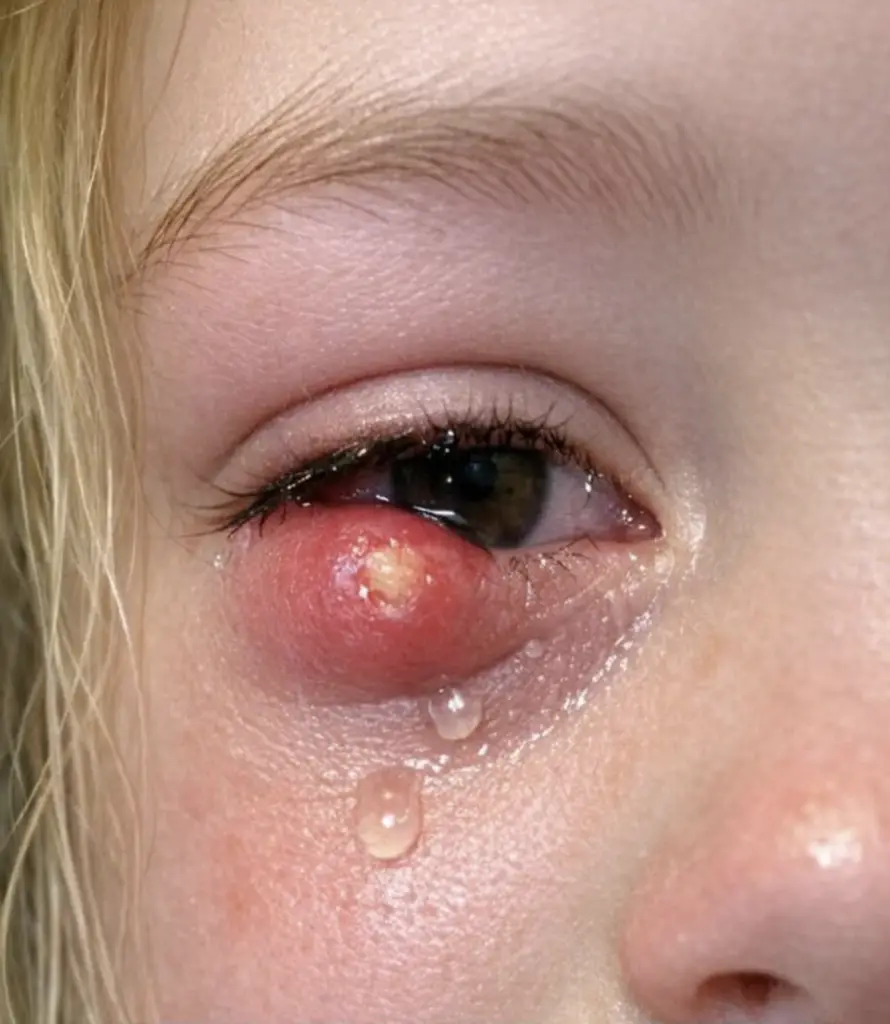
👁️ What a Stye Looks and Feels Like
Typical features include:
- A red, swollen bump on the eyelid
- Located near the lash line
- May have a small yellow or white pus point
- Tender or painful to touch
- Eye may water or feel irritated
👉 Size is usually small (pea-sized), though it can appear large due to swelling.
As described in your content, styes often develop very quickly—sometimes within hours or overnight .
🧭 Stye vs. Other Eyelid Lumps: How to Tell the Difference
Not every lump is a stye. Here’s how to distinguish:
Stye (Hordeolum)
- Painful
- Red and tender
- Appears suddenly
- Located at lash line
Chalazion
- Usually painless
- Develops slowly
- Firm lump inside eyelid
- Less redness
Infection (Abscess or Cellulitis)
- Increasing pain
- Spreading redness
- Possible fever
Allergic Reaction
- Itchy, not painful
- Often affects both eyes
- Diffuse swelling
👉 Quick tip: If it’s painful and at the lash line, it’s most likely a stye.
🚨 Red Flags: When You Must Seek Emergency Care
Most styes are harmless—but some symptoms require immediate medical attention.
Go to ER or seek urgent care if your child has:
- Fever (≥ 38°C / 100.4°F)
- Blurred or double vision
- Swelling spreading to face or around the eye
- Eye cannot open due to pain/swelling
- Rapid worsening within hours
- Severe, unrelieved pain
- Extreme fatigue or confusion
These signs could indicate a more serious condition like:
- Preseptal cellulitis (infection of eyelid tissue)
- Orbital cellulitis (deep infection behind the eye — rare but serious)
👉 These conditions require antibiotics—and sometimes hospital care.
🏠 What You Can Do at Home (Safe & Effective Care)
If there are no red flags, you can safely start treatment at home.
1. Warm Compress (Most Important Step)
This is the #1 treatment.
How to do it:
- Use a clean cloth soaked in warm (not hot) water
- Place gently over the closed eyelid
- Hold for 5–10 minutes
- Repeat 3–4 times per day
👉 This helps:
- Improve blood flow
- Reduce pain
- Encourage natural drainage
2. Keep the Area Clean
- Wash hands before touching the eye
- Use a clean cloth each time
- Avoid sharing towels or pillows
3. Pain Relief
If needed:
- Use age-appropriate acetaminophen or ibuprofen
- Follow correct dosage
4. Prevent Rubbing
Children tend to rub their eyes, which worsens infection.
Helpful tips:
- Trim nails
- Distract with calm activities
- Use soft mittens for younger children
❌ What NOT to Do
Avoid these common mistakes:
- Do NOT squeeze or pop the stye
- Do NOT apply random creams or remedies
- Do NOT use contact lenses
- Do NOT ignore worsening symptoms
👉 Squeezing can spread infection and make things worse.
⏳ How Long Does a Stye Last?
- Most improve within 3–7 days
- May fully resolve within 1 week
👉 If it lasts longer than 7–10 days or worsens, consult a doctor.
⚠️ When a Simple Stye Can Become a Problem
While rare, complications can occur if infection spreads.
Progression stages:
- Early stye
- Small, painful bump
- Responds to warm compress
- Worsening infection
- Increased swelling
- More redness
- Preseptal cellulitis
- Eyelid swelling spreads
- May include fever
- Orbital cellulitis (emergency)
- Bulging eye
- Vision problems
- Severe pain
👉 Early care prevents escalation.
📱 Telehealth vs Urgent Care vs ER: What to Choose
Telehealth (Best first step if unsure)
- Confirm diagnosis
- Get advice
- Possibly receive prescriptions
Urgent Care
- Moderate symptoms
- No emergency signs
Emergency Room
- Any red-flag symptoms
- Rapid progression
- Vision issues
🩺 What Doctors Will Do
If you seek care, doctors typically:
- Examine the eyelid
- Check vision
- Confirm diagnosis
- Recommend treatment
Treatment may include:
- Continued warm compresses
- Antibiotic ointment (if needed)
- Oral antibiotics (if infection spreads)
👉 Surgery is rarely needed.
❓ Common Questions Parents Ask
Will it affect my child’s vision?
Almost never. Styes are superficial.
Can I use natural remedies (like breast milk)?
Not recommended. They are not sterile and may worsen infection.
Is it contagious?
The bacteria can spread—but styes themselves are not highly contagious.
Can my child go to school?
Usually yes—with good hygiene.
What about recurrent styes?
Frequent styes may indicate:
- Poor eyelid hygiene
- Blepharitis
- Skin conditions
👉 A doctor can help prevent recurrence.
🧘 Helping Yourself Stay Calm as a Parent
Your reaction matters just as much as the treatment.
When anxiety rises:
- Take slow breaths (4-7-8 method)
- Focus on facts: most cases are harmless
- Take action instead of worrying
- Limit online searching
👉 Calm parents help calm children.
📋 Simple Action Plan
Right Now
- Stay calm
- Check for red flags
- Start warm compress
Next 24–48 Hours
- Continue compresses
- Monitor symptoms
- Avoid rubbing
Seek Help If:
- No improvement after 48 hours
- Symptoms worsen
- Red flags appear
❤️ Final Thoughts: You’re Doing Better Than You Think
Seeing your child in pain is hard—but your response matters more than perfection.
You noticed.
You acted.
You searched for answers.
That’s what good parenting looks like.
Most eyelid lumps—especially styes—are temporary and manageable. With simple care and attention, they usually resolve quickly.
But your awareness of warning signs is what truly protects your child.
👉 Trust yourself.
👉 Stay observant.
👉 And when in doubt—seek help.
⚠️ Medical Disclaimer
This article is for educational purposes only and does not replace professional medical advice. If your child has severe symptoms, worsening condition, or any concerns, consult a qualified healthcare provider immediately.